

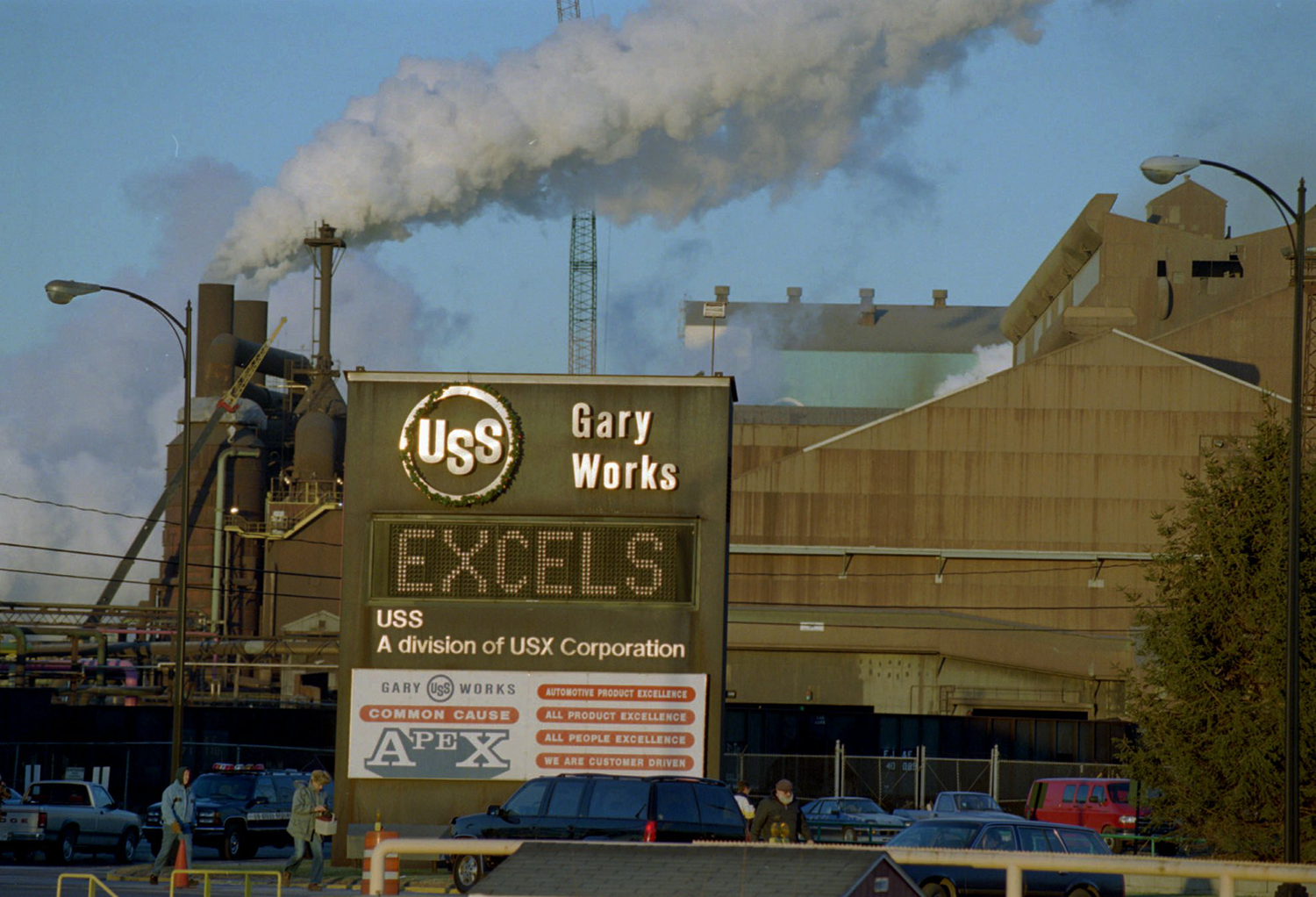
GARY, Ind. — The economy in most of Indiana defies Donald Trump’s explanation of how the world works.
But in Gary, maybe not so much.
Recommended Stories


The Hoosier State has rebounded from the 2008 recession to become a manufacturing and agricultural powerhouse once again. It runs an enormous trade surplus within the NAFTA area. The value of its manufacturing exports has more than doubled since 2000, and even many of its biggest imports are components used in manufacturing. Hoosier manufacturing output is up more than 50 percent since 2000, and a greater share of Hoosiers work in manufacturing than do the residents of any other state.
Indiana’s employment picture is also strong overall. The number of jobs in Indiana surpassed pre-crash levels during calendar 2014, nearly a year before the U.S. attained that milestone as a whole (with Indiana’s help). Billboards at the Illinois border welcome potential refugees to a state with healthy finances.
In all of these respects, Indiana’s economy strongly resembles that of Wisconsin. So at first glance, one might expect the two states to react to Trump in a similar way.
But then you visit Gary, where the job numbers still haven’t fully recovered to 2007 levels, and the unemployment rate is nearly 70 percent higher than that of the state as a whole.
If there is any place in Indiana where Trump’s story of American decline can resonate, it is in the Rust Belt towns of the state’s Northwest corner. Gary is a gloomy industrial town of 80,000, cut off from the south shore of Lake Michigan by a Toll Road and the hulking metallic structures of the largest steel works in North America. It rarely looks gloomier than it did on Saturday, under Northern Indiana’s characteristic gray skies and amid torrential rain.
Former President Bill Clinton was here Saturday evening, offering encouragement to voters and Democratic canvassers just a few blocks south of the grand entrance to U.S. Steel’s Gary Works. Like Trump, he talked about bringing jobs to the area. He cited an adage that was actually an old Reagan favorite — that the best social program is a good-paying job — to cheers from a crowd that reflected the city’s 90 percent black demographic makeup.
But unlike Trump, who bizarrely promised to bring back Pennsylvania’s long-dormant steel mills, Clinton did not make any promises about bringing back the same jobs this city had lost long, long ago.
The U.S. Steel facility’s sign, visible from the Indiana Toll Road, said “Gary Works” and there was a time when that was not just a label but also a true sentence. In the 1970s, Gary’s steel works employed 30,000 people. But by the Clinton era, the number working there was 6,000. Today it’s about 5,000 and shrinking.
International trade — which Trump frequently rails against — played a role in making this happen,, but so did environmental concerns, automation and movement of jobs to other U.S. states.
Just last year, U.S. Steel laid off about 300 Gary workers when it moved its coke production to an environmentally upgraded facility in Pennsylvania. It laid off 400 more when it idled its nearby tin facility in East Chicago.
Even with the protection that steel receives through U.S. anti-dumping laws, the company has lost money five out of the last six years. Its prospects worsened in 2014 after one of its more profitable product lines — steel pipes and tubes for domestic oil producers — was wiped out by the huge plunge in oil prices.
Former President Clinton was in Gary to get out the vote in the most reliably Democratic area of the state. Gary and Lake County will surely decide a close Democratic primary that leans slightly in Clinton’s favor. The outcome won’t matter much anyway, as Clinton has her race locked up.
But when Indiana decides on a Republican, it will be a clash between the emotions and outlook of two Indianas. One of them is a successful and well-governed state that companies are flocking to. The other looks like Gary.
