

China is deeply alarmed by the West’s unified response to Russian President Vladimir Putin’s war on Ukraine.
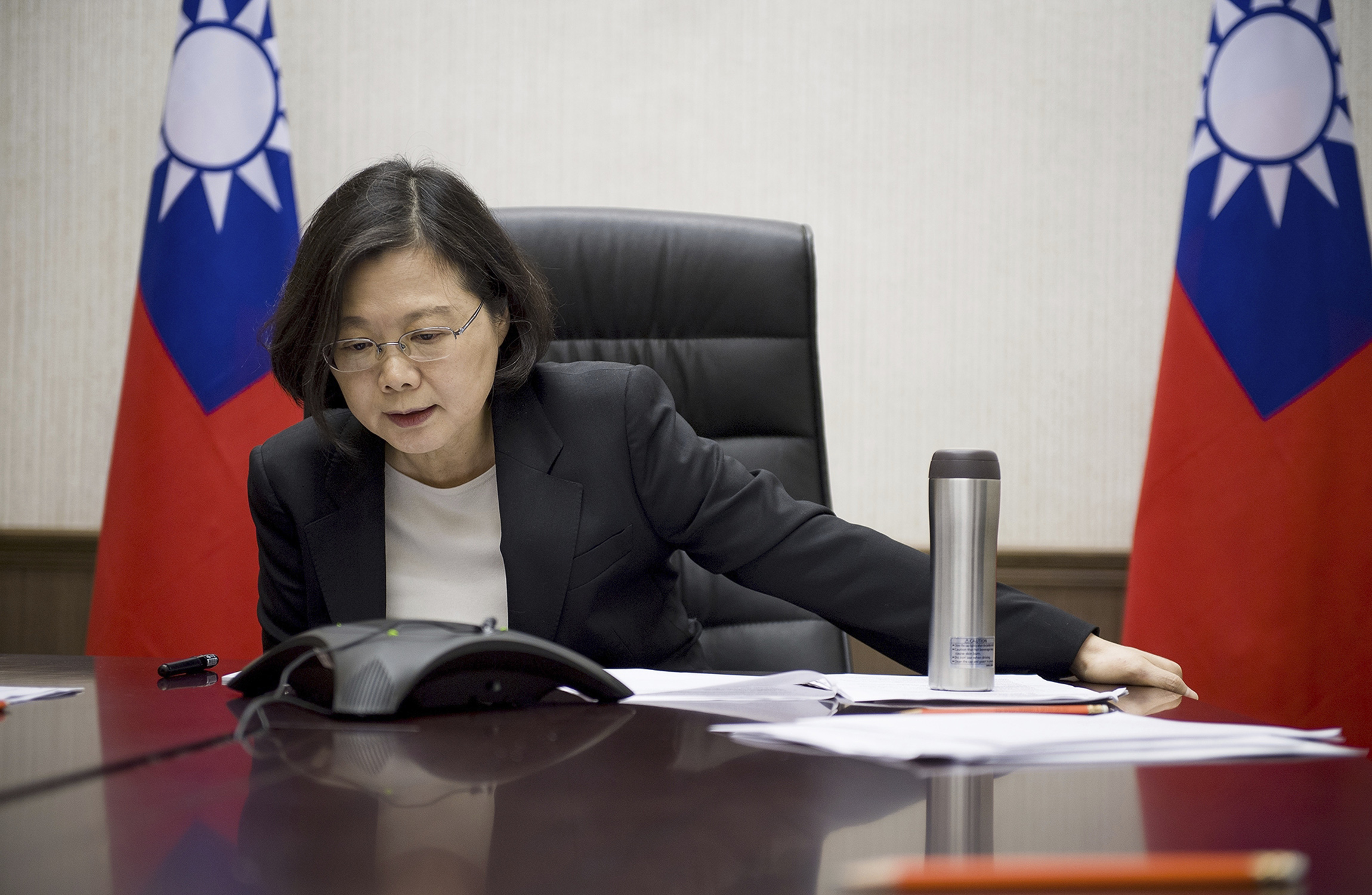
Actively contemplating its own conquest of a neighboring democracy, Taiwan, China wants to ensure that its aggression won’t meet a similar Western response to that which has met Russia’s aggression. Beijing’s fear is that a People’s Liberation Army assault on Taiwan will lead to China’s isolation from the international community.
Recommended Stories


That development would greatly undermine President Xi Jinping’s ultimate long-term objective of supplanting the U.S.-led democratic international order with an order of Chinese communist feudal mercantilism. That is to say, an order in which nations offer Beijing their political obedience in return for China’s disbursing of trade rights and access.
How has Ukraine changed things?
While China has always assumed that an invasion of Taiwan would result in a major U.S. sanctions response, it had also assumed that other global powers would react more cautiously. Alongside French President Emmanuel Macron’s vision of “strategic autonomy,” Beijing has been increasingly optimistic that it could separate the U.S. response to a Taiwan invasion from that of the European Union. This separation would feasibly allow Beijing to retain its global trade interests and weather the short-term condemnation that came with attacking the island democracy.
Yet with the EU and even longtime neutral nations such as Switzerland responding to Russia with wide-ranging sanctions, China has been forced to reconsider its assessment. Reflecting the growing concern in Beijing, Xi held a summit with Macron and German Chancellor Olaf Scholz on Tuesday. Offering a cautious olive branch to the EU, Xi said he “deeply regretted” Russia’s war (though he did not condemn Russia or Putin by name). In a telling example of China’s concerns over Taiwan, however, Xi pressed the EU’s two most powerful leaders to temper their sanctions on Russia. China’s foreign ministry has repeatedly trumpeted this “sanctions are always bad” argument in recent days. On Thursday, spokesman Zhao Lijian argued, “It has been long proven that rather than addressing the problem, sanctions will create new problems.”
The United States should adopt the very opposite argument. Determined to safeguard Taiwan’s democracy and the democratic international order, senior U.S. officials should present what Russia is doing in Ukraine as part and parcel of what China is threatening to do to Taiwan.
U.S. officials should point to the devastation of Ukrainian cities and lives in places such as Mariupol and note that a similar fate likely awaits the people of Taipei. They should make clear that the Xi-Putin partnership is not personal, but rather inherently political — namely, that these two leaders find kinship because they stand for a very different view of human rights than does the democratic world. U.S. officials should impress the point that only the democratic world can defend its values.
Considering the renewal of democratic purpose that the West’s response to Russia has sparked among its populations, this message will have salience beyond Western leaders. Put simply, even if Macron and Scholz are reluctant to draw parallels between Ukraine and Taiwan, many in the European Parliament and in national parliaments will be inclined to do so. The U.S. should then make clear that it would meet a Chinese attack on Taiwan with the same coordinated sanctions response it has applied against Russia.
The U.S. should also point to Ukraine as proof of something else: the ability of a smaller, weaker democracy to resist external aggression from a far more powerful autocracy.
In turn, the U.S. should immediately and dramatically expand the sale of high-quality anti-air and anti-sea missile, radar, and other defensive systems to Taiwan. It should encourage other democracies to do the same, pointing out that a well-armed Taiwan might well defeat a Chinese invasion. Considering that the Taiwan Strait is more than 80 miles in length at its shortest point, Chinese naval forces would have to spend significant time at great risk in order to transit the strait under fire — especially if thousands of anti-ship missiles, fighter jets, drones, and submarines are blitzing them as they do so.
The objective of this effort would be to deter a Chinese war on Taiwan. But considering the almost theological importance Xi puts on his conquest of Taiwanese democracy, the time to act is now. Now, just as Xi is scared and just as Western populations are pressuring their leaders to do more in the defense of democracy.
