

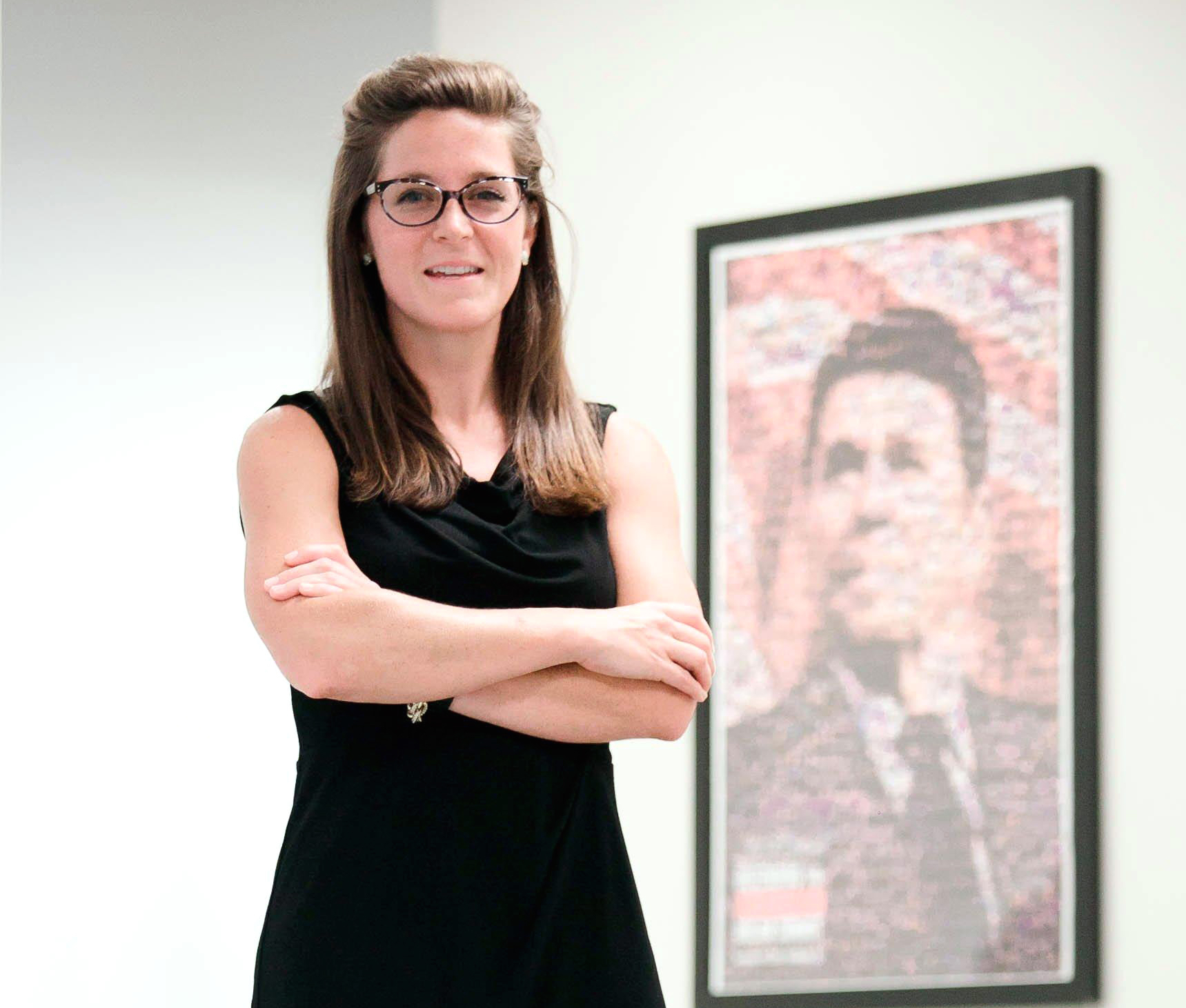
A 26-year-old leads development for one of the Koch brothers’ most influential advocacy groups.
Recommended Stories



Sarah Moore, a St. Louis native and 2011 graduate of Wheaton College in Illinois, started at Americans for Prosperity as a development assistant, eventually began fundraising for the group and was appointed in December to lead its development efforts.
Moore says she sort of fell into the job four years ago — but she joined at a time when the group was dramatically growing in scope and influence. The decade-old group is now a top election-year spender and operates chapters in 34 states where it advocates for limited government, particularly in the areas of healthcare, energy and economics.
The Washington Examiner recently spoke with Moore about her new role, how she got there and what’s next.
Examiner: You started at AFP as a support staffer for fundraisers. Why did you take the job?
Moore: When they started building this fundraising team four, five years ago, it was the first time they built out a support capacity for our regional fundraisers. I was the first person to do that for our development team.
When I met someone from AFP at a Koch function, they said, “This is what we’re looking for, you have to do a lot of research, you have to do a lot of strategic thinking, we’ve never tried this role before.” I supported seven major gift officers. I also worked on events, helped with logistics and the planning. I was able to experience all the different dimensions of our team at a very young age, when we were at a massive growing stage.
Examiner: What happened when they asked you yourself to start fundraising?
Moore: I told them they were ridiculous. I wasn’t qualified for that, but they encouraged me to do it anyway. I was picking up the phone, asking people for meetings and they were laughing at me. I essentially had to build my own caseload. I think that’s one of the reasons why they saw at a young age I had the potential to understand the needs of our team, because I had to start from scratch and develop how to build a portfolio across 10 states.
Examiner: You eventually started raising more money than anyone else. How’d you do that?
Moore: The appropriate dose of humility and hustle. There’s advantage in realizing you’re a rookie.
Examiner: But seriously, how’d you do it?
Moore: It was “how many meetings can I get.” I wanted to have more meetings than anybody else on the team because I knew my starting point was different than anyone else. It was just kind of a numbers game. You can work hard, you can hustle, but ultimately you’re putting yourself in a position to get lucky a little bit. My travel schedule was so hectic because I had to work harder to figure out how to build those relationships. The way I look at it is the numbers are just a byproduct of a relationship that’s functioning the right way.
Examiner: How did you get such a big promotion at such a young age?
Moore: They appreciated that I was a really hard worker. The reason I was told I was promoted was because I had integrity. At AFP, we have this very high emphasis on culture, things like humility, respect and integrity. We believe authentic production doesn’t occur if you don’t develop those principles. Those are the kind of leaders they’re looking for at AFP and the kinds of leaders they tend to develop.
Examiner: So what does your job encompass now?
Moore: I manage about 35 people — the folks that run our direct mail program, major gifts team, events team and our support team. We have about six managers. I probably spend most of my time with that team. About 25 percent of my time is actual fundraising with those high-level donors. Most of them are at the $100,000-plus level.
Examiner: How do you convince people decades older than you to give you their money?
Moore: At first I thought my age was a disadvantage. I’d go into meetings and wear the Hillary pantsuit. I’d wear vintage jewelry and try to make myself look older than I was. I never shared my age with anyone.
It wasn’t until I had some real breakthrough conversations with a donor where I realized that at the end of the day, the product is me. When they see a young person who shares the vision — who understands the threats politically, culturally, to our society — they get really excited. It wasn’t until I owned my age and kept wearing my goofy hipster glasses that I started to have success as a fundraiser and realized I don’t have to pretend I’m older than I am.
Examiner: Which issues do you think motivate donors the most?
Moore: I think my job as a fundraiser is to effectively share the mission of the organization … but it’s also to really get to know that donor’s experience and interest based on the industry they’ve worked in for their whole life. When we go to them, it’s not, “Hey, we have everything figured out, give us money.” It’s “let’s figure out where our visions intersect and where we can make a difference.”
Examiner: AFP has been trying to reach a younger, poorer and more diverse crowd with its limited-government message, yet aren’t your donors still overwhelmingly older and white?
Moore: I’m not sure I’d characterize our donors as old and white. I’d characterize them as successful entrepreneurs. I think there is a big push to expand our donor base and the different types of people we reach. Through our Bridge Program, we’re meeting with communities we never thought possible.”
Examiner: How do you motive donors in an off-election year?
Moore: In an off-year I think there’s a real advantage to being at AFP, because we’re not focused on elections. It’s kind of hard to pull people’s attention away from elections because one election isn’t going to change the country. Because we’re about building long-term institutions, our donors and activists understand we’re just as important on Nov. 5 as we were on Nov. 4.
Examiner: For a while, you were traveling every week. How’d you cope?
Moore: Once you figure out how to make it more enjoyable, it can work. I travel with soap so everything always smells clean. I bring Clorox wipes. I sleep with white noise every night. You find your favorite bars and restaurants in all the different cities you visit. Sometimes I show up and I just want to read the Wall Street Journal. Sometimes I’m there to visit and keep up with old friends.
Examiner: How do you keep up with all the policy news in Washington?
Moore: The Wall Street Journal is my best friend. We also have an incredible policy/government affairs team that meets with our team every week that keeps us looped in with the issues. We come together once a week as a team to determine what is our pitch, how can we nuance it, what are the top policy items we need to incorporate on our discussions with donors.
Examiner: Why work for Americans for Prosperity and not some other group?
Moore: What has really been missing in the right-of-center movement is that grassroots component which can take those policy items fostered at the think tank level and make that digestible to the public. What’s fun for me is being at a “do tank” instead of a think tank.
To be at AFP for almost four years, that’s kind of a long time because there’s so much turnover in the nonprofit D.C. world. It’s tough work, it is grueling, it’s intense. I’m only 26 years old and I already have chest pains. But the work is so rewarding because you see it every single day.
Examiner: Do you have any professional mentors?
Moore: I love mentorship — I have a couple mentors. Marilyn Bush who works at Bank of America in St. Louis — incredibly wonderful, successful, brilliant. And there’s a couple sales managers I meet with on a regular basis to get their input into the energy industry.
Examiner: Where would you like to see your career go long term?
Moore: A lot of my friends would say I’m extremely career-focused, but I would say I’m incredibly mission-oriented. So I don’t really think much about where I want to take my career as much as it goes back to “what are the talents God has given me, and how can I use these to learn and grow.” I never looked for AFP. AFP kind of found me, and I’ve been so grateful for all the opportunities I’ve had here. I’m not focused on my career. I just ended up here, and I don’t know what the next step is.
