

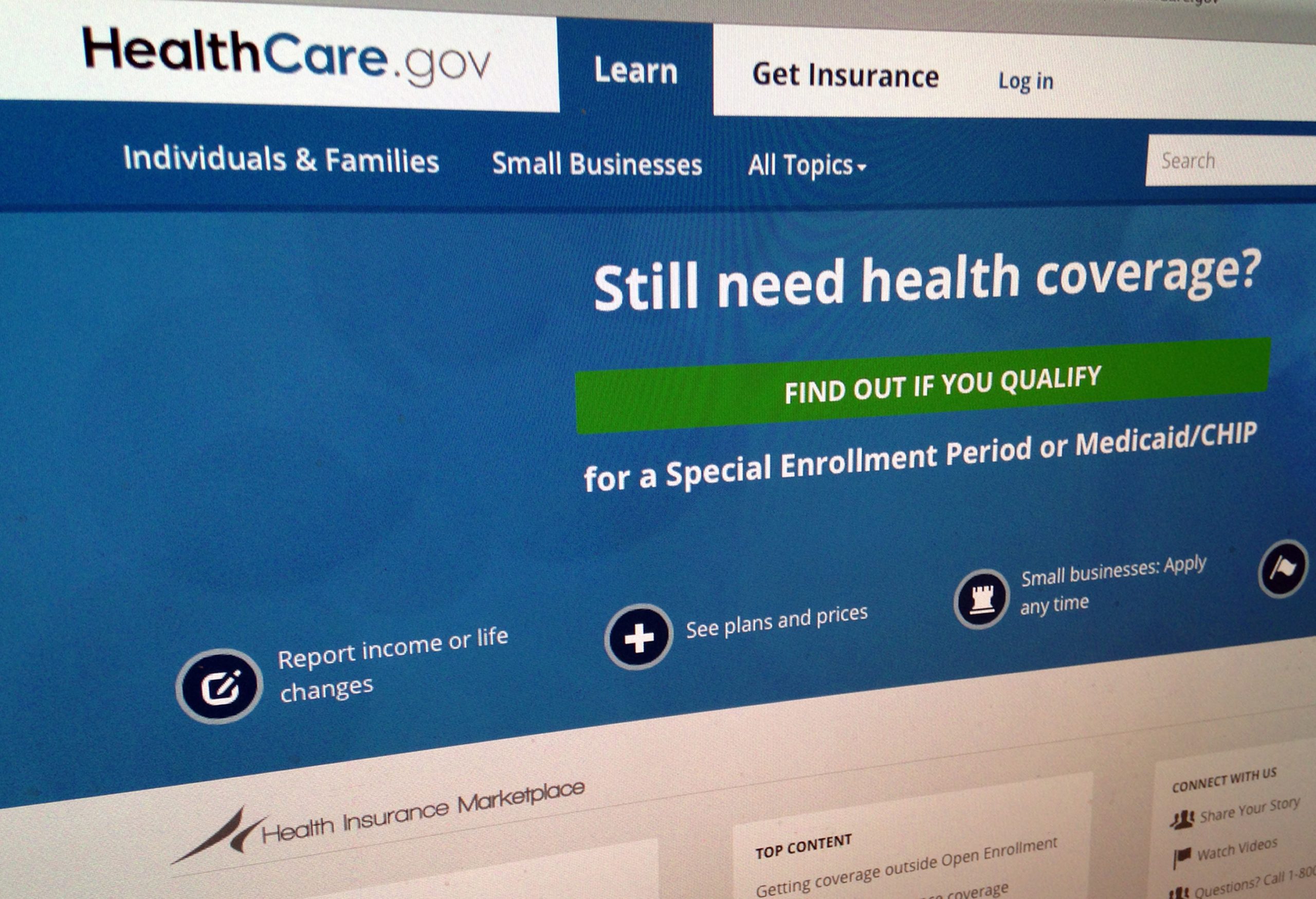
Shopping for health insurance on healthcare.gov starting Sunday will find fewer plans offered by about the same number of insurers, the Obama administration announced Friday.
A snapshot of the plans being sold on the Obamacare online marketplaces this year shows that the average consumer will have 50 plans to choose from in their county, down from an average of 58 plans last year.
Recommended Stories



But the number of insurers selling the plans is inching up slightly, averaging five issuers per county instead of four like last year.
“That really is enough to drive some pretty robust competition,” Richard Frank, HHS assistant secretary for planning and evaluation, told reporters.
The question of competition in the marketplace is one of great concern to both advocates for the Affordable Care Act — who want to ensure low-income people shopping there have affordable options — and opponents, who have charged that President Obama’s signature healthcare law would harm competition and bump prices upward.
The more plans that participate in the marketplaces, the more incentive they’ll have to offer consumers attractive monthly premiums, lower deductibles, better cost-sharing and more comprehensive coverage.
It’s unclear exactly why insurers have reduced their plan offerings this year, but the Department of Health and Human Services suggested in a brief that they’re responding to consumer demand.
“In many cases, reductions in the number of plans available will have little or no practical effect on the scope of options available to consumers, either because the eliminated plans were unpopular with consumers or because those plans were very similar to other plans that will continue to be offered,” HHS wrote.
After a turbulent first year of enrollment, in which healthcare.gov was widely criticized for massive technical failures, the administration has managed to get the website on a better footing and convince millions of Americans to sign up for coverage.
But even with the improvements this year, it faces a big challenge in convincing the remaining uninsured to sign up, especially with premiums rising in the vast majority of states. Monthly premiums for the average benchmark “silver” plan are rising by 7.2 percent, but that varies dramatically by state.
Officials are emphasizing that most Americans eligible to buy plans on the exchange, chiefly those who don’t have coverage through their employer and can’t enroll in Medicaid, can qualify for tax credits to make it more affordable.
About eight in 10 enrollees will qualify for enough subsidies to reduce their premiums to below $100 a month, while seven in 10 could have a monthly cost below $75, the administration said.
“We know for the remaining eligible uninsured, cost is a top concern,” said HHS Assistant Secretary for Public Affairs Kevin Griffis.
Enrollment begins on Sunday and lasts through the end of January.
