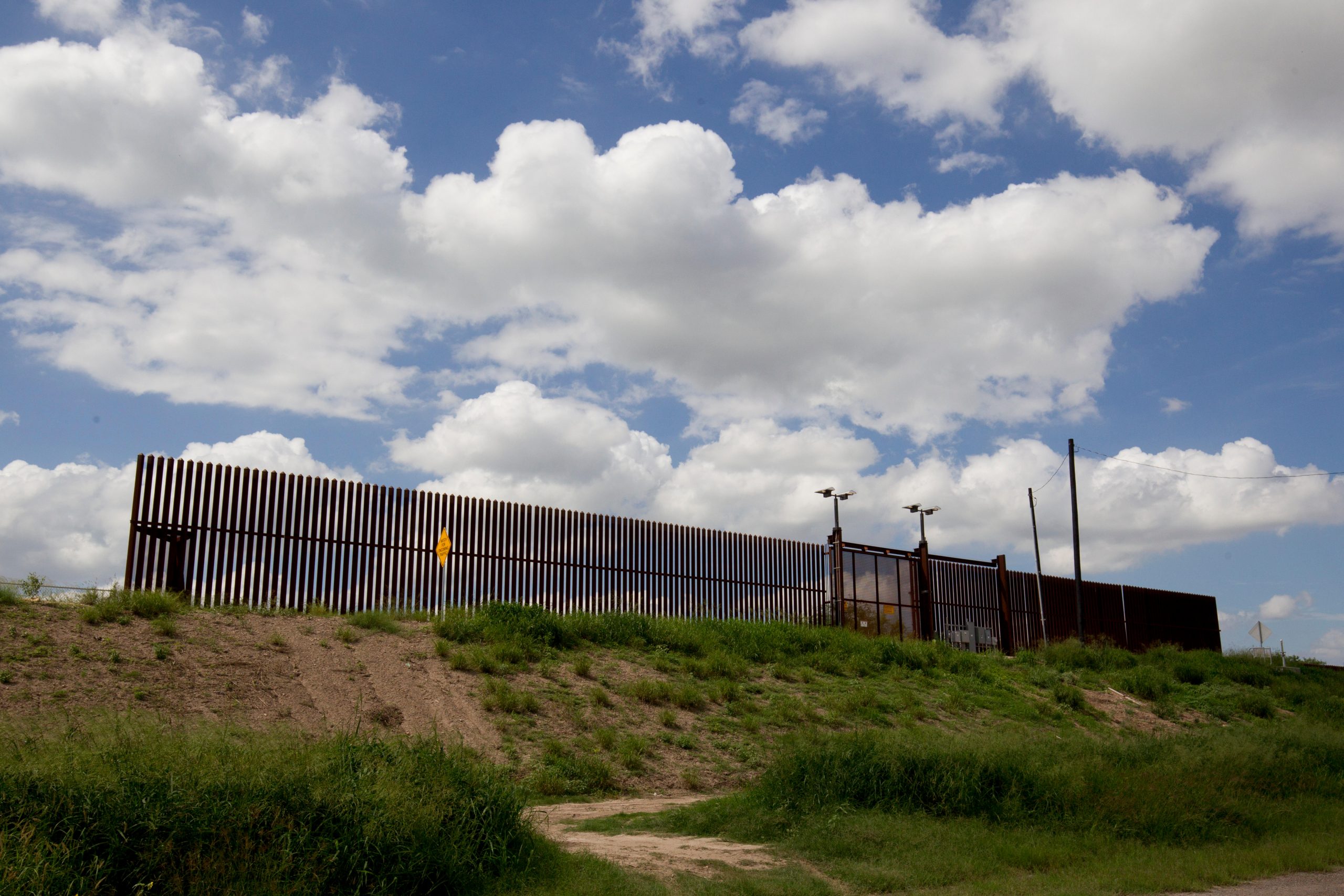
President Trump is making good on his campaign promises to curtail illegal immigration, signing two executive orders at the Department of Homeland Security headquarters Wednesday afternoon. Of the two directives, one pertains to the construction of a 2,000-mile wall along the Mexican border; the other to the denial of federal funds to “sanctuary cities.”
Here’s Reuters on the executive orders:
President Donald Trump on Wednesday signed directives to build a wall along the U.S. border with Mexico and crack down on U.S. cities that shield illegal immigrants, proceeding quickly on sweeping and divisive plans to curb immigration and boost national security. The Republican president is also expected to take steps in the coming days to limit legal immigration, including executive orders restricting refugees and blocking the issuing of visas to people from several Muslim-majority Middle Eastern and North African countries including Syria, Sudan, Somalia, Iraq, Iran, Libya and Yemen. Trump signed two executive orders during an appearance at the Department of Homeland Security, one on building a wall along the roughly 2,000-mile (3,200-kilometer) U.S.-Mexico border and the other to strip federal grant money from “sanctuary” states and cities, often governed by Democrats, that harbor illegal immigrants.
THE WEEKLY STANDARD’s Chris Deaton recently wrote on both parties’ history of support for a physical border construction, remembering 2006’s Fence Act, a potential funding mechanism for a wall, and parsing the challenges it poses:
A majority of Senate Democrats, including their new leader, Chuck Schumer, approved the Secure Fence Act. The legislation called for double-layer fences, “additional physical barriers,” and new surveillance equipment along five particular stretches of the southern border. Endorsing it may have amounted to necessary election-year politics. But some lawmakers didn’t just allow their votes to do the talking. “Democrats are solidly behind controlling the border, and we support the border fence,” California senator Dianne Feinstein declared at the time. She is one of seven Democrats in the upper chamber today to have supported the measure—one lawmaker short of the eight that Republicans need to meet a 60-vote threshold to secure new money for that wall. It’s a fact the majority is sure to dangle before the public as Congress takes up the issue. The substance of the matter, however, is more complicated. An omnibus appropriations bill altered the Fence Act significantly a year after it was enacted. Texas Republican senator Kay Bailey Hutchison and a Democratic House colleague pushed through an amendment requiring the federal government to consult local officials, Indian tribes, and property owners before receiving the money to build. Hutchison also secured language that struck the double-layer constraint and inserted a mandate of at least 700 miles of “reinforced fencing” somewhere along the border, eliminating any mention of the five specific areas of construction in the original legislation. The changes were sold as providing the secretary of homeland security flexibility in executing the law. But immigration hawks and the bill’s own author, New York representative Peter King, saw them as weakening the statute. The overhaul erected bureaucratic hurdles instead of a fence, critics charged, and whatever fence ended up being built was liable to be ineffective. “This was a midnight massacre. It was absolutely disgraceful,” King said in 2007.
According to Reuters, Trump will meet next week with Mexican President Enrique Pena Nieto. Nieto has flatly denied Trump’s repeated claim that Mexico will pay for the border wall—or, at least, will somehow reimburse the United States for the cost of its construction.