

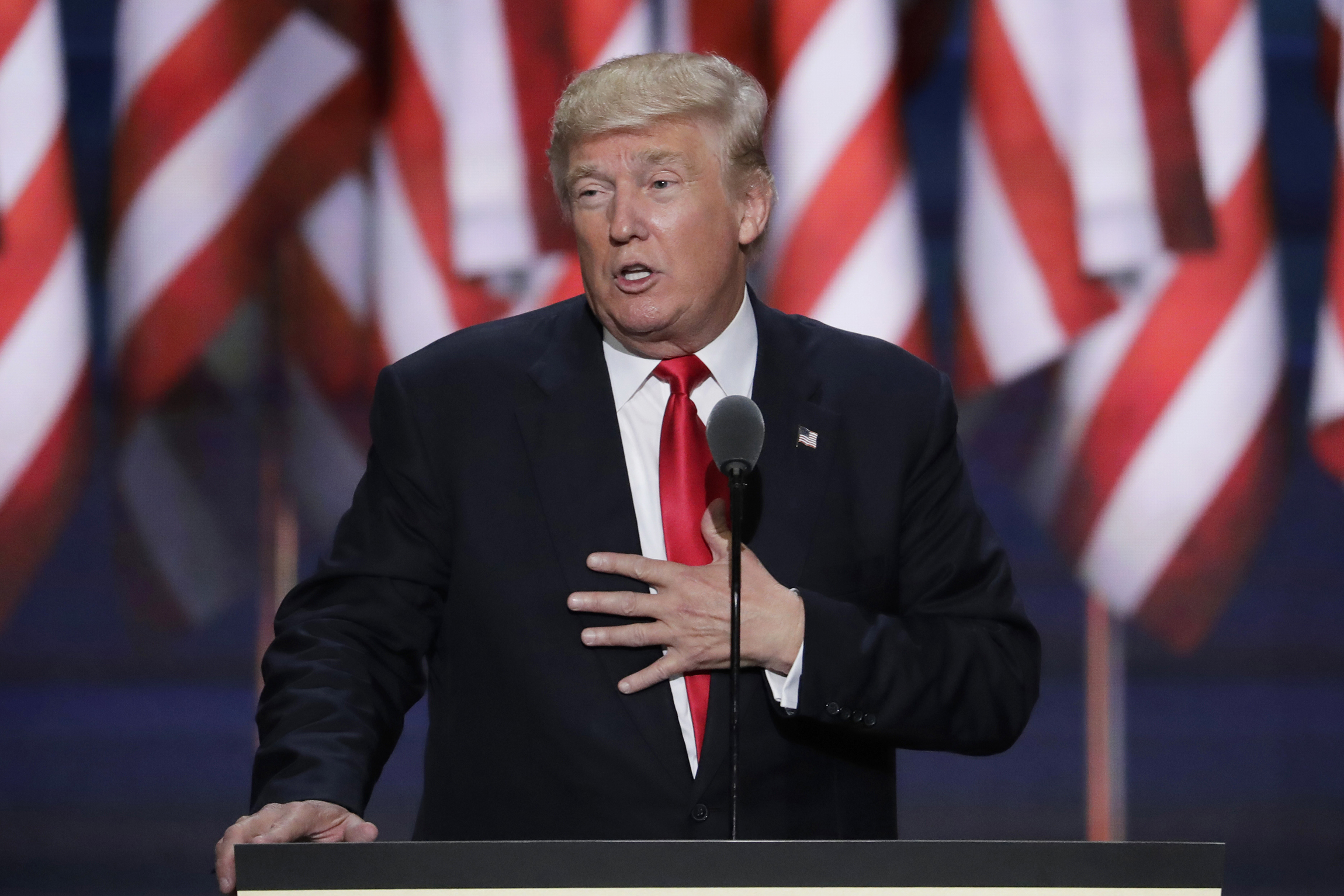
We’ve argued before that Donald Trump is a poor messenger for an important message. It’s a message that should be heeded not because his policy prescriptions are the right ones — many would, we believe, be damaging if implemented. It should be heeded, rather, because it captures real and justified concerns shared by millions of Americans.
On Thursday night, despite undisciplined ad libs that sapped his convention speech of energy, Trump came closer than ever before to becoming an effective messenger. Beneath his occasionally mangled delivery was the voice of millions of people who feel left behind, vulnerable and dismayed by political and cultural developments at home and abroad.
Recommended Stories

We continue to disagree with many of his specific policies. This includes his damaging dedication to tariff wars and to closing lucrative markets to American exports. It also includes his weird desire to mollify Russian President Vladimir Putin, head of a hostile foreign nation more dangerous even than Iran.
But Trump is not wrong when he excoriates officials who pay too little attention to the physical protection of Americans in their own country, and that includes protecting them from convicted criminal immigrants.
Although he has not been consistent on any aspect of foreign policy, Trump is also on to something with his new rhetoric about bringing a sense of restraint to the projection of American power. He is right, too, to cite Islamist terrorists as this nation’s enemy.
His call to stanch the flow of immigrants from countries known to foment terrorism will be regarded as beyond the pale only by those who are reflexively hostile to him and his party. In this speech, he avoided the toxicity, xenophobia and self-wounding commentary to which he has been prone during the past year.
Trump is no orator. He is unpracticed and unskilled delivering important set-piece texts. But despite these shortcomings, we suspect that the message he delivered Thursday while accepting the Republican presidential nomination will resonate with a wider audience across America than he has reached before.
When he talks about the striking and sudden increase in violent crime in America’s 50 largest cities, he is talking about something that even residents of Washington, D.C., can attest to. When he discusses the stagnation of working-class wages, he may not be speaking from personal experience, but he is not speaking into a vacuum either.
Thursday night’s speech is likely to serve Trump better than his sophisticated critics expect, for he managed mostly to avoid distractions and say what millions of voters want to hear.
It may be enough to turn what had been an ineffective, even counterproductive, convention into a plus for his campaign. Hillary Clinton’s inner circle may be smirking just a bit less today than they were on Thursday morning.
