

President Trump this week threatened to partially shut down the federal government unless it approves funding for his border wall, but lawmakers from both parties say that isn’t going to happen.
Publicly, Trump is keeping people guessing, as he made a few threats late in the week to reject spending bills for fiscal 2019 that don’t include border wall money.
Recommended Stories


“I would do it because I think it’s a great political issue,” Trump told reporters on Air Force One on Friday when asked about a shutdown.
[Related: Trump ‘willing to do anything’ to secure border wall funds]
But Republican leaders are desperate to avoid the last-minute spending fights that have plagued Congress for years. The GOP has worked with Democrats to move 2019 funding bills faster than any time in decades, and they are reasonably sure they have a deal with Trump to fund the government without a big fight over the border.
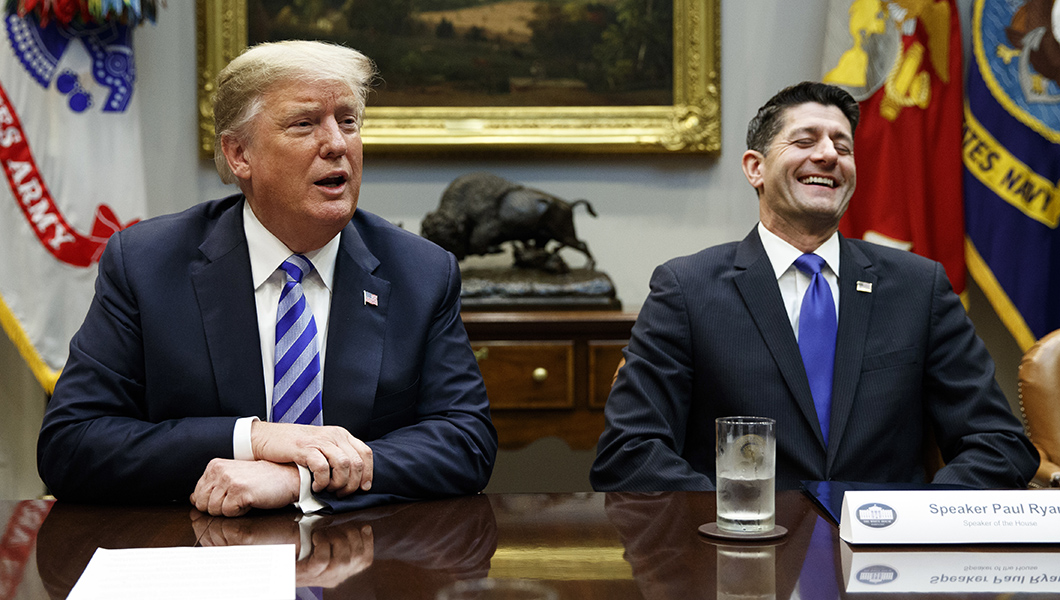
House Speaker Paul Ryan, R-Wis., told reporters that despite Trump’s threats, he is certain the president will sign the 2019 spending bills because of private discussions held with the GOP leadership.
Ryan, McConnell, and other top GOP leaders met with Trump last week at the White House and, according to a GOP aide, the group reaffirmed a plan to complete 2019 government funding in September.
“We have a good understanding,” Ryan said. “I’m confident our understanding will stick.”
Still, Trump has made it clear he’s under pressure from supporters to deliver on the wall, a goal that has eluded him more than 18 months into his presidency.
“There are a lot of politicians that I like and respect and are with me all the way that would rather not do it because they have races, they’re doing well, they’re up,” Trump said on Air Force One about the idea of a shutdown. “The way they look at it, might be good, might be bad.”
Border security funding is normally budgeted in the Homeland Security spending bill, but GOP lawmakers want to postpone the bill until after the election along with two other spending measures.
The House and Senate versions contain different funding levels for a wall, which is certain to trigger a bipartisan battle and the kind of spending gridlock both parties are eager to avoid weeks before the November midterm elections. That means Trump may end up having to sign a temporary spending bill to keep Homeland Security operating at 2018 levels and it would not include any new wall funding.
The House is scheduled to vote on the first three bipartisan spending bills after Congress returns Sept. 12. Federal funding runs out on Sept. 30 and lawmakers are eager to pass the majority of 2019 spending bills before that deadline.
The House is set to vote next week on the first tranche of funding, containing a bill that would pay for energy and water projects, military construction, veterans affairs, and the legislative branch.
Since the legislation is a compromise measure negotiated with Senate lawmakers in both parties, it could also pass the upper chamber as soon as next week, although Majority Leader Mitch McConnell, R-Ky., has not yet scheduled it for a vote.
Once the bill clears the Senate, it will be up to Trump to sign it into law.
Lawmakers will then take up a bill funding agriculture, transportation, financial services, and Department of Interior programs.
A third bill likely to get a vote in September would fund the Defense Department and the departments of Labor, Health and Human Services, and Education.
