

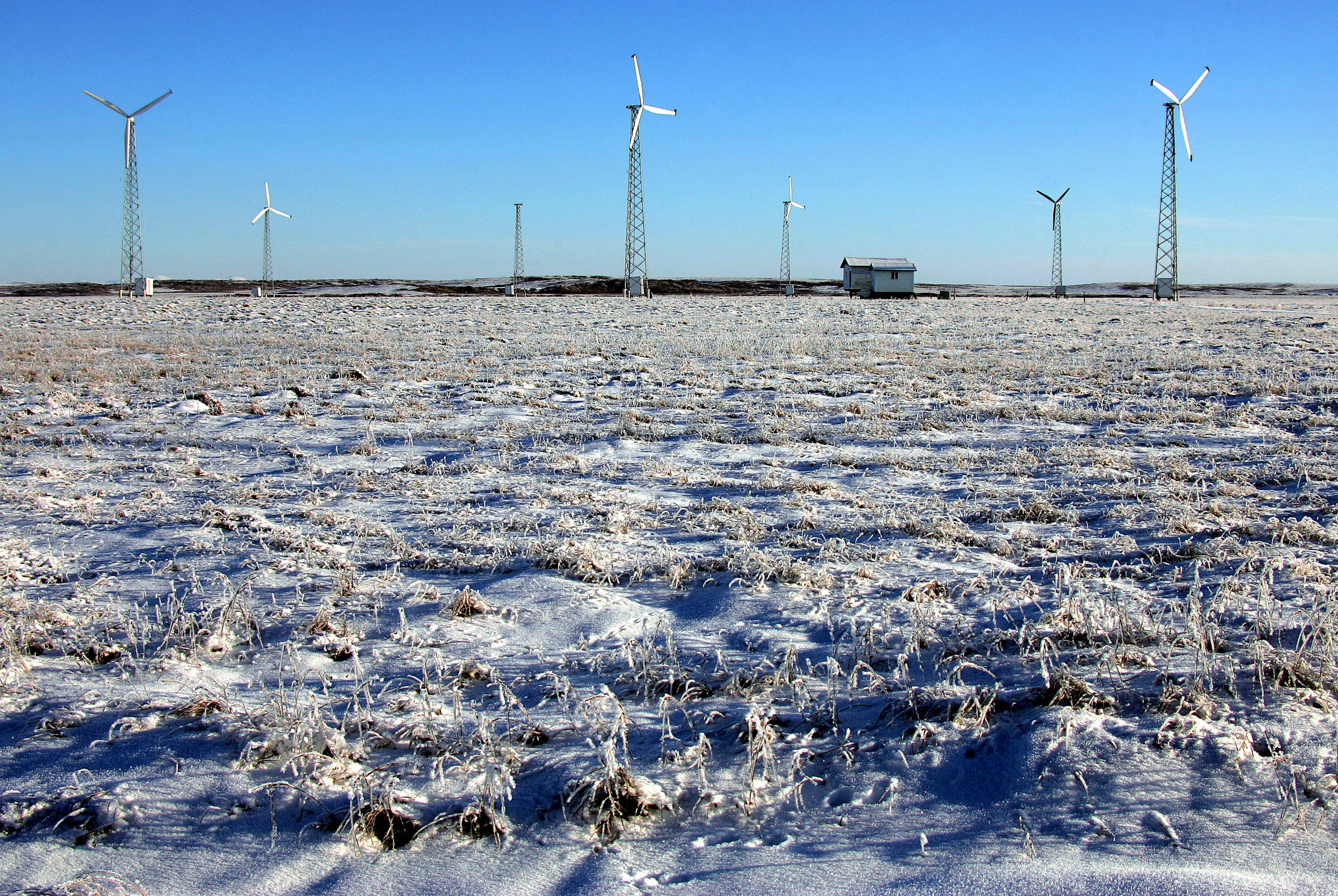
President Obama is announcing a number of actions on Wednesday with the goal of transforming Alaska from a fossil-energy user to a clean energy leader, while pumping up funding to make the state more resilient to climate change.
To help accomplish this task, the White House is placing a little-known government agency called the Denali Commission in charge of beefing up the state’s rural energy resources.
Recommended Stories


The commission was established by Congress in 1998 with the mission of helping to improve utilities and energy resources for the hundreds of rural communities that dot the Alaskan countryside. The communities are susceptible to high energy costs due to over-reliance on diesel fuel, which is hard to transport to remote communities and drives up costs exorbitantly.
The Denali Commission has been examining ways of transitioning the state away from expensive diesel power for electricity and heating, with more reliance on distributed wind systems and central power stations.
The president’s announcement Wednesday will lend funding to the effort, while also slightly changing the mission of the commission from improving rural utility services and lowering cost to making Alaska more resilient to the effects of climate change.
A White House fact sheet calls the commission the “federal coordinator for building climate resilience in Alaska.” The term “climate resilience” is a catchall used by the administration to mean anything that helps a community, or state, cope with the effects of global warming through changes in infrastructure or improved fuel and electric power resources.
“The White House will announce that the Denali Commission will play a lead coordination role for federal, state and tribal resources to assist communities in developing and implementing both short- and long-term solutions to address the impacts of climate change, including coastal erosion, flooding and permafrost degradation,” the fact sheet reads.
It says the commission will serve as a “one-stop-shop for matters relating to coastal resilience in Alaska as appropriate,” receiving input directly from a special council on the Arctic that the president set up earlier this year.
The commission will be coordinating its efforts with state, local and tribal authorities. It also will be given $2 million, in addition to its $14 million budget, to fund resilience activities that include “voluntary relocation efforts” to move people from their homes, “where appropriate,” as a response to the effects of climate change.
The Denali Commission will announce another $15.5 million to construct new power plants and create fuel storage facilities across rural Alaska.
That funding will be augmented by $4 million in Energy Department dollars to be used to accelerate clean energy solutions for the state that are affordable and reliable. The money will be used to develop energy-efficiency practices for rural communities.
The White House also is helping to launch the Clean Energy Solutions for Remote Communities initiative with the state to develop clean energy solutions to move it away from expensive fossil fuels.
“Energy costs are among the most significant expenses in remote communities, many of which rely on costly diesel generators to provide power and heat,” the White House fact sheet reads. “Over the past decade, Alaska has focused on bringing cleaner, cheaper energy to our many isolated rural communities, where residents pay up to 50 percent of their household income on energy.”
The clean energy initiative for the state will seek to leverage billions of dollars in private capital to spur investment in Alaska’s clean energy infrastructure, to both reduce energy costs and carbon dioxide emissions that are blamed for manmade global warming.
Kodiak Island will be launching a pilot project with the goal of transitioning its shipping facilities to 99.7 percent renewable energy, opening a $3 million loading crane powered by renewable energy in the coming days, says the White House.
In addition, the Department of Housing and Urban Development will be developing a set of principles to be used across federal agencies for relocating people from areas at risk of flooding due to global warming. The National Oceanic and Atmospheric Administration will be giving $300,000 to help foster ways Alaska’s native coastal communities can adapt to climate change by anticipating changes in the environment before they occur.
The Federal Emergency Management Agency also will be meeting with tribal leaders to develop a plan for dealing with changes in environment due to climate change.
Wrapping up the effort, the state will host a Clean Power Forum next month “designed to kick off a series of conversations about how Alaska can reduce emissions, increase renewable energy production and energy efficiency measures, and become a true leader addressing climate change.”
