

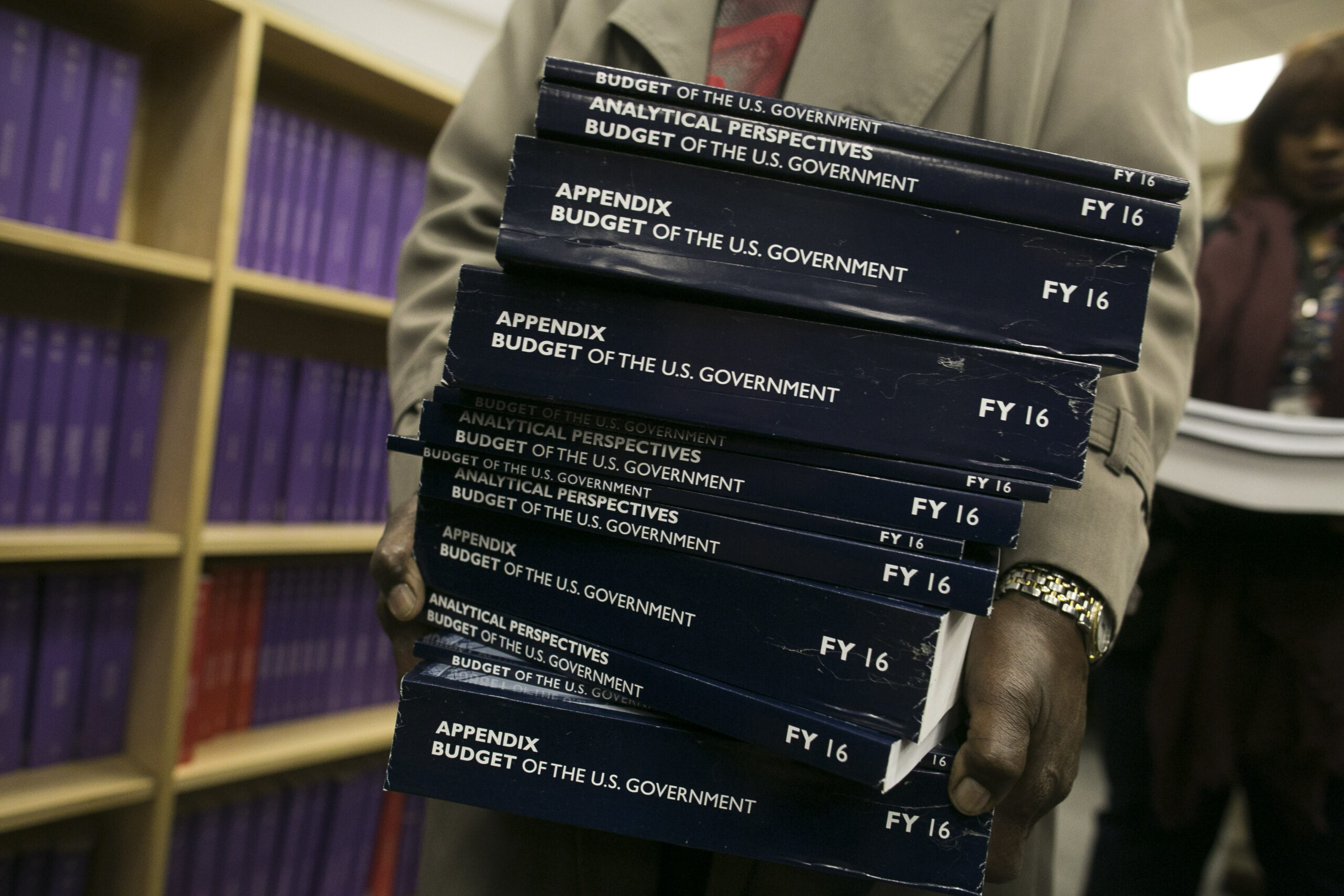
President Obama’s proposed fiscal 2016 budget would reduce deficits by $1.2 trillion over 10 years, according to the Congressional Budget Office.
The budget office, which serves as Congress’ in-house budget accountant, on Thursday released its projections of the White House budget published in February.
Recommended Stories



Its assessment of Obama’s plans for taxing and spending mostly followed the White House’s own projections. Over 10 years, annual deficits would total $5.98 trillion under Obama’s policies, the budget office projects, just $300 billion more than the White House’s own projections.
The budget office sees the Obama proposal pushing the deficit below $400 billion next year, and then slowly expanding it the rest of the decade. In 2025, the federal debt would total 73 percent of U.S. economic output, roughly the same as where the White House pegged it. Under current law, the budget office would expect the debt to hit 77 percent of gross domestic product by then.
The biggest savings to the Treasury in the Obama budget would come from tax increases, the biggest of which would be a limitation on the amount of deductions and exclusions taxpayers can claim. That would raise an additional $530 billion over 10 years. Tax increases on capital gains and dividends ($230 billion), corporate earnings held overseas ($210 billion), and estate taxes ($153 billion) would be among big revenue producers.
The administration’s plans for reducing Medicare spending would spare the deficit $240 billion.
Passing an immigration reform bill along the lines of the one that passed the Senate in 2013 also would be a net boost to the budget of $158 billion. Large-scale immigration reform would entail big increases in government spending but also in taxation, netting out to savings for the Treasury.
Those savings would be offset by the president’s spending plans. Most notably, he would undo the spending caps negotiated between the White House and congressional Republicans, and introduce a number of new or expanded refundable tax credits for low-income families and children, as well as for college.
Lower spending and higher taxes would mean that the government would spend less on interest payments on the debt, saving the Treasury $153 billion.
