

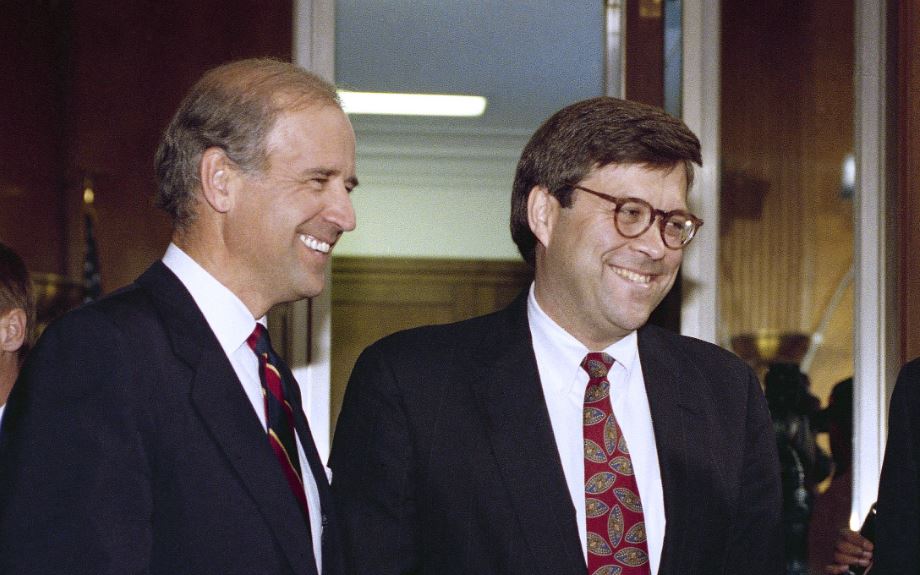
More than likely, the confirmation hearings of William Barr will stand as bookends between an era of civil disagreement and partisan resistance.
Consider the first time Barr was nominated to serve as attorney general in 1991 by President George H.W. Bush. According to reports, the Senate hearing was “unusually placid.” But there was one remarkably frank exchange between Barr and then-Sen. Joe Biden.
Recommended Stories



When asked about the right to privacy and “a woman’s right to choose,” Barr said the right existed but explained that “I do not believe it extends to abortion.” He went farther, saying that Roe v. Wade was wrongly decided adding that the question of allowing abortion is “a legitimate issue for state legislators. That’s where the decision ought to be.”
Younger political observers will be surprised by the result. No one screamed, no one shouted, and no one was arrested. Instead adults had a discussion. Biden even complimented Barr.
Biden, who noted he did not agree with Barr, the Los Angeles Post reported at the time, said the nominee’s response was “the first candid answer” he had heard on the question. “It’s astounding to me,” Biden said. “You should be complimented.”
If this happened today, not only would Barr’s nomination be in trouble, Biden’s career would in peril for even entertaining the possibility of disagreement over a woman’s sacred right to choose. It isn’t difficult to imagine the corresponding riots that would break out in the committee, on Twitter, and cable news if this exchange happened today.
Don’t expect civil disagreement when Barr comes before the Senate Judiciary Committee again. Expect a second Spartacus moment from Sen. Cory Booker, D-N.J. Expect non-sequitur needling from Sen. Mazie Hirono, D-Hawaii. Expect general hysteria.
