

The surprise adoption of an amendment to require Congress to vote on new military authorization for the president may well end up being sidelined by GOP leaders, but their doing so would still require the first House vote on presidential military authority in 15 years.
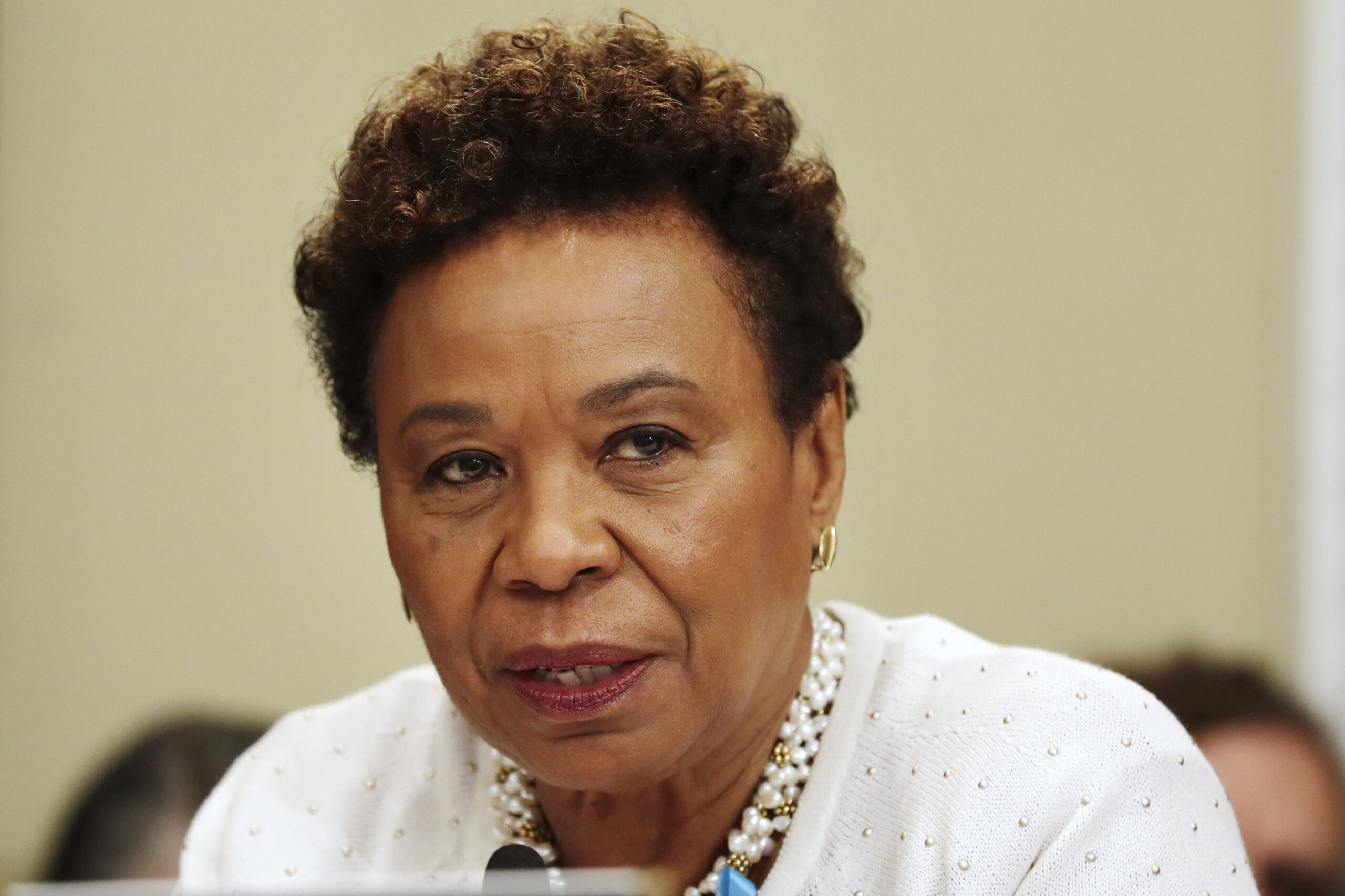
Rep. Barbara Lee, an anti-war progressive California Democrat, proposed the amendment to revoke the 2001 Authorization for Use of Military Force, which Presidents Bush, Obama and Trump have utilized to carry out military missions overseas. Lee’s amendment sets a 240-day deadline for Congress to pass a new authorizing measure.
Recommended Stories


House appropriators passed the amendment at the committee level on Thursday in a voice vote, catching the rest of the GOP conference off guard and pleasantly surprising anti-war Democrats.
But top Republicans Thursday wouldn’t promise to include the provision when the defense spending measure makes it to the House floor.
They could move to rule the provision out of order, using the argument that spending bills are prohibited from changing existing law. But even if they do, that will require a roll call vote, the first on an Authorization for Use of Military Force in years.
“It’s going to have to be dealt with,” House Rules Committee Chairman Pete Sessions, R-Texas, whose panel sets the terms of debate on bills, told the Washington Examiner. “The committee does not have the jurisdiction on the issue.”
A spokesperson for House Speaker Paul Ryan, R-Wis., said there is no commitment to keep the provision in the bill.
“We are having conversations about that,” the spokesperson said.
There are several avenues GOP lawmakers could use to strip out the Authorization for Use of Military Force revocation.
The House Rules Committee could strike it from the bill. Or it could be removed via a floor amendment or a manager’s amendment. But all three changes would require passage by a majority in the House.
The vote to include Lee’s amendment in the must-pass defense spending bill caught top GOP lawmakers off guard and came after the committee engaged in a debate on the matter.
“We are at war against an enemy that did not exist in a place we did not expect to fight, so how an AUMF that was passed 16 years ago, before I was in Congress, could possibly be stretched to cover this is just beyond belief to me,” Rep. Tom Cole, R-Okla., a senior member of the panel, said in support of Lee’s amendment.
Lawmakers for years have dodged voting on a new AUMF because few want to take what would amount to a war vote. The House last voted on military authority in 2002, when it passed the Iraq War resolution.
But a significant and growing number of lawmakers believe the broader 2001 law needs to be updated because U.S. military action overseas has changed dramatically since the days after the Sept. 11, 2001, terrorist attacks that were used to justify the current AUMF.
Republican leaders plan to talk to the GOP appropriators who voted for the measure to gauge their desire to keep it in the bill, aides told the Washington Examiner. But even if it stays in, it would have to clear the Senate and win Trump’s signature.
Republican senators have held briefings with the Trump administration about its plans to combat terrorism in the Middle East but have not discussed an official AUMF proposal. Some GOP senators believe it is time for Congress to vote again on the matter.
Senate Majority Leader Mitch McConnell, R-Ky., said earlier this year he would consider a new AUMF if Trump sent one to Congress.
In the House, the House Foreign Affairs Committee has sole jurisdiction over military authorizations, said spokesman Cory Fritz. But he would not say whether GOP votes in favor of Lee’s amendment would prompt the Foreign Affairs panel to consider a new AUMF resolution.
