

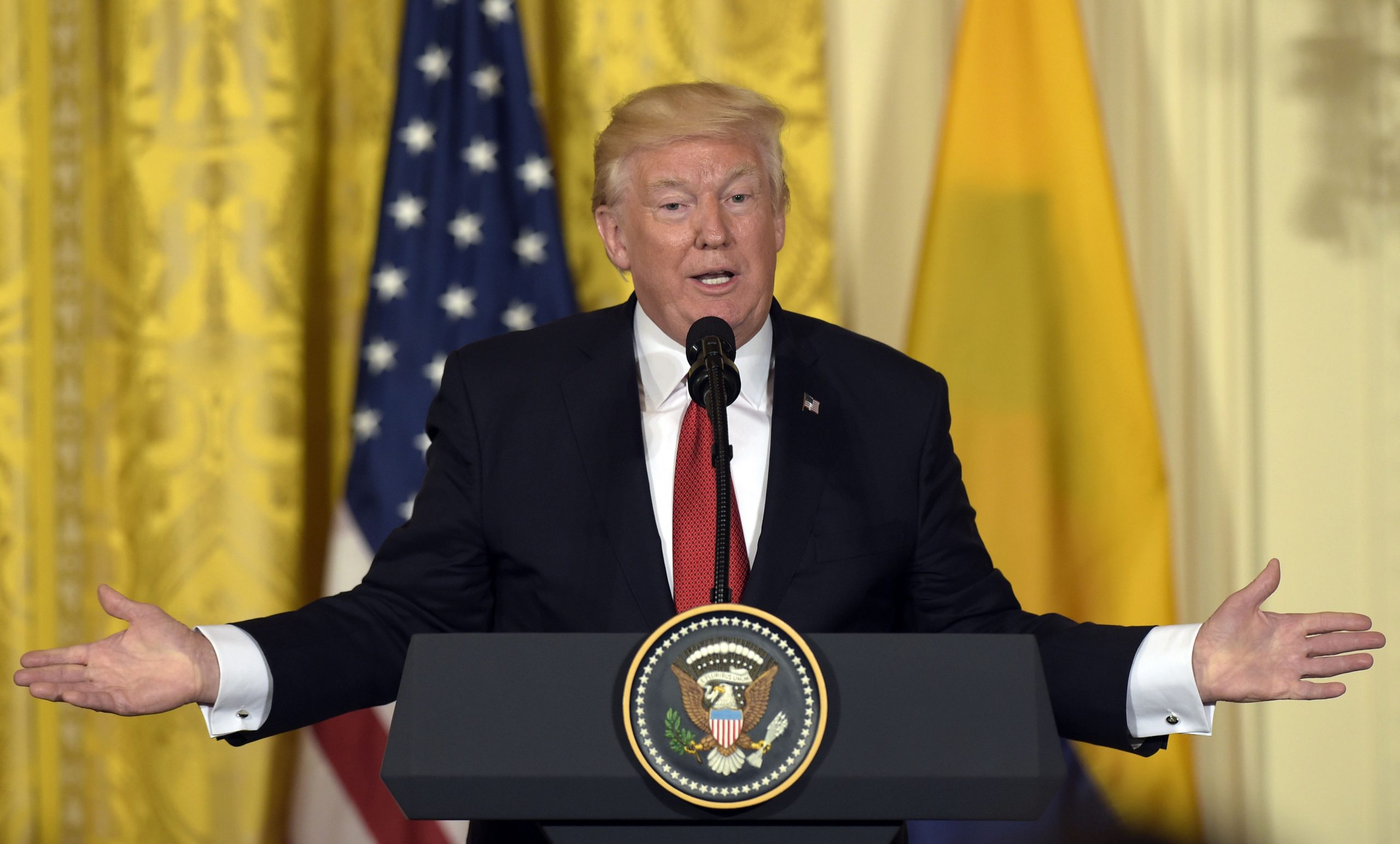
President Trump worked this week to revive his legislative agenda and kick off his administration’s pursuit of an infrastructure overhaul, but the attention devoted to former FBI Director James Comey’s congressional testimony demonstrated how difficult it will be to get back on track.
Trump’s efforts to expedite legislative priorities that had stalled amid controversy included a meeting with House and Senate leaders on Tuesday, which was followed by a private dinner with a handful of national-security-focused Republican lawmakers that evening.
Recommended Stories


One GOP congressional aide noted this was “not the first overture” the White House had made toward Republicans on Capitol Hill. But another told the Washington Examiner that Trump’s team has been “very hands-off” when it comes to big-ticket items like Obamacare repeal and tax reform.
A third Republican aide said Treasury Secretary Steve Mnuchin and Budget Director Mick Mulvaney had recently met with members about tax reform.
“But I expect to see a bigger push in coming weeks,” that aide said.
Several Republican staffers pointed to Vice President Mike Pence as the most visible face of the Trump administration’s congressional outreach over the past month. However, one staffer acknowledged that Trump has impressed some members with his personal touch and his ability to recall details about individual lawmakers.
In the nearly five weeks since Trump removed his FBI director, the Russian election-meddling probe that was once under Comey’s purview has threatened to overtake the White House and grind its agenda to a standstill. West Wing aides faced a daily barrage of questions about the investigation and Comey’s involvement with it until, in late May, they began referring all Russia-related inquiries to Trump’s outside counsel.
Mark Serrano, a Republican strategist, said the move to direct those questions toward Marc Kasowitz, Trump’s attorney, could help the administration tremendously in its efforts to advance beyond the controversies.
“That was a very necessary and prudent measure for the sake of the country, for the sake of the operations for the White House,” Serrano said.
After a week of hearings and revelations that saw multiple current and former administration officials deny encountering interference in the Russia probe, the White House should take advantage of the momentum it now has, Serrano argued.
“I think the administration should first value and appreciate the point they’ve reached,” he said. “It’s demonstrated that the there’s no shred of evidence of Russian collusion. There’s not a shred of evidence that there was any obstruction of justice.”
But Trump’s agenda won’t progress without the assistance of Republicans on Capitol Hill, Serrano cautioned, and uniting those lawmakers around Trump’s agenda remains a challenge.
“I think congressional Republicans are as conflicted today as they were a year ago about Donald Trump,” Serrano said. “He’s an outsider, he’s a disrupter, and not all of them — but many of them — are part of the problem. They are part of the, you know, the establishment elites, and they are reluctant to embrace him.”
Ford O’Connell, a Republican strategist, said the GOP could be running out of time to notch any legislative accomplishments before the midterm elections sweep some Republican House members out of office.
“Congressional Republicans have to grow a backbone. They have to realize that, in terms of numbers, it’s not going to get any better than it is right now,” O’Connell said of the House majority. “You’ve got to produce some deliverables, basically.”
Trump’s top two legislative priorities — an Obamacare overhaul and tax reform — have hit roadblocks in the House and Senate thanks to dissent within Republican ranks about the direction of those policies. And this week, administration officials piled on a third policy initiative by announcing its renewed push for an infrastructure package before the end of the year.
“When we talk about Obamacare and we talk about tax reform or tax cuts, these are not just Trump items that are just separate from the GOP agenda like, say, the wall might be,” O’Connell noted. “These are items that [Republicans] promised no matter who the president is.”
Beyond the friction Trump has encountered on Capitol Hill, the president may find his own habits a hindrance to his return to governing.
Trump’s unpredictable use of Twitter, a staple of his political career since it launched in 2015, has become an obstacle to his efforts at building goodwill in Congress. Confronted with a steady stream of controversial or inaccurate tweets from the president, many Republican members have chosen to distance themselves from Trump rather than wade into the quicksand of defending Trump from himself.
