

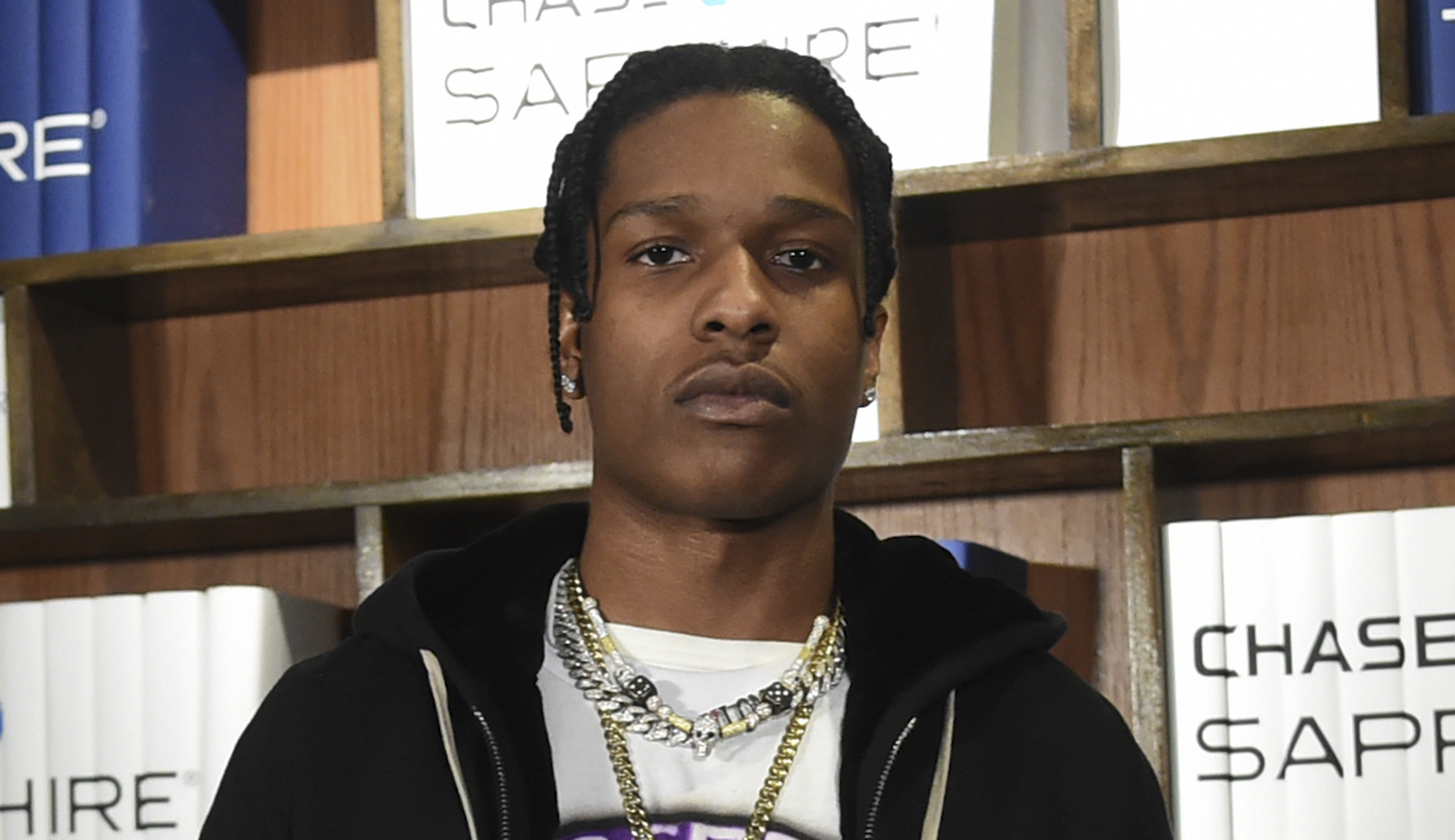
A$AP Rocky has just been found guilty of assault in Sweden, but the verdict comes a little late. Thanks to President Trump and Kim Kardashian, the rapper has already returned to the United States.
His case, which lit up the internet last month with its confluence of pop culture — the reality TV star-turned president joined the reality TV star-turned-criminal justice reform advocate to defend a Harlem-born rapper — has generally united Americans. (Sen. Kamala Harris, D-Calif., appeared to express the minority opinion by calling Trump’s involvement a misuse of power.)
Recommended Stories


At least we can all agree that we never thought we’d see Trump tweeting, “A$AP Rocky released from prison and on his way home to the United States from Sweden. It was a Rocky Week, get home ASAP A$AP!”
Welcome to 2019.
It’s interesting, though, that many onlookers appeared to support A$AP Rocky, whose real name is Rakim Mayers, in the conflict. In a dustup involving Rocky and a couple of his crew members, Rocky claimed a man who had been following his entourage was actually the one who threw the first punch.
According to the New York Times, “The judges found his defense unconvincing. ‘Based on two witness statements, the court finds the defendants were not subject to imminent attack,’ the judgment said. ‘Therefore, the defendants were not entitled to use violence in self-defense.’”
As Swedish journalist Nathalie Rothschild wrote for Variety, some onlookers tended to take sides based on which party in the conflict appeared to be part of a more aggrieved group. It was A$AP Rocky, the 30-year-old African American rapper, versus Mustafa Jafari, a 19-year-old Afghan refugee.
“In fact, the affair highlights the limits of characterizing people as either victimized or privileged by virtue of their ethnicity and then judging their behavior accordingly,” Rothschild wrote. “That clouds rather than clarifies reality. We’d do better coolly to consider the facts, which of course the Swedish court has tried to do during its deliberations.”
In addition to highlighting the way intersectionality reduces the chances justice, the case brings up another question: Why were Americans so eager to see A$AP Rocky get off with just a slap on the wrist? Was it because they didn’t realize his counterpart was a young refugee, or was it because we still, despite our commitment to identity politics, prioritize the rich and powerful?
Maybe A$AP Rocky is the protagonist of this story because he gave our summer one of its most absurd headlines. In the entertainment industry, all press is good press.
