

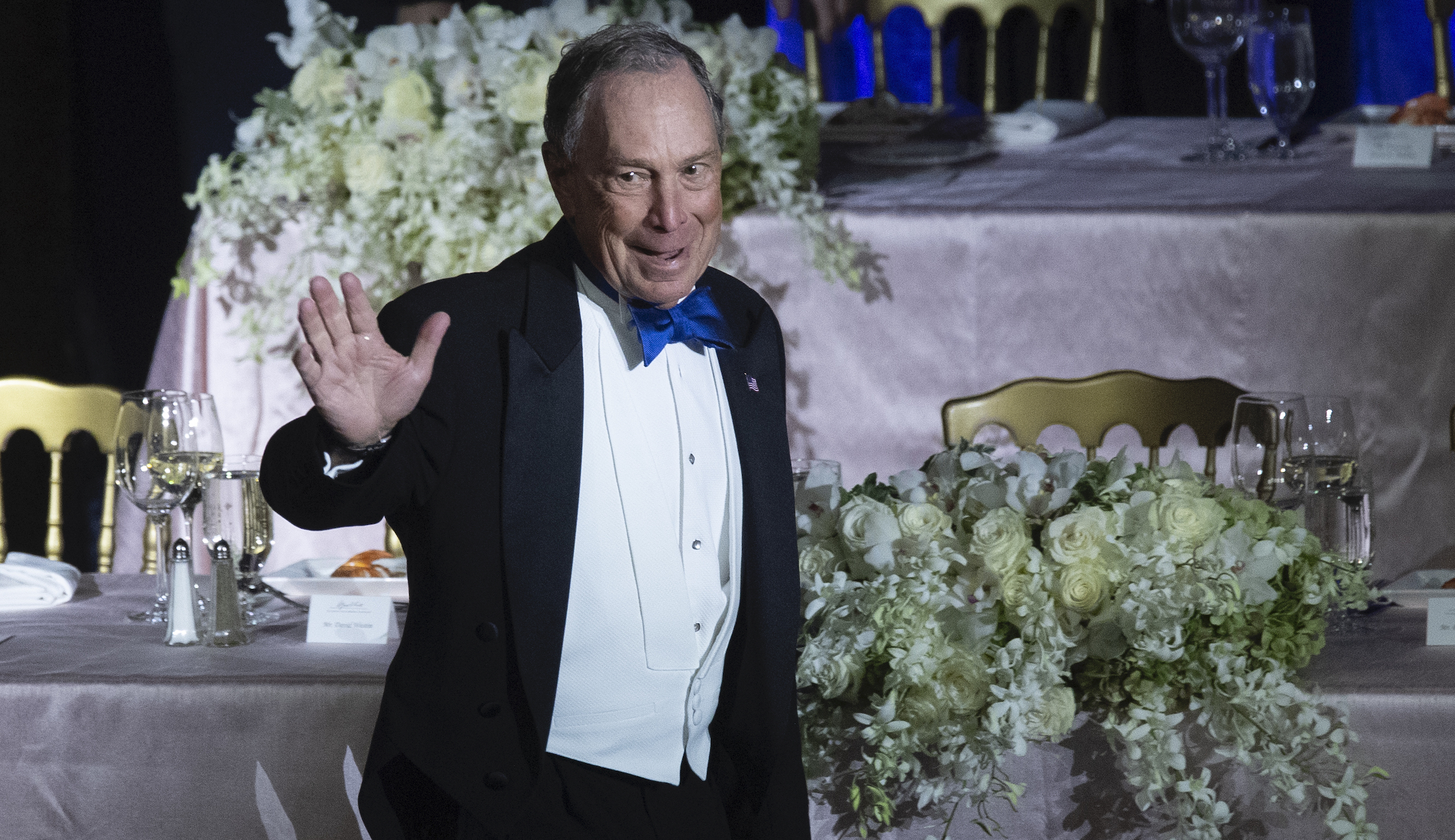
With his expected late entry to the Democratic presidential primary, Michael Bloomberg hopes that he can find success by breaking campaign norms — something that fellow wealthy businessman President Trump proved was possible during his 2016 campaign.
But that may not be so easy for Bloomberg, New York City’s mayor for 12 years starting in 2002, and a multi-billionaire through his eponymous financial services information and news company.
While Trump built a new coalition and subverted traditional Republican policy messaging with his combative personality, he entered the race relatively early and spent many months building campaign infrastructure before the first primary contests.
“Trump behaves in an unconventional way and frankly, unacceptable, but he ran a traditional campaign. He competed in a pretty traditional way,” said Democratic strategist Mary Anne Marsh.
Bloomberg, 77, has the money to build a campaign team before the Feb. 3rd Iowa caucuses but little time to do so. And without 200,000 unique donors, he would not qualify for the December primary debate, a threshold that may increase for future debates. Bloomberg might not accept campaign contributions, according to Axios.
Bloomberg, unlike Trump, also has a conventional political background and history of supporting within liberal advocacy groups.
“He was a mayor for 12 years. He has a long track record of funding and leadership on a variety of public policy issues,” said Simon Rosenberg, president of the New Democrat Network and New Policy Institute. “He’s not an outsider businessman. He’s already made the transition to being a politician a long time ago.”
[Related: ‘Little Michael will fail’: Trump rips Michael Bloomberg’s 2020 chances]
That history could be a liability for liberal activists energized by drastically changing political and economic structures. Several Democratic presidential hopefuls — including Massachusetts Sen. Elizabeth Warren, who has proposed a wealth tax on ultra-millionaires and billionaires — have condemned a potential Bloomberg run and accused him of trying to buy the presidency.
Bloomberg, though, appears to be hoping to capture more moderate voters. Last month, he reportedly indicated he would consider a presidential bid if former Vice President Joe Biden appeared unable to win.
A New York Times/Siena College poll of Democrats in six key battleground states released Friday found voters preferred a centrist candidate who could work across the aisle with Republicans. The survey suggests the 2020 Democratic primary field is fertile ground for a Bloomberg-like contender as pundits question the durability of Biden’s campaign.
Bloomberg’s history and influence could provide a boost to his candidacy.
“He is a far more formidable politician than people really understand,” Rosenberg said. “He might surprise people with the amount of support he gets from allied groups and other politicians in the early stages.”
But Marsh said that Bloomberg’s approach of swooping in to pick up support from a faltering Biden and other less liberal candidates like South Bend, Indiana, Mayor Pete Buttigieg, California Sen. Kamala Harris, and New Jersey Sen. Cory Booker is “flawed.”
“That’s now how the process works. And it’s not where the Democratic primary and the party is today,” Marsh said.
Other candidates have spent months appealing to voters in early primary and caucus states, where election results can quickly change the course of the primary. A March Des Moines Register/CNN/Mediacom poll found Bloomberg with a negative 11% net favorability rating among likely Democratic caucus-goers in Iowa.
“He is not a great fit for these early states, and he’s gonna have a lot of work to do to succeed there,” Rosenberg said.
Naomi Lim contributed to this story.
