

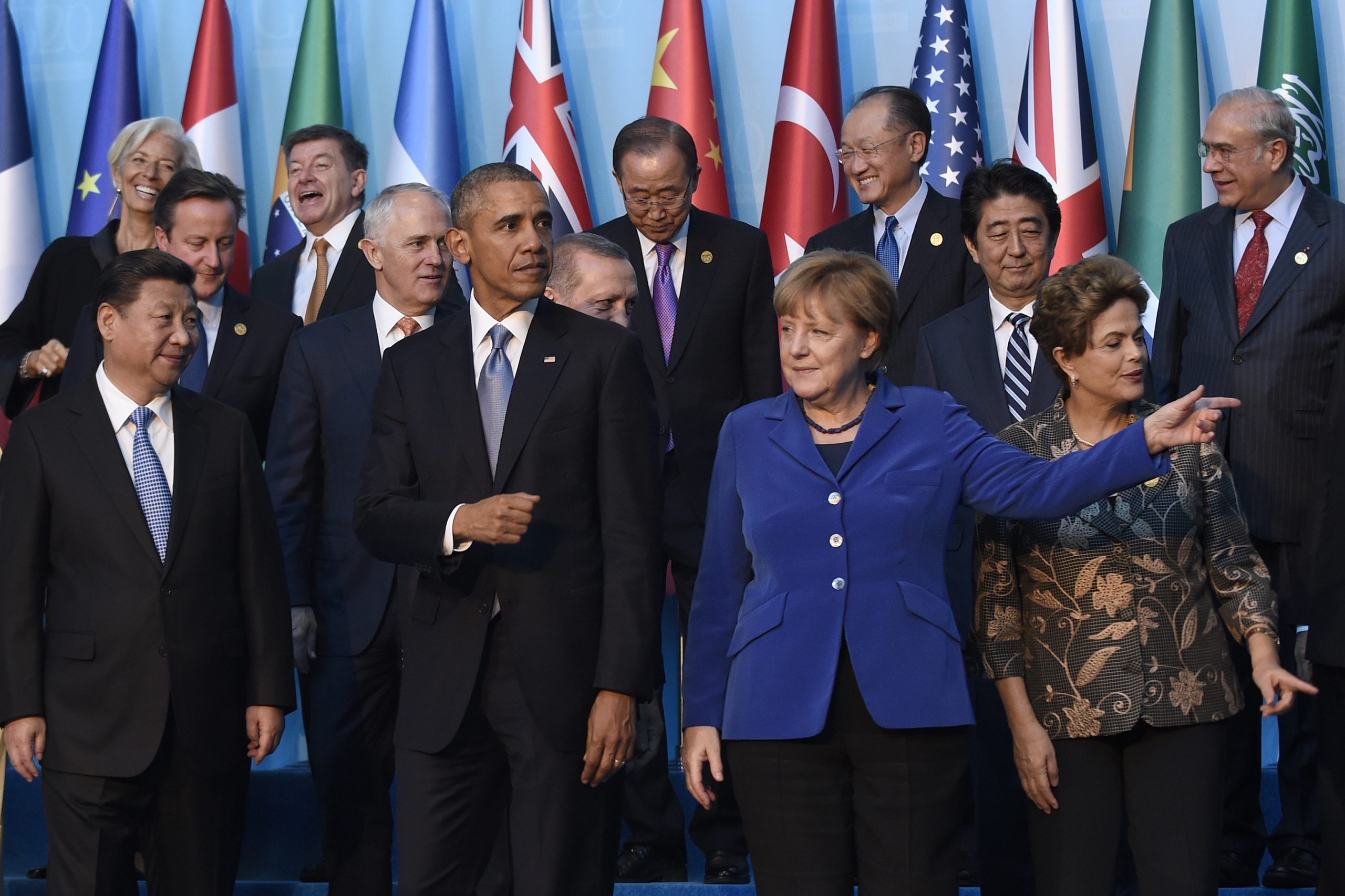
The G20 nations have agreed to a set of cybersecurity norms that include a prohibition of commercial espionage.
“Given growing cyber threats, we committed to a set of norms — drafted by the United States — for how governments should conduct themselves in cyberspace, including a commitment not to engage in the cyber theft of intellectual property for commercial gain,” President Obama said in a press conference following the G20 Summit in Turkey on Tuesday.
“We are living in an age of Internet economy that brings both opportunities and challenges to global growth,” the G20 participants said in a communique. “In the [information and communications technology] environment, just as elsewhere, states have a special responsibility to promote security, stability and economic ties with other nations. In support of that objective, we affirm that no country should conduct or support ICT-enabled theft of intellectual property, including trade secrets or other confidential business information, with the intent of providing competitive advantages to companies or commercial sectors.”
Related Story: http://vip-stage.washingtonexaminer.com/article/2575923
The agreement represents a culmination of U.S.-led efforts to establish cybersecurity norms with the U.N.’s Governmental Group of Experts over the past several years. The U.S. has sought primarily to obtain agreement that countries should not damage each other’s critical infrastructure; engage in commercial espionage; or obstruct emergency response teams seeking to mitigate the damage from cyberattacks.
Christopher Painter, the coordinator for cyber issues at the State Department, praised the development. “It’s remarkable the amount of progress we’ve been able to make on this in a fairly short period of time,” Painter told the Washington Examiner.
In a prominent May speech delivered in Seoul, Secretary of State John Kerry affirmed those principles. “All of those ones he mentioned were embodied in the GGE text, which was welcomed by the G20,” Painter said, and added that the agreement “really promotes the idea of international law applying to certain norms of behavior within cyberspace, and greater cooperation around the world.”
The development follows separate but similar bilateral agreements reached between China and the U.S. in September and China and the U.K. in October. All three countries are members of the G20.
China’s agreement with the U.S. resulted in a commitment to engage in regular ministerial meetings to review progress that has been made. The first is scheduled to take place in Washington, D.C., on Dec. 1-2, where Attorney General Loretta Lynch and Secretary of Homeland Security Jeh Johnson will lead the U.S. delegation.
