

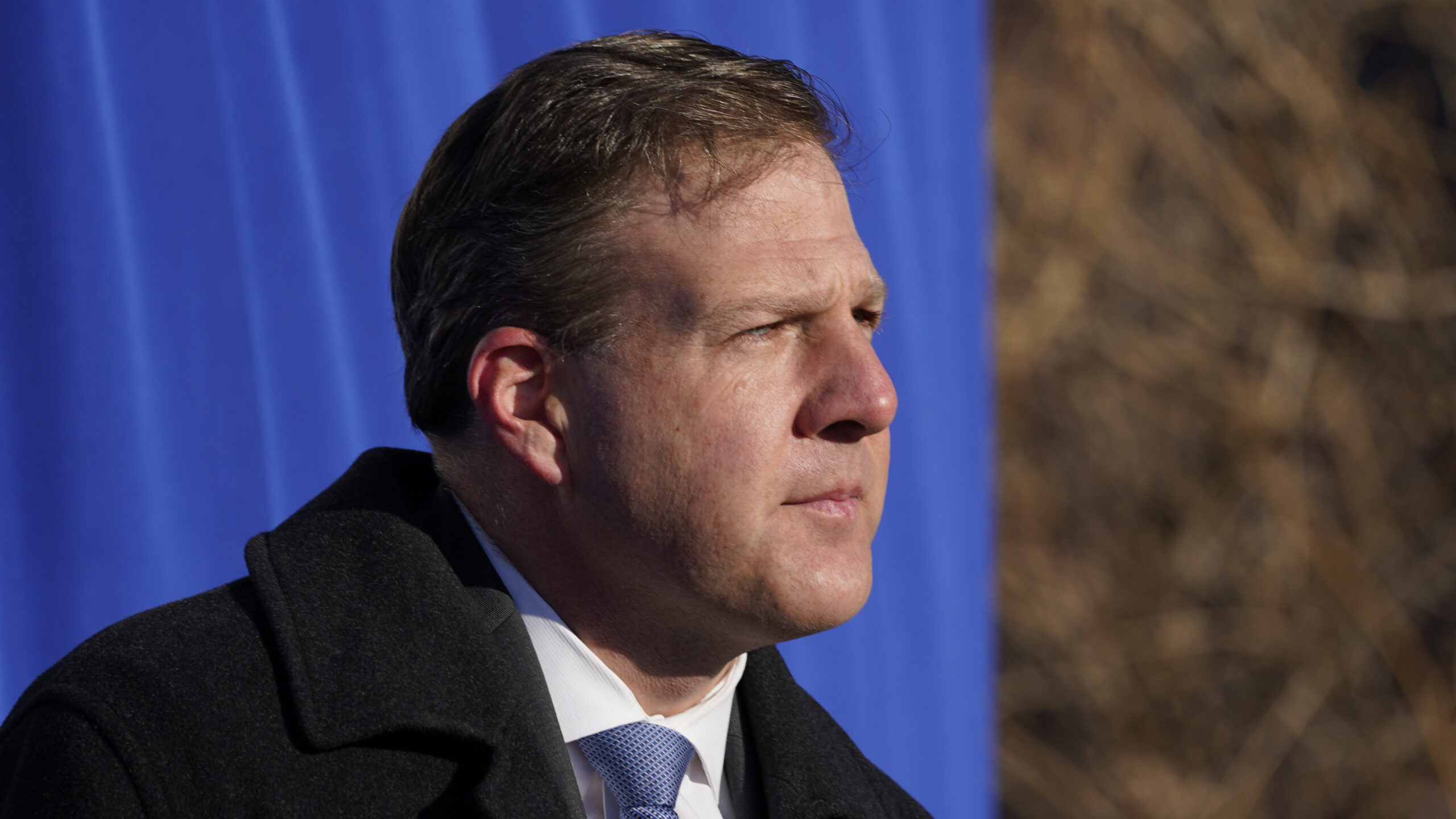
The Republican-led New Hampshire state Legislature passed a new congressional map on Thursday over the objections of the GOP governor as the state scrambles to apportion its federal districts.
Republican Gov. Chris Sununu dashed hopes that the Legislature’s map, which would have likely cemented a 1-1 partisan split between Republicans and Democrats for the state’s two congressional districts, would become law, quickly pledging to veto the bill on the grounds that it was too partisan.
Recommended Stories



“The proposed congressional redistricting map is not in the best interest of New Hampshire, and I will veto it as soon as it reaches my desk. The citizens of this state are counting on us to do better,” he said Thursday.
NEW HAMPSHIRE REPUBLICANS DIVIDED ON HOW AGGRESSIVELY TO GERRYMANDER HOUSE SEATS
New Hampshire’s state Senate passed the map in a narrow 13–11 vote Thursday without amending the version that previously cleared the state House. Now, the lawmakers are set for a showdown as Republicans in the Legislature lack the votes to override Sununu’s veto.
Until Thursday, Sununu, a centrist who was unsuccessfully courted by national Republicans to entertain a Senate bid, had been coy about whether he would buck his own party with a veto. He had been outspoken about his objections to the map and expressed hope that the state Senate might improve the map put forward by the House.
.@GovChrisSununu is hopeful congressional redistricting maps will be amended on @TheNHSenate floor, cites concern for an engaged electorate: “That’s what we’re known for, that’s what we are… that’s what I’m looking to preserve more than anything.” #NH01 #NH02 #NHPolitics #WMUR pic.twitter.com/ArAAdZT1Ig
— Adam Sexton (@AdamSextonWMUR) March 9, 2022
Currently, Democrats hold the state’s two congressional seats, but both are considered competitive, according to FiveThirtyEight. The Left, reluctant to risk losing control over one of the seats, has roundly denounced the new map, with high-profile lawyer Marc Elias signaling he might take legal action if the new lines are approved.
If the map were to go into effect, it would be one of the most drastic congressional redistricting changes in the state since the 1880s, deviating from the historical reliance on the Merrimack River to divide the two districts. Haunted by a decade in which Democrats have dominated control over the two seats, Republicans in the state Legislature find the guarantee of representation appealing.
But Sununu maintained that Republicans can win both seats if the party leaves them competitive and contended that congressional lines should reflect the fact that New Hampshire is a competitive state.
“I think what you have to appreciate is that New Hampshire is a purple state,” Sununu told WMUR TV. “The idea of always keeping those seats in play keeps what we already have as a very engaged electorate — keeps them even more engaged.”
Since the last round of redistricting, Republicans have only won control of at least one of the seats on two occasions. The first was in the 2010 midterm cycle, in which GOP Reps. Frank Guinta and Charles Bass won District 1 and District 2, respectively. The second took place in the 2014 election, when Guinta won District 1.
CLICK HERE TO READ MORE FROM THE WASHINGTON EXAMINER
Primaries are currently not slated to take place until September, so Republicans have ample time to sort through their differences. New Hampshire is currently one of three remaining states without legally binding congressional maps alongside Florida and Missouri, though over a dozen states that have adopted new maps are tied up in legal disputes that could result in alterations to the current landscape.
In total, Democrats have picked up a net of about four seats’ worth of redistricting victories, the Cook Political Report estimates. The analysis appears to rely on the map backed by the New Hampshire state Legislature.
