

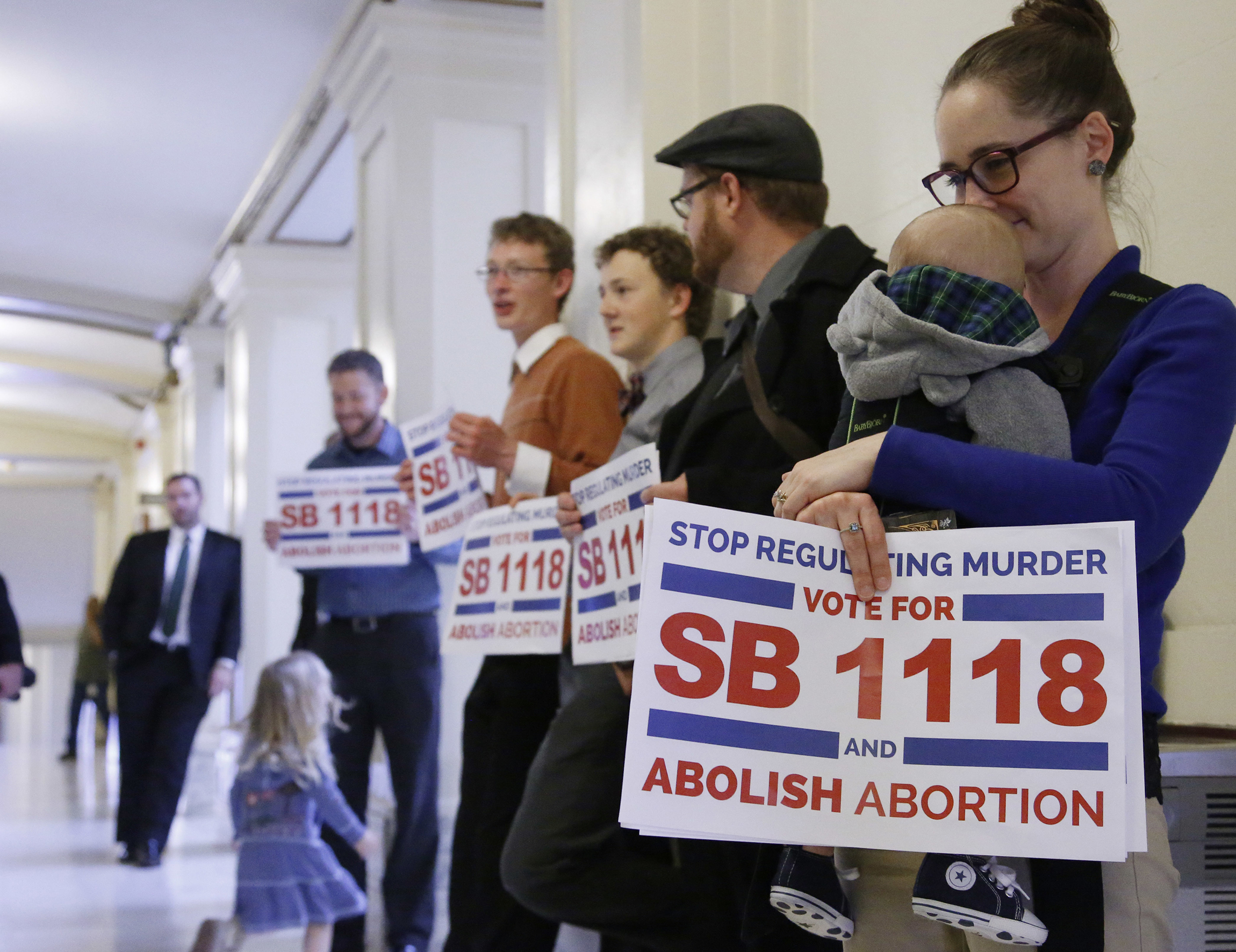
Indiana on Thursday became the second state to ban abortions chosen solely because of the unborn child’s disability, race or sex. The new law also requires aborted or miscarried babies to be cremated or buried, and that abortionists renew their hospital admitting privileges every year if they have them.
Abortion-rights advocates predictably criticize Gov. Mike Pence for signing the bill, saying abortion decisions are always harrowing and should be left up to women and their families.
Recommended Stories


Every prospective parent surely hopes that their child will be born without disabilities. The birth of a disabled child can be an overwhelming and sometimes devastating experience for family members. The issue is thus one that should be dealt with compassion and sensitivity on all sides, rather than with angry moral certitude.
This means the law shouldn’t be reflexively dismissed. And indeed, there is a strong case to make in its favor. It addresses the subject of eugenic abortions with the seriousness that this grave issue deserves.
People with Down syndrome, the most common genetic condition, have an extra copy of the 21st chromosome, which impairs them intellectually and physically. A review of two-dozen academic studies found that 50-85 percent of fetuses discovered to have Down syndrome are aborted.
Those numbers will probably increase as new, cheaper and more sophisticated blood tests become widely available earlier in pregnancy. There are good grounds to fear that the ease with which disabled humans can be destroyed before they are born will lead to their complete elimination and that of people with other genetic conditions, too.
The lives of people with disabilities should be treated with as much respect, indeed reverence, as those without disabilities. This is as much the case before they are born as after they are born.
The widely held belief that the elimination of genetic disorders is humane and desirable is rooted in two false assumptions.
The first is that unborn babies have no moral standing. It is hardly surprising that people living in modern American culture should have come to think this, given that abortion was made a constitutional right 43 years ago. The majority of people now alive in this country have never known unborn babies to have legal rights.
The second false assumption is that the lives of severely disabled people are are not worth living. This belief, while often prompted by humane impulses, is horribly presumptuous and rooted in ignorance about what it’s like to live with a disability, or to care for someone who has one. A generation ago, babies with an extra chromosome could expect to live only 25 years or so. Today, much has changed, and life expectancy has risen into the early 60s for people with Down syndrome.
Studies reveal that people with disabilities are just as happy as others. And though raising a child with a disability is often difficult, research shows that people with disabilities affect those around them more positively than negatively and help to cultivate virtues such as compassion, patience and tolerance.
Laws like the one passed in Indiana (and a similar law passed in North Dakota in 2013) are an important part of building a culture that respects all human life. Just as important are less controversial steps such as efforts to get objective information into the hands of women who are pregnant with babies with disabilities, as well as efforts to ensure that doctors deliver diagnoses free of bias. These have all been significant problems in the past.
There’s also promise in clinical trials for pharmaceuticals that may improve the cognition and memory of people with Down syndrome, an increasing number of whom suffer from Alzheimer’s.
It’s an open question whether this law will have much effect on abortion rates, since it applies only to women who identify disability (or race or sex) as their reason for choosing to have an abortion. Women who wish to abort can simply provide another reason. That said, the law sends a crucial message, that the most vulnerable among us should not be pitied or discarded but, rather, should be protected and cherished.
