

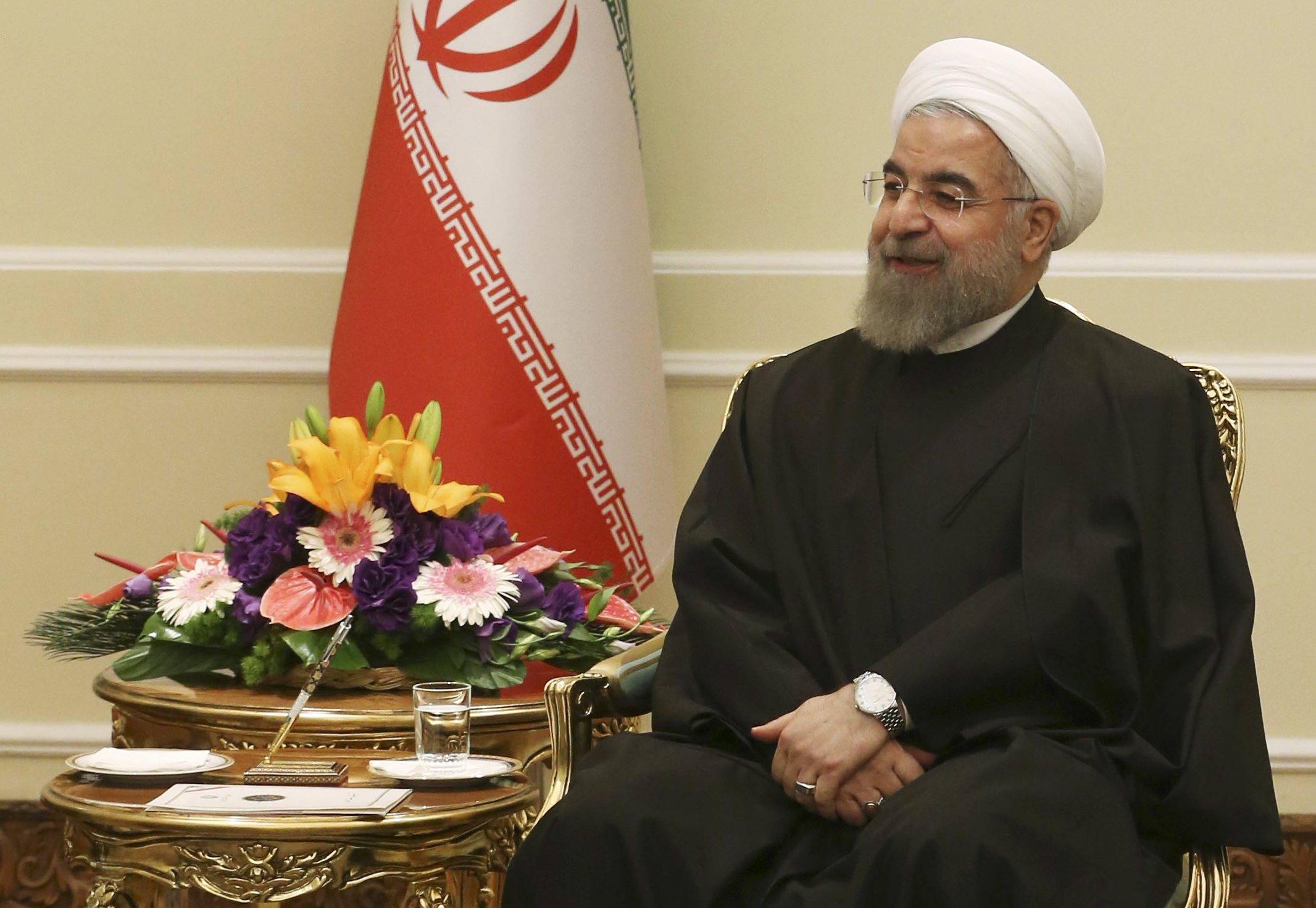
The White House on Monday defended the first wave of inspections at Iran’s Parchin facility as a sign that Iran is not being allowed to run some aspects of that inspection, despite reports that Iranian officials provided the samples to be inspected by the International Atomic Energy Agency.
Recommended Stories


Critics of the Iran nuclear agreement have said Iran’s ability to select samples from Parchin under the IAEA is a sign that the agreement is hopelessly flawed. But White House spokesman Josh Earnest said Monday that the weekend activities show Iran “is not self-inspecting.”
“Iran is cooperating with IAEA inspections” and the agency confirmed “authentication by the agency [of the samples] was achieved” under IAEA monitoring, Earnest said. “This certainly disproves the claims of our critics who suggested that Iran would be conducting self-inspections; that obviously is not true.”
IAEA chief Yukiya Amano visited Iran and confirmed that samples Iranian experts collected from the Parchin nuclear site were turned over to the agency for testing and that the process is proceeding to his satisfaction. But according to the Associated Press, Amano said Iranians chose the samples.
Still, both the White House and the State Department said the process worked, and said the Obama administration is satisfied with the process so far. State added that the IAEA itself has said it is “comfortable” with the inspection regime at this point.
Reps. Peter Roskam, R-Ill., Mike Pompeo, R-Kan., and Lee Zeldin, R-N.Y. said Monday that the reports seem to verify their fears about how the deal will work.
“This report appears to confirm our grave concern that the Iran-IAEA side agreements permit Tehran to self-inspect its own nuclear sites,” they said in a joint statement. “Without access to these documents it’s impossible to verify that necessary mechanisms are in place to ensure Iran will abandon its pursuit of nuclear weapons.”
“This is why, until the president complies with the law and provides the side agreements to Congress, we must keep the sanctions regime in place,” they said.
As the IAEA, the United Nations, Britain, China, France, Germany, Russia, the United States and Iran implement the agreement to curb Tehran’s nuclear weapons program “we will have many future opportunities to illustrate how the critics and warnings … are eventually disproven based on the way that the agreement is being implemented,” Earnest added.
“These sort of inspections are critical” to the agreement’s successful implementation, he said. Earnest also seemed to dismiss the idea of Iran picking the inspections, by saying the broader goal with the agreement was to get Iran to agree to an inspection regime.
“The goal of the international coalition that corralled Iran’s nuclear program was to compel Iran to cooperate with the IAEA and their inspections; that’s what we asserted all along was a reasonable expectation” and what is happening, Earnest said.
“There was also some concern … that the IAEA would not have access to military sites,” Earnest continued. But he noted that Amano “was at a prominent Iranian military site over the weekend.”
