

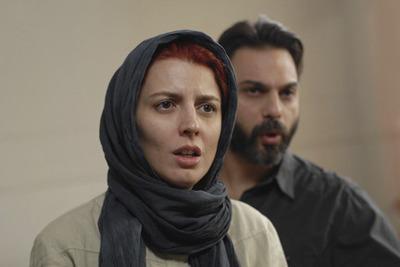
Relations between the United States and Iran are particularly tense right now. The U.S. Special Operations Command just revealed it has a team operating in the region. Might art serve to bridge the gap? “A Separation” became the first Iranian film to win a Golden Globe when it took home the trophy for best foreign-language film on Sunday. The movie was made inside the Islamic Republic, with the full blessing of the regime that repeatedly refers to America as the enemy of its people.
It’s quite something for a film made under such conditions to receive one of Hollywood’s highest honors — and chances are good that it will get an Oscar nomination next week. But let’s get one thing clear: “A Separation” is not the work of a mouthpiece for a murderous regime. This moving drama focuses on the family, but ends up traveling far beyond the confines of a couple of homes in Tehran. Writer-director Asghar Farhadi, who accepted his award in person, has made a surprising and, of course, subtle critique of the authorities who approved his work.
The seemingly simple separation of the title sets into motion a series of events of which neither husband nor wife could have dreamed. Simin (Leila Hatami) wants to take her daughter, who’s approaching the difficult teenage years, out of the country; her husband, Nader (Peyman Moadi), refuses to leave his father, who’s suffering from Alzheimer’s.
| On screen |
| ‘A Separation’ |
| 3.5 out of 4 stars |
| Stars: Peyman Moadi, Leila Hatami, Sareh Bayat |
| Director: Asghar Farhadi |
| Rated: PG-13 for mature thematic material |
| Running time: 123 minutes |
Denied permission to move her daughter abroad, Simin leaves the girl with Nader and moves back in with her parents. Now there’s no one to take care of the old man while Nader’s at work at a bank and Termeh (Sarina Farhadi) is in school. Nader hires a woman — importantly, of lower social standing — as caretaker. She immediately has problems. In one mordantly comic scene, she calls an unidentified mentor to ask whether it would be sinful to change the grandfather’s soiled pants.
A bigger disaster is on the way, though, one that will test not just two marital relationships, but each character’s conscience.
The criticism of an authoritarian regime is, as I said, subtle. Simin doesn’t go into the details of why she wants to remove Termeh from Iran, saying simply, “As a mother, I’d rather she didn’t grow up under these circumstances.” Just as nuanced, but with a bigger emotional punch, is the rest of this “Rashomon”-like tale of right and wrong, life and death, actions and consequences, all of which reveal various particulars of life in Tehran. “A Separation” has believers and skeptics, some of whom seem born unlucky, while others are, perhaps, privileged. It is Farhadi’s achievement that censors couldn’t tell which was which.
