

Welcome to Byron York’s Daily Memo newsletter.
Was this email forwarded to you? Sign up here to receive the newsletter.
TRUMP IN KENOSHA. President Trump wasn’t on the ground in Wisconsin for very long, but it was long enough to show that he did the right thing to visit the riot-plagued city. News coverage before Tuesday’s visit focused on the governor of Wisconsin and mayor of Kenosha telling Trump to stay away. But Trump went to Wisconsin to show that many people have suffered from the unrest there. Yes, of course, Jacob Blake and his family have suffered. But the damage from Kenosha’s riots extends far beyond a single family.
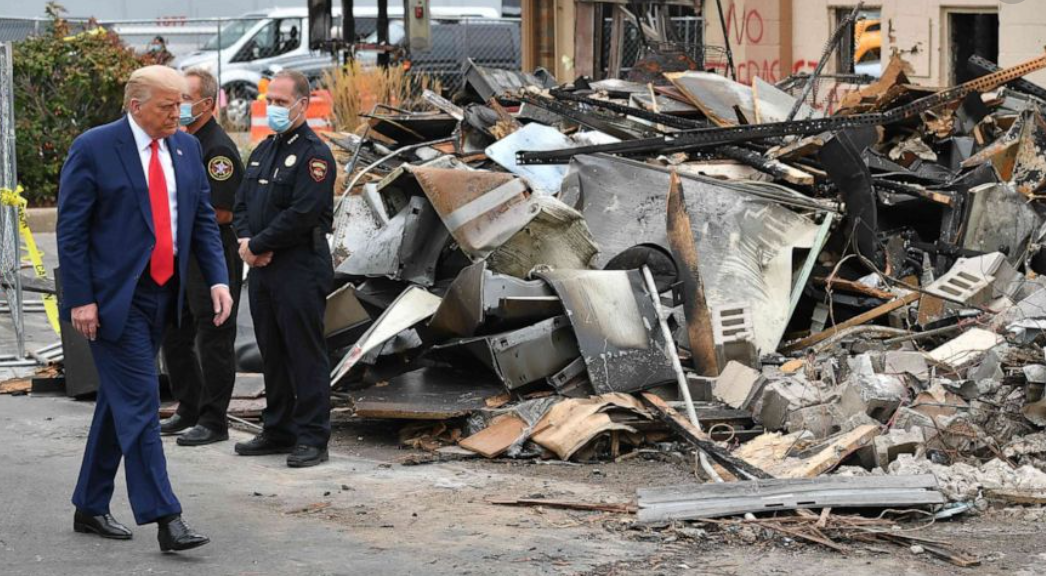
That was a point worth emphasizing, and Trump’s visit did it. But at the same time, Trump also addressed what might be called the Kyle Rittenhouse problem. He is the 17 year-old accused of killing two protesters and wounding a third during unrest last Tuesday. In his pre-visit interview with Laura Ingraham, Trump discussed the issue in a way that could serve him well in coming weeks.
Ingraham asked: “Do you want your supporters to confront the left-wing protesters?” “No,” the president said. Ingraham continued: “Or do you want to leave it to law enforcement?” Answered Trump: “I want them to leave it to law enforcement.”
Subscribe today to the Washington Examiner magazine that will keep you up to date with what’s going on in Washington. SUBSCRIBE NOW: Just $1.00 an issue!
It’s a point Trump should make often. The problem in Portland, and Seattle, and then in Kenosha and elsewhere is that local police would not confront violent protesters. Trump does not want fixed battles between his supporters and Antifa anarchists. He wants the local authorities to keep order. He has, in fact, spent a good deal of time begging local officials to request federal assistance to help restore order in their cities. “As you know, they have to call us,” he said Tuesday. “They have to call and request help.” He is asking repeatedly, and local officials, all Democrats, have refused.
That has left law enforcement in an uncomfortable position. They want to enforce the law and keep the peace. But some mayors and governors — again, all Democrats — have handcuffed their own police forces. In Portland, Mayor Ted Wheeler has a “19-point plan to achieve racial justice” that essentially amounts to a partial defunding of police. Even after a fatal shooting on a Portland street — the victim was a Trump supporter, the suspect an Antifa fighter — Wheeler stuck to his “plan” and has rejected federal offers of help.
“We’d really love to help Portland,” Trump said during the Wisconsin visit. “We have the people; they’re ready. They could be there in less than an hour.”
Finally, Trump addressed the problem of bad cops. “We have to condemn the dangerous, anti-police rhetoric,” he said in Kenosha. “It’s getting more and more. It’s very unfair. You have some bad apples. We all know that. And those will be taken care of through the system. And nobody is going to be easy on them, either.”
Trump noted that police are under tremendous pressure in dangerous situations. “They may be there for 15 years and have a spotless record,” he said. “And all of a sudden, they’re faced with a decision. They have a quarter of a second — quarter of a second — to make a decision. And if they make a wrong decision, one way or the other, they’re either dead or they’re in big trouble. And people have to understand that. They choke sometimes.”
Trump’s words in Kenosha helped frame the public safety issue in the campaign against Democrat Joe Biden. But more importantly, the president gave the public a clear statement of his, and his administration’s position on the disorder that still plagues many cities. It’s a problem that unfortunately is not likely to go away before the election, and voters need to know precisely where each candidate stands.
