


January 26, 2021 Print Edition
Cover Story
Still Bernin’
The great irony of Bernie Sanders’s socialist revolution is that for it to have any chance of succeeding, the Vermont senator would have to convince his fellow Americans that it wasn’t very revolutionary. In fact, it merely required his adopted political party to return to the path from which it had recently strayed. Democrats, according to Sanders, have broken from the successful formula of President Franklin Roosevelt, who assembled a coalition in part made up of immigrants, city dwellers, left-wing intellectuals, and black people to restructure the economy and the future of the party radically. The New Deal coalition was broader than that, of course, with rural Southerners and trade unionists providing Roosevelt with electoral margins that gave him and the Democratic Party supermajorities for years. But that coalition, to hear Sanders say it, had been broken, along with the menu of rights and privileges it offered. “Now,” Sanders said June 19 in Washington, D.C., “we must take the next step forward and guarantee every man, woman, and child in our country basic economic rights — the right to quality healthcare, the right to as much education as one needs to succeed in our society, the right to a decent job, the right to affordable housing, the right to a secure retirement, and the right to live in a clean environment.” There was one problem for Bernie, however: If none of this was revolutionary, if...


Stories that matter—told with clarity and conviction.







Your Land

Magazine - Your Land
Masking our faces
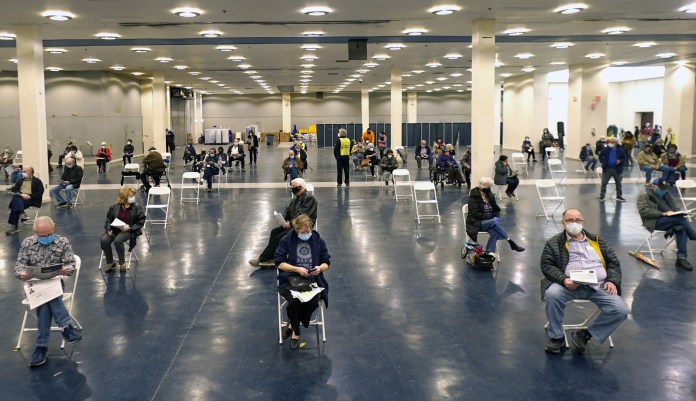
Health experts generally agree that face masks slow the spread of the coronavirus. But there’s reason to worry...
By

Magazine - Your Land
Word of the Week: ‘Rebuild’
The verbiage of President Biden’s inauguration was self-consciously Lincolnesque. Emphasis on the self-conscious. He used the phrase “uncivil...
By
Magazine - Your Land
Old-time religion
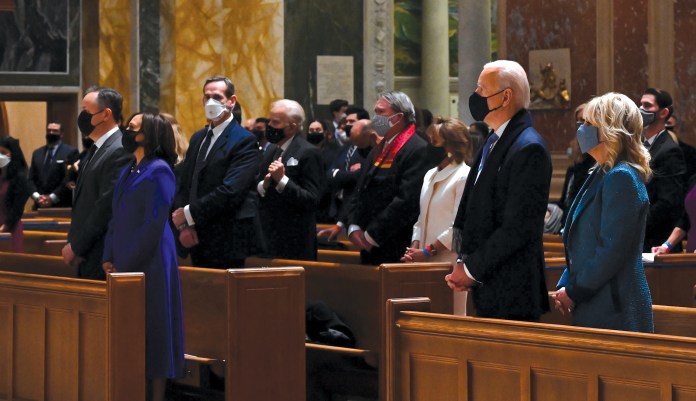
In a secular age with an overwhelmingly secular media, cultural, and academic elite, there’s a strange remnant of...
By

Magazine - Your Land
Spiritually infected
Have you noticed that every time you have learned and shared a bit of good news about the...
By

Magazine - Your Land
Is it time to go back to school yet?
Schools are still closed. Yes, many school districts have opened their doors, but in most of our big cities and large suburban counties, schoolhouses are empty while the...
By
Magazine - Your Land
Garth Brooks tries to live in the world
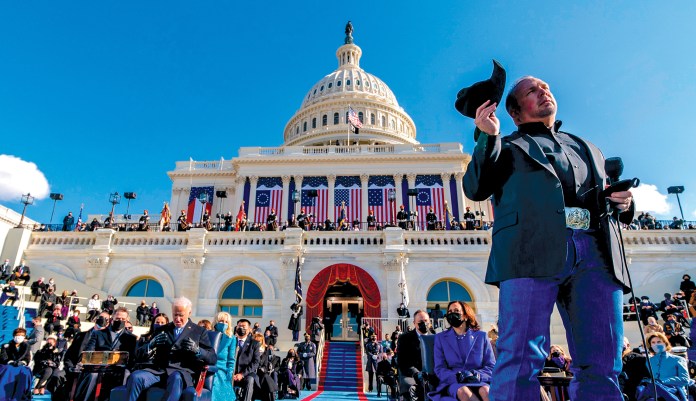
Garth Brooks is in trouble for having friends in high places as cancel culture spreads rightward. When Brooks announced that first lady Jill Biden had asked him to...
By
Business

Magazine - Business
Business sectors consider impact of Biden administration
President Biden’s inauguration and the new slim Democratic majority in Congress have together shuffled the political...
By

Magazine - Business
The Left wants unconditional surrender, not unity
About two years ago, one of my wife’s best friends began to turn down invitations to...
By
Washington Briefing
Magazine - Washington Briefing
Trump leaves behind a coterie of frustrated former national security advisers
Retired Marine Corps Gen. John Kelly, who served as President Donald Trump’s chief of staff and...
By
Business
Big-business shift on carbon pricing unlikely to move the needle on legislation
The new shift by big business to consider supporting carbon-pricing policies will create more momentum to...
By
Energy
Biden moves quickly to erase traces of Trump
President Biden was only in office for a few hours before he struck down one of...
By
Business
FAA signs off on drones that require no human operation
The first steps toward eliminating restrictions on some drone usage kicked off last week with a...
By
Healthcare
The puzzle of COVID-19 on the brain
Dr. Juliette Madrigal has seen a fair number of patients in recent months suffering from anxiety...
By
Magazine - Washington Briefing
FBI says woman stole Nancy Pelosi’s laptop and wanted to sell it to the Russian government
According to a charging document filed by the FBI, a woman stole a laptop or a...
By

Letter from editor
Should Alito stay or go?
Through the 1973 Roe v. Wade decision, the 1857 Dred Scott case, and back to the beginning of the republic,...
By
The Columnists



Life & Arts








More from the Magazine


MAGAZINE ARCHIVE
See all archives →



Stories that matter—told with clarity and conviction.
