

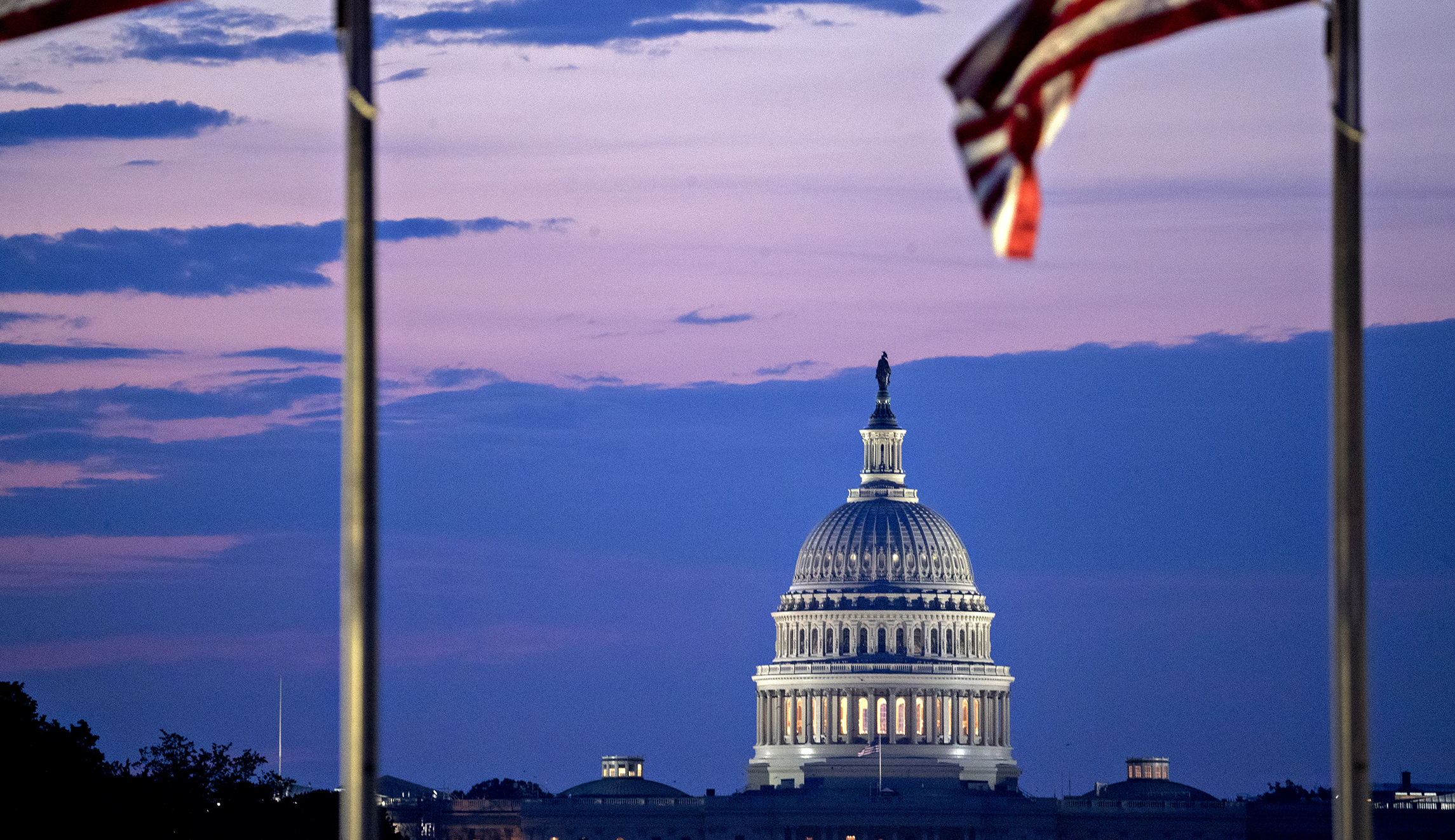
Democrats’ push to transform the liberal enclave of Washington, D.C., into a state could involve a number of hidden costs — beyond the political cost Republicans would pay if Democrats received extra seats in the U.S. Congress due to the change.
The House passed H.R. 51, the bill granting statehood to the district, last week, but the legislation may not go much further than the Senate.
Recommended Stories


Not all Senate Democrats have expressed support for the move, and no Republicans have, all but dooming the bill’s chances of passage with the 60 votes necessary.
WHAT YOU NEED TO KNOW ABOUT DC STATEHOOD
The Congressional Budget Office estimated last year that granting statehood to the district would cost at least $76 million over a decade. Most of that cost would relate to staffing the two new U.S. senators who would represent the state.
But other costs could inflate the price tag significantly, depending on how the new state was structured.
For example, according to the CBO, Congress set aside more than $700 million in 2020 to fund public defenders, the court system, and education grants in the district — and some of those responsibilities would likely become the burden of the new state once it was created.
The statehood bill that House Democrats passed on a party-line vote last week would draw new borders for the District of Columbia around some federal buildings and monuments, preserving the constitutional requirement for the seat of government to remain in a district controlled by Congress.
The rest of what is now considered Washington, D.C., would become Washington, Douglass Commonwealth, named for the abolitionist and former Washington resident Frederick Douglass.
Republicans have sharply criticized the effort to grant statehood to the district, in part, due to its overwhelmingly Democratic constituency. President Joe Biden won the 2020 election in Washington by 93%, for example, and not a single member of Washington’s city council is a Republican.
The existing structure of the city government would become the new state’s government if the bill was passed. Democratic Mayor Muriel Bowser, who is in favor of statehood, would become the “chief executive officer of the state,” and the city council would become the State Legislature, according to the text of the legislation.
H.R. 51 would set up an 18-member “Statehood Transition Commission” that would sort through some of the logistical issues involved with turning much of the district into a state.
Members of the commission would receive no salaries, but they each would have all expenses paid when they traveled to Washington for the meetings, and the commission would continue to exist for two years after the state was admitted into the union.
The commission would also have the power to hire “experts and consultants” and pay them at one of the highest rates available on the federal government’s pay scale — as much as $70 per hour.
The shift to statehood could raise the prospect of other costs, such as designing and distributing the new state’s flag.
When Mississippi voted to change its state flag earlier this year, the Legislature passed a separate bill to set aside funds just for buying flags bearing the new design. The bill appropriated $10,000 to buy flags for state buildings.
Amid a 2017 debate in Nebraska over changing its state flag, estimates for the cost ran between $200,000 and $400,000.
CLICK HERE TO READ MORE FROM THE WASHINGTON EXAMINER
And the addition of a 51st state could present an even larger cost to the federal government because the classic stars and stripes flying over buildings across the country would need an update.
In 2017, a mathematician named Skip Garibaldi developed a computer program that determined all possible ways to configure 51 stars on the flag. Garibaldi’s program suggested alternating rows of odd and even numbers of stars, such as six rows of eight and nine stars.
