

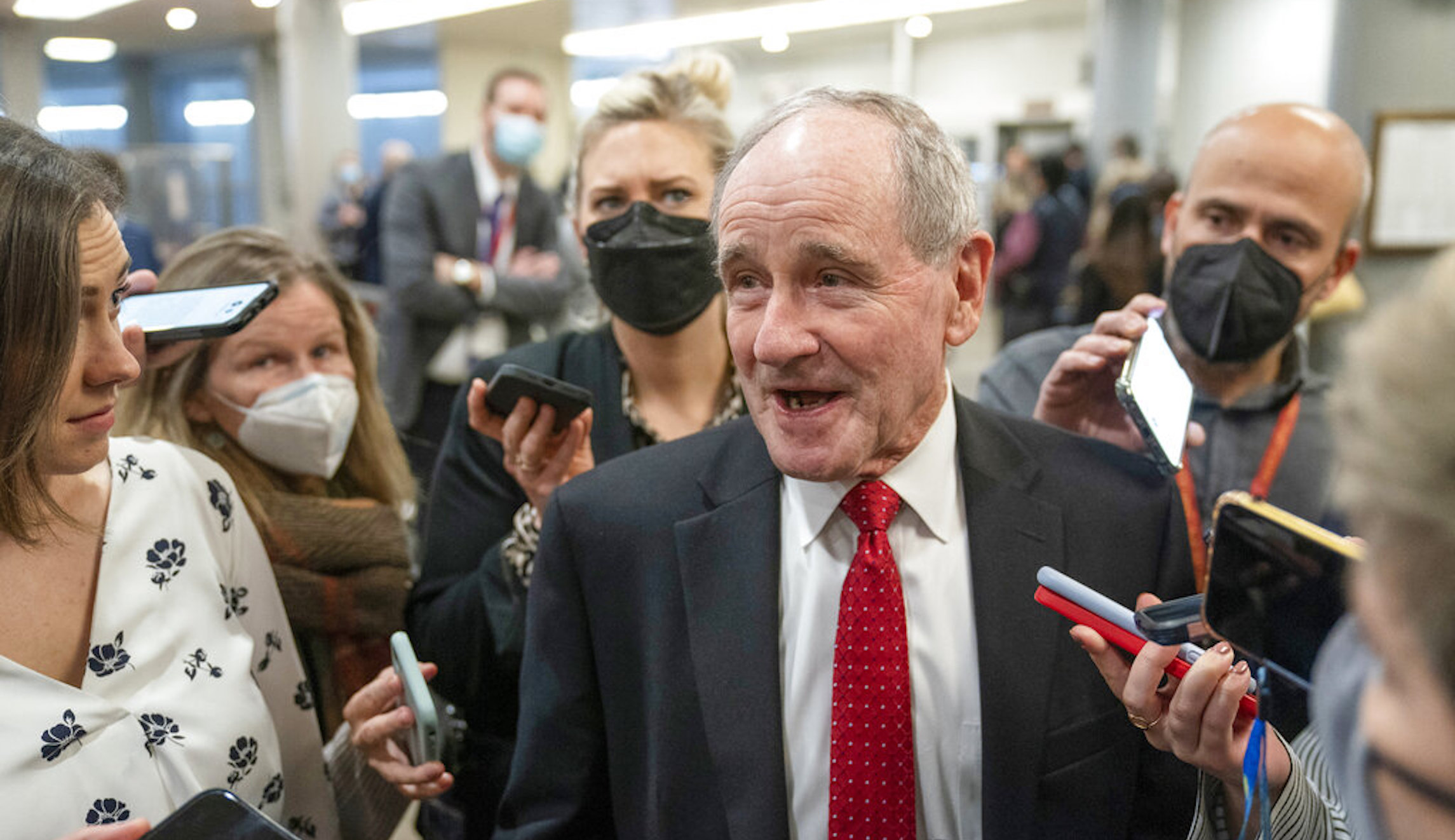
After weeks of negotiations to come up with a bipartisan Russia sanctions bill, Republicans decided to move forward on their own.
GOP. Sen. Jim Risch, the ranking member of the Senate Foreign Relations Committee, along with more than 30 members of his party, introduced the Never Yielding Europe’s Territory Act on Tuesday.
Recommended Stories


Democrats and Republicans had been negotiating for weeks about a sanctions bill they could both support, but there had been differing views on how and when to apply such sanctions.
SENATE SPLIT ON IMPOSING RUSSIAN SANCTIONS BEFORE OR AFTER INVASION OF UKRAINE
The bill comes as Russia expresses interest in easing tensions regarding its military buildup on the border of Ukraine through diplomacy, though U.S. and NATO officials said they have not seen any tangible signs that Russia’s troops are pulling back.
The legislation, were it to be signed into law, would sanction Russian President Vladimir “Putin’s cronies, enablers, and major banks before Russia further invades Ukraine to ensure Putin pays a price now for hybrid attacks already launched,” according to a readout from Risch.
It would also provide $500 million in foreign military financing for Ukraine, which includes $250 million in emergency funding and another $100 million in emergency lethal assistance, and would attempt to halt the Nord Stream 2 pipeline should Russia invade.
A senior House GOP aide told the Washington Examiner that the bipartisan talks “fell apart” after “Senate Democrats, at the insistence of the White House, reneged on a couple of their commitments to Republicans.”
“While a ‘military’ invasion has not yet occurred, there are other ways Russia can attack Ukraine that would be debilitating for Ukrainians and European security more generally,” said Risch. “Rather than simply restating authorities the president already has, the NYET Act takes immediate action to permanently stop Nord Stream 2, sends a powerful deterrent message, imposes heavy economic and military costs on Russia, strengthens U.S. allies and partners, and supports Ukraine via new authorities, funds, and tools.”
Sen. Bob Menendez, the Democratic chairman of the Senate Foreign Relations Committee, described the GOP bill as “partisan posturing” and said a “partisan victory is not worth a message of division in Washington, which only benefits Putin.”
Menendez had been one of the leaders of the negotiations, in which he and other leaders sought to combine a variety of related sanction bills.
“That is why I have worked for weeks to convince Republicans to join us in legislating something that can deter Putin, and why I will continue pushing for my Republican colleagues to reconsider this path before it’s too late for the people of Ukraine,” he said in a statement. “There is still hope for a diplomatic breakthrough, and there is still time to reach bipartisan agreement so the U.S. Congress can help impose the swiftest and harshest of responses for any unprovoked, unjustified actions by Russia.”
CLICK HERE TO READ MORE FROM THE WASHINGTON EXAMINER
A spokesperson for Menendez passed along the written statement to the Washington Examiner but didn’t respond to additional questions about what parts of the legislation he disagreed with, if there were any.
The Biden administration has taken both a diplomatic and militaristic approach to the conflict, with President Joe Biden and administration officials calling their Ukrainian and Russian counterparts, while the president has also deployed roughly 6,000 troops to neighboring countries. Administration officials have also called on all Americans to leave Ukraine immediately.
