

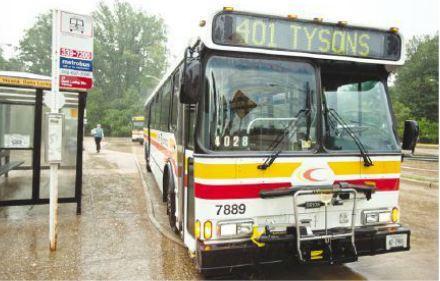
Cost estimates for upgrading roads and public transit at Tysons Corner have jumped about 20 percent in just the past two years, and it is still not clear who is going to pay for it.
Fairfax County officials now expect Tysons streets and buses to cost $2.1 billion through 2030, up from the previous estimate of $1.6 billion. And costs through 2050 will reach $3 billion — or $5.5 billion in 2051 dollars, county staff estimated.
The price tag will pay for roads, sidewalks and buses, as well as improvements beyond Tysons, such as the widening of Route 7 and connections to the Dulles Toll Road.
The numbers may lead to sticker shock for some residents.
“Just seeing the number is going to surprise people,” said Mark Zetts, who follows Tysons planning for the McLean Citizens Association. “The numbers are gigantic because the amount of development planned for Tysons is gigantic.”
Officials said residents shouldn’t worry, since the costs will be spread out over time.
“What we’re dealing with is long-term projections,” said Sharon Bulova, chairwoman of the Fairfax County Board of Supervisors. “We’re looking ahead many years.”
And the county is expecting land owners, developers and the state of Virginia to pay for large chunks of the costs.
“We’re working hard to make sure this plan does not result in an extra burden on the county’s real estate tax,” said Walter Alcorn, chairman of the planning commission’s Tysons Committee. “It’s a big number, no doubt. But it is stretched out over a 40-year period. And we’re looking at a financing plan where landowners and developers would step out and pay for their fair share.”
Keith Turner, a representative for a coalition of Tysons Corner developers, did not return calls for comment on how much developers plan to pay for the upgrades.
Officials say they are confident the state will kick in some money eventually, despite warnings from Virginia Secretary of Transportation Sean Connaughton that Fairfax should be looking elsewhere for funds.
“That’s crazy — to think that the state is just getting out of the transportation business entirely,” Bulova said. “I don’t think that’s what the governor campaigned on. And just because we have a transportation crisis right now doesn’t meant the commonwealth is going to stop doing any kind of transportation in Northern Virginia.”
