

ROSCOE, Pennsylvania — When people think of Washington County, Pennsylvania, they often associate it with the wealthy northern tier of affluent suburbs such as Peters and Cecil townships. But that is only part of the story. If you are from these parts, you know Washington County is both Fox Chapel and West Virginia.
Washington County is the second-largest producer of natural gas among Pennsylvania’s 67 counties and also the second-largest producer nationwide, thanks to the Marcellus and Utica shale formations. It is also one of the so-called “heat counties” that could swing Election Day in less than two weeks.
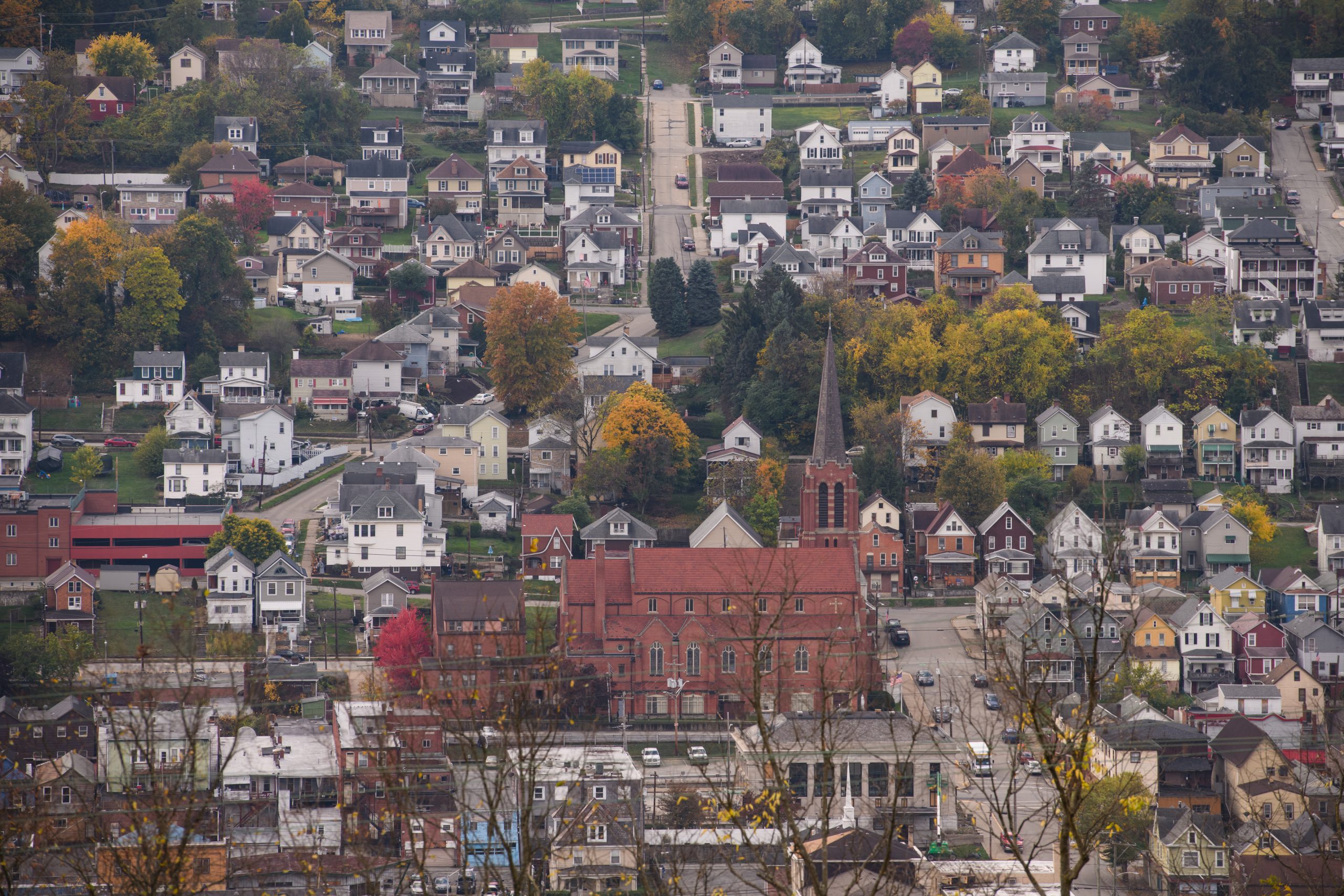
Its environs include suburbs filled with teachers, college professors, doctors, and executives. Some parts are very rural, with farming and ranching. It is home to quaint river towns and scarred Rust Belt remnants of the coal and steel era.
Four years ago, Donald Trump not only won this county but out-performed Mitt Romney’s win by over 8,000 votes. His overperformance here and in ten other “heat counties” helped him rack up numbers that offset Pittsburgh and the heavily populated Democratic Philadelphia collar counties. Unless you listened, you never heard it coming.
Washington County is no longer the Democrat-dominated county it once was. Increasingly, local races have started going Republican. And as of this month, Republican voter registrations have finally overtaken Democratic ones.
In last November’s off-year municipal elections, as the row offices in suburban Philadelphia’s Delaware, Chester, and Bucks counties flipped from red to blue, six other counties across the state were flipping the other way. In Washington County, Republicans added a second county commissioner and elected five row officers.
As Pennsylvania heads into Election Day, polls show Joe Biden with a persistent but diminishing lead. If Trump were to win here on Nov. 3, it will be from the heavy lifting of voters in heat counties like Washington, whose voters are less driven by ideology (or by what others will think of their support for Trump) and more by community and localism.
These heat counties not only need to show up with the same remarkable enthusiasm that they did in 2016, but they will also need an additional 3% of the vote to offset the numbers in Philadelphia and Allegheny County, as well as any shenanigans that might happen in the mail-in vote process. That is the only path the president has to winning this state.
Two things happened last week that might help them hit that goal. One came when Trump looked at Biden during the debate and said, “I ran because of you … ’cause you did a poor job. If I thought you did a good job, I would have never run.” The line reminded voters here that Trump’s victory had been about them and their long-neglected communities, as well as the failures of the swamp in that other Washington.
Then came the line that only someone from around here would get. “I would transition away from the oil industry, yes,” Biden said in the closing minutes of the debate, “The oil industry pollutes, significantly. It has to be replaced by renewable energy over time.”
Those two lines might have changed the race in places like this one.
Some reporters believe voters are so split on climate change and hydraulic fracturing in this state that his comment won’t move the needle for voters. But drill down and ask voters more than surface-level questions on climate change, and you are likely to find that they do not believe the eradication of natural gas is required to preserve the environment.
In 2016, Trump won Pennsylvania by 44,000 votes out of 6 million cast. Hillary Clinton won all of the large urban population counties of Philadelphia, Allegheny, Montgomery, and Delaware as well as the Philly ring counties of Bucks, Chester, and Lehigh. She just barely carried Centre County, home to State College, and Monroe County, where a large population of New Yorkers lives.
Since then, voters in the heat counties have been rewarding Trump’s performance by switching their voter registrations from Democrat to Republican in astounding numbers. In Washington County, the rolls of Republican registrants grew by enough to overcome what had been a deficit of 13,000 in 2016. The county has since added 12,000 voters and Republican voters form the plurality for the first time since the 1930s.
The whole western region of energy heat counties that also includes Beaver, Westmoreland, Fayette, Greene, and Butler has shown a net Republican increase of 21% since 2016.
Even Allegheny County gained a net 2.7% new registrants; Trump will never win that county, but through the energy voters, he could mitigate the numbers a bit his way.
Since June 10, Bradford, Clinton, Lackawanna, Luzerne, Lycoming, Potter, Sullivan, Susquehanna, Tioga, and Wyoming have all increased their Republican voter registration, and — judging by what the people there will say if you visit and listen to them — their enthusiasm for Trump. Trump held a rally recently in Erie County, the one heat county he won in 2016, which seems likely to go to Democratic this time.
If Trump can squeeze an extra 50,000 more votes out of these counties over his 2016 numbers, then this race will finish a lot closer than the polls currently project.
