

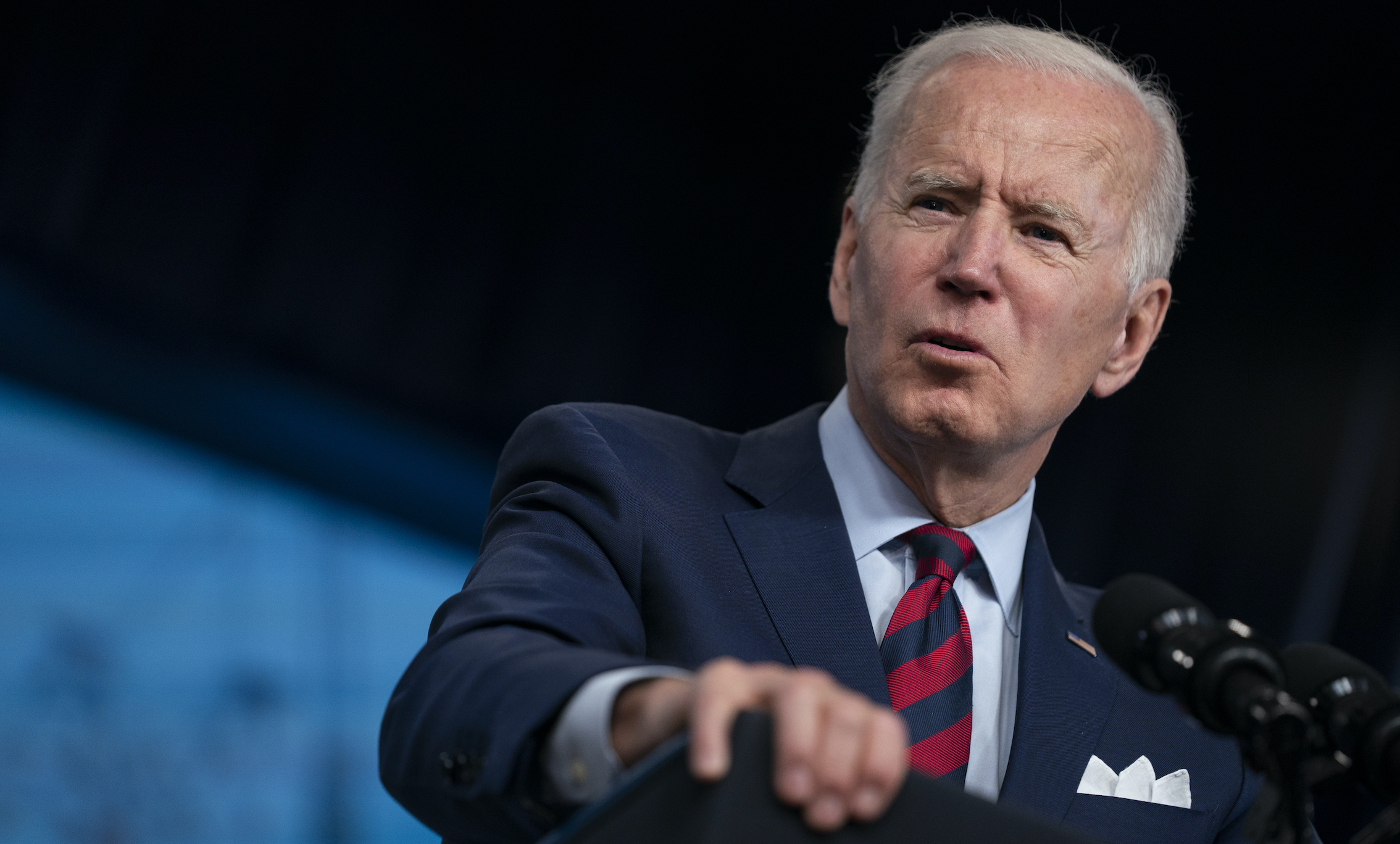
Partisan battle lines are being drawn over President Joe Biden’s $1.5 trillion funding proposal for next fiscal year.
Biden’s domestic spending request in the White House’s “skinny budget” has thrilled Democrats. The party has applauded the president for asking for $769 billion to be pumped into rebuilding the country after the coronavirus pandemic, addressing economic and racial inequality, and tackling climate change.
Recommended Stories


But Biden’s proposed $753 billion allocation for national defense programs has rankled both its liberal colleagues and congressional Republicans.
FACTS VS. SPIN: BIDEN WHITE HOUSE BLURS THE LINE TO ADVANCE GOALS
Senate Budget Committee Chairman Bernie Sanders expressed “serious concerns” Friday over Biden’s $753 billion request for what he called a “bloated” Department of Defense. That funding level represents a $12.3 billion increase from the last year of former President Donald Trump’s term, according to the Vermont socialist.
“At a time when the U.S. already spends more on the military than the next 12 nations combined, it is time for us to take a serious look at the massive cost overruns, the waste, and fraud that currently exists at the Pentagon,” Sanders said.
At the other end of the political spectrum and on the other side of the Capitol, House Budget Committee ranking member Jason Smith previewed the broader fight brewing over how lawmakers should use taxpayers’ dollars.
“The president’s proposal shows an administration that is less interested in the primary responsibility of the federal government, to ensure the safety and security of the American people while it looks to further fuel growth of government in those areas that enhance Washington’s control and interference in the lives and livelihoods of the American people,” the Missouri Republican said.
White House press secretary Jen Psaki echoed senior administration officials in countering criticism regarding raising defense funding by 1.7% from this fiscal year, which Republicans have pointed out is an increase essentially flat adjusted for inflation.
Psaki contended the extra money would be spent promoting “diversity and inclusion” in the armed forces, cover military and civilian staff pay raises, and facilitate defense investments in “climate resilience and energy efficiency” projects.
“We believe it provides a robust funding level for the military forces needed to deter war and ensure our nation’s security,” she said. “But again, there will be a full budget later this spring that will be proposed by this White House.”
Bill Hoagland, a Bipartisan Policy Center senior vice president and 25-year Republican Senate staffer, told the Washington Examiner Biden’s problems were twofold: some of his budget’s line items and the procedural obstacles he’ll have to overcome in a Congress narrowly controlled by Democrats.
Biden’s first budget request coincides with the rolling back of discretionary spending caps placed on the federal government by the Budget Control Act of 2011, permitting a 16% increase in domestic allocations. And Hoagland reminded critics balking at the skinny budget’s $1.5 trillion price tag that discretionary funding accounts for only about one-third of the government’s total spending.
For Hoagland, Biden’s asks for funding for science and technology innovation, housing and anti-homelessness initiatives, pandemic preparedness, opioid crisis responses, and mental health services will likely receive bipartisan support, as well as his “Made in America” scheme and “building up defense capabilities against China.” But Hoagland warned Biden was embarking on a long, complicated process, with Republicans arguing against the top-line figures and his provisions for climate change, civil rights enforcement, and gun control.
“The president’s not going to get everything he wants in the discretionary spending on the domestic side, and the progressives are not going to get everything they want on reducing defense,” he said. “I think it just has to be a trade-off here.”
But aside from those “trade-offs” that Biden and Congress will have to negotiate as they work on a budget resolution blueprint and start appropriations procedures before their Oct. 1 deadline, the federal government also has to deal with a debt limit debate after lawmakers return from their summer recess. If they can’t agree on an arrangement in time, they face the prospect of another government shutdown or the country defaulting on its debt.
“I worked with him when I was a Senate staffer for many, many years when he was in the Senate,” Hoagland said of Biden. “He understands that what he’s proposed here today is going to go through the sausage mill, and he’ll have to give on some things, and Republicans will have to give if we are to avoid a government shutdown. Otherwise, we’ll have to do a continuing resolution, which nobody likes either.”
CLICK HERE TO READ MORE FROM THE WASHINGTON EXAMINER
Biden’s comprehensive budget, due later this spring, will detail the president’s discretionary and mandatory spending recommendations, as well as proposed tax reforms, and will incorporate funding for his $2.25 trillion infrastructure and jobs package.
