

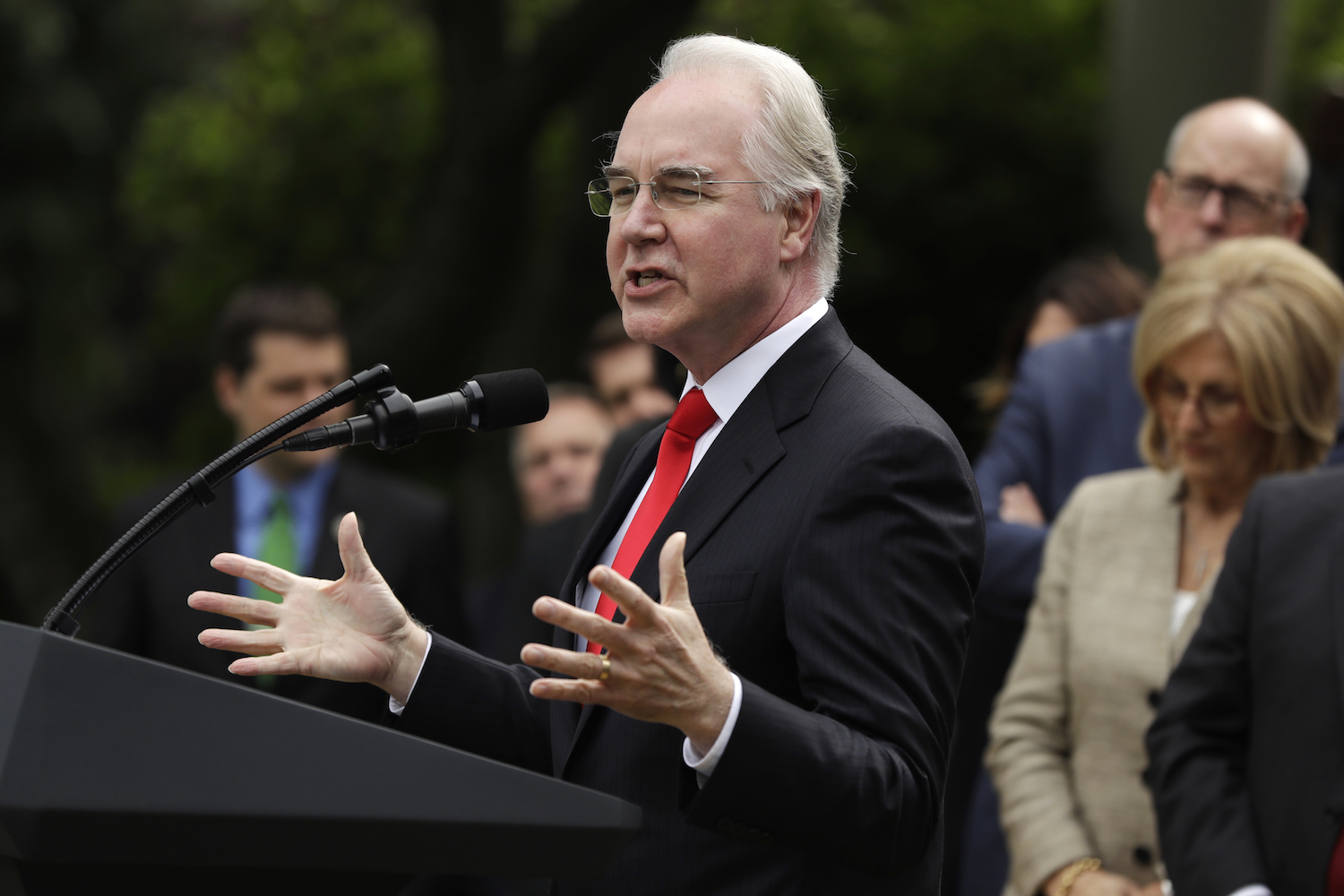
Obamacare’s insurance regulations contributed to premiums doubling over the course of four years, finds a new federal report.
The findings, assembled by the Health and Human Services Office of the Assistant Secretary for Planning and Evaluation, show that since 2013, one year before the Obamacare regulations were fully implemented, premiums have risen from an average of $2,784 in 2013 to $5,712 in 2017 on the federal exchange, healthcare.gov. This represents an increase of $2,928, or 105 percent.
Recommended Stories


Premiums tripled in Alaska, Alabama and Oklahoma during the same time period, and the lowest premium increase, 12 percent, was in New Jersey.
“With data that shows average premiums doubling nationwide and Americans paying nearly $3,000 more for health insurance per year, this report is a sobering reminder of why reforming our healthcare system remains a top priority of the Trump Administration,” Alleigh Marre, spokeswoman for the Department of Health and Human Services, said in a statement. “The status quo is unsustainable.”
Prior to Obamacare, insurers were allowed to deny coverage to people with pre-existing illnesses and states varied the type of coverage they allowed insurers to offer. At the time health insurance could be sold with fewer medical benefits. This allowed for lower premiums for healthier people, but it also put coverage out of reach for millions of others.
Under Obamacare most people who sign up for coverage through the exchanges have not personally felt the premium increases because the law provides tax credits that reduce premium costs. But middle-class individuals and families, who make more than $48,240 or $98,400, respectively, often take on the full increases. The report cites some of these changes in regulations as a reason for the increase.
“This analysis does not account for the fact that the overall populations enrolling in the individual market in 2017 are different from those enrolling in 2013,” the report says. “Older and less healthy people are a larger share of the individual market risk pool now than in 2013. The changing mix of enrollees and adverse selection pressure has likely been a significant cause of the large average premium increases in the individual market over this four-year period.” The report also evaluates only the 39 states that used healthcare.gov, not those sold on state exchanges or off the federal exchange.
