

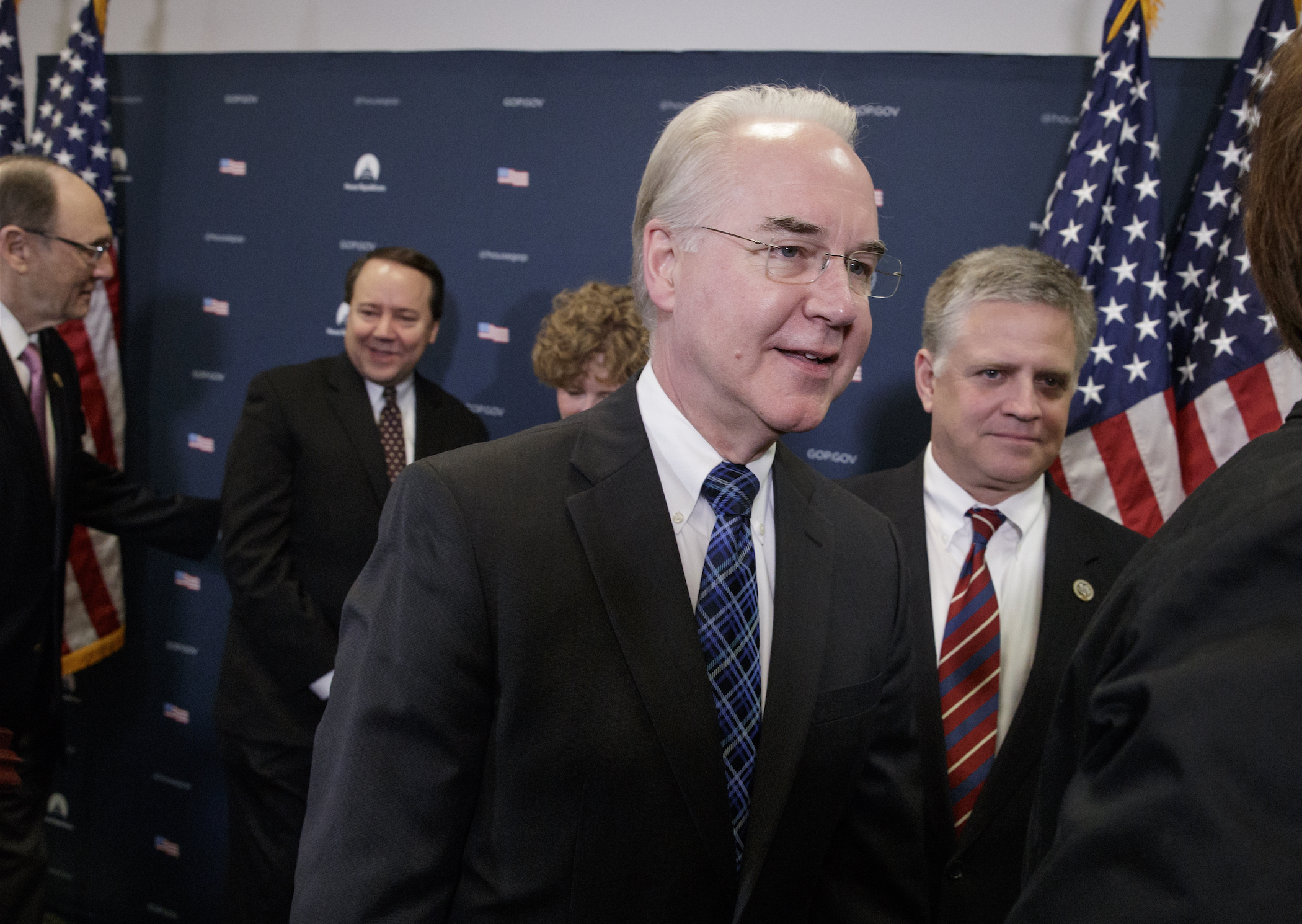
Republican senators on Thursday urged Health and Human Services Secretary Tom Price to reverse an Obama-era regulation that places restrictions on short-term health insurance plans.
The plans do not contain the same comprehensive list of benefits mandated by Obamacare, instead allowing people to choose what they want covered. The greater the number of provisions, the higher the premiums tend to be.
In a letter to Price, 14 senators asked for the plans to go back to being allowed to cover people for 364 days. Customers are not allowed to be enrolled in short-term plans for more than 90 days because of a regulation created by former President Barack Obama.
Recommended Stories


The plans generally are used by customers who are between jobs or outside the open enrollment window, but have been used by people who want to pay less for health insurance, even though those who buy plans often still have to pay the penalty under Obamacare’s individual mandate.
The regulation was put into effect under Obama because the administration feared that healthier enrollees would be targeted for such plans, leaving only sicker enrollees to buy plans from the exchanges created under the healthcare law and resulting in an unbalanced risk pool.
In their letter, senators said people needed more options for coverage because insurers are fleeing the exchanges.
“As the Trump administration continues to work on repairing the damage caused by the Affordable Care Act, we must consider solutions that will increase consumer choice in the healthcare markets and, ultimately, decrease healthcare costs,” the senators wrote. “As health insurers continue to leave the Obamacare exchanges, consumers need more, not fewer, options for health insurance. Reversing this regulation will provide consumers with an important option for health coverage.”
Insurers, facing financial losses as well as uncertainty over what will happen to Obamacare, are choosing to leave the exchanges in various states, leaving some residents with no tax-subsidized options for next year. At risk is whether the administration will enforce the individual mandate, as well as whether it will pay out billions of dollars in insurance payments.
