

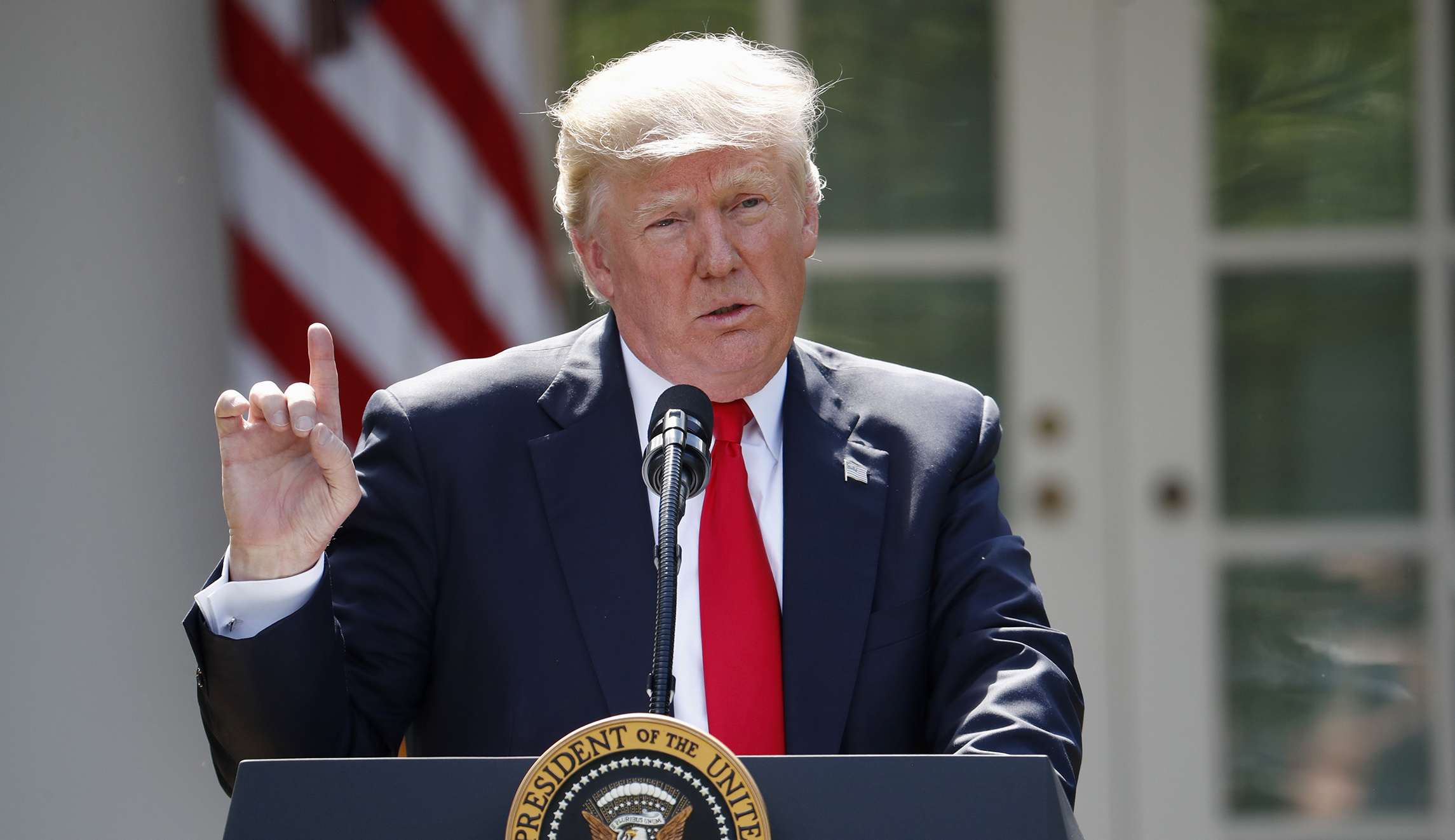
A group of 16 states and Puerto Rico are marking the one-year anniversary of President Trump’s June 1 exit from the Paris climate change agreement by re-upping their commitment to the nonbinding deal signed by former President Barack Obama.
The U.S. Climate Alliance, including governors from the Mid-Atlantic, Northeast, and California, announced Thursday that they are reducing greenhouse gas emissions faster than the rest of the country, while raising economic output at double the rate of the nation.
Recommended Stories


“The U.S. Climate Alliance now represents 40 percent of the U.S. population and a $9 trillion economy, greater than the third-largest country in the world, and U.S. Climate Alliance states are on track to meet their share of the Paris Agreement emissions target by 2025,” the states reported.
The states, led by Democratic Govs. Jerry Brown of California and Jay Inslee of Washington, formed the alliance last year when Trump announced his decision to leave the Paris accord. They pledged to pull together an alliance of states committed to the goals that Obama backed in agreeing to the Paris deal. Govs. Larry Hogan of Maryland, Charlie Baker of Massachusetts, and Phil Scott of Vermont are the three Republican members of the alliance.
The states on Thursday announced new financing tools and other programs to push toward meeting the U.S. commitment under the Paris deal, including the creation of their own “green bank” initiative to finance sustainable infrastructure and help advance more green banks. The program appears to be in response to Trump’s decision to cut all U.S. financial contributions to the U.N. Green Climate Fund.
“As a part of this initiative, NY Green Bank is raising at least $1 billion from the private sector to deploy nationally as well as providing resources and capacity that can be leveraged by newly established green banks,” the alliance announced.
Fifteen of the states signed a pledge to cut short-lived climate pollutants used in refrigeration called hydrofluorocarbons. The alliance will issue its action plan on reducing the pollutants at a major climate change meeting in California in September called the Global Climate Action Summit.
At a Wednesday conference hosted by the World Resources Institute in Washington, many were optimistic about the work the states were doing, while Obama’s top climate negotiator warned not to underestimate the harm Trump has caused.
“It’s really damaging for the U.S. to be on the way out,” Todd Stern said in addressing the forum. He warned proponents of the Paris Agreement not to “underestimate the negative side” of the U.S. decision to leave the agreement.
He noted that the next major meeting on implementing the Paris Agreement, which will be held after the California meeting, is being undermined by Trump’s unwillingness to even discuss climate change, which is damaging to the momentum that coalesced around the 2015 deal.
The U.N. meeting is meant to implement provisions of Paris, but in the absence of U.S. leadership, countries that believe they “extended themselves” in agreeing to the deal are now trying to “pull back a bit” on their commitments, he said.
Other nations at the conference said they want the U.S. back in the agreement. Ambassador Selwin Hart of Barbados said state and local efforts are a “very positive sign,” but he wants “the U.S. back at the table.”
He said countries “are not going to wait” for Trump, but at the same time conceded the U.S. was pivotal in bringing everyone to the table for the initial deal.
Trump has to wait two more years before the U.S. can formally withdraw from the agreement on Nov. 4, 2020, which is coincidentally one day after the next U.S. presidential election.
