

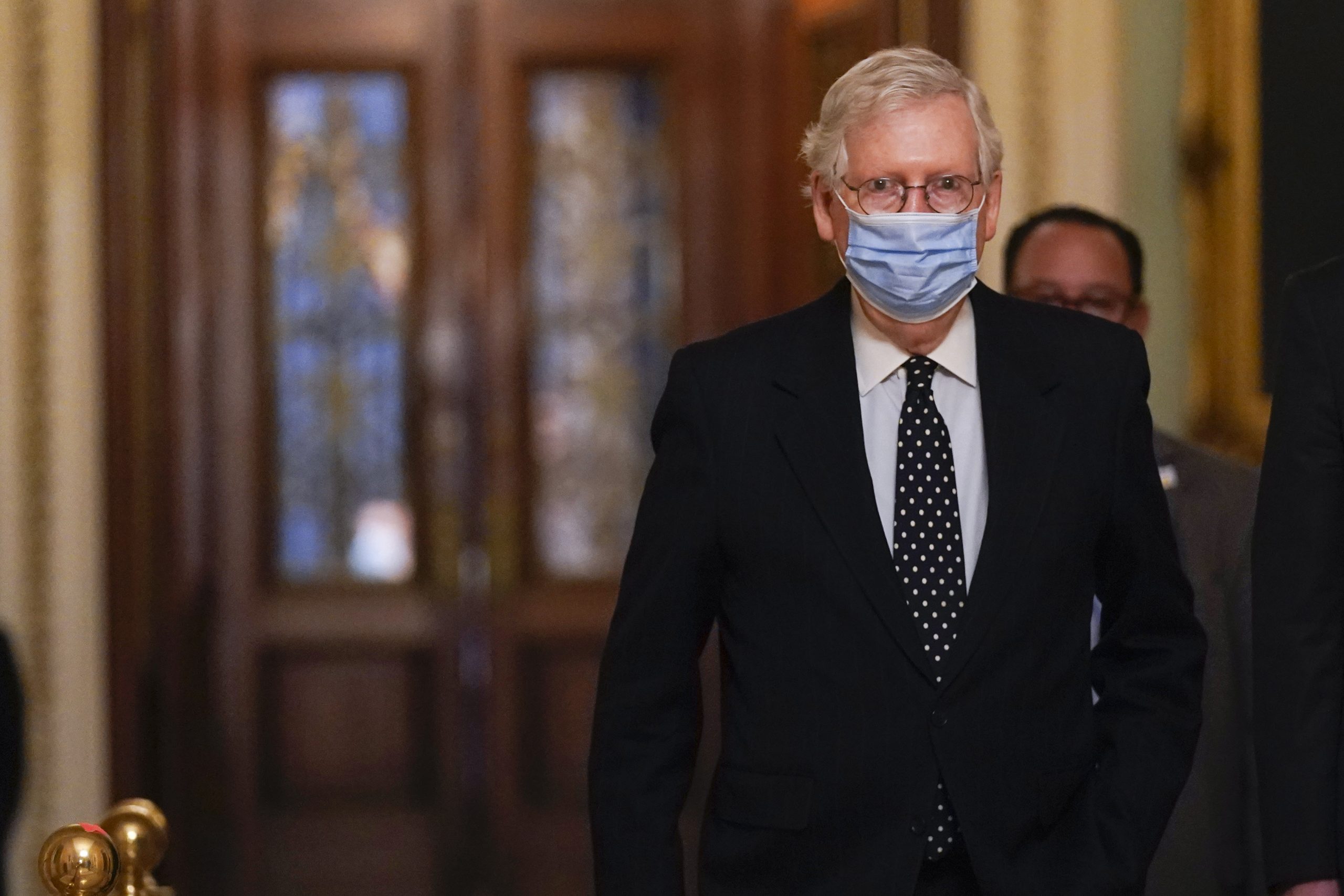
Republican senators are all over the map when it comes to a conviction vote on an impeachment charge against former President Donald Trump for “incitement of insurrection.”
Senators are weighing rage about the Jan. 6 Capitol invasion against a desire to move forward and not stall on working with the new Biden administration, reading the tea leaves from anonymously sourced articles relaying opinions from Senate Minority Leader Mitch McConnell, considering constitutional loopholes can give them the best of both worlds, and working through the electoral consequences of either side that they take.
Recommended Stories



Assuming that all 50 Democrats vote in favor of convicting Trump on impeachment charges, an additional 17 Republicans would have to join in voting to convict to meet the Constitution’s two-thirds threshold. If that happened, simple majority votes in the House and Senate would bar Trump from being able to hold public office again.
Nearly all of the 50 Republicans refuse to say exactly whether they would vote to convict or acquit Trump, citing their duty as impartial jurors. But most of them have delivered other statements that reveal whether they’re leaning toward convicting Trump, are open to it, or appear opposed to the impeachment process entirely.
The four Republican senators who are most open to voting to convict are Alaska Sen. Lisa Murkowski (“I want him out,” she said following the Capitol riot); Utah Sen. Mitt Romney, who was the only Republican who voted to convict Trump on an article of impeachment last year; Nebraska Sen. Ben Sasse, who said he believes Trump “disregarded his oath of office”; and Pennsylvania Sen. Pat Toomey, who is retiring at the end of his term in early January 2023 and has said that he believes Trump “committed impeachable offenses.”
“When the president incites an attack against Congress, there must be a meaningful consequence,” Romney said on Jan. 11.
Maine Sen. Susan Collins, a centrist politician in the caucus, is also thought to be one of the more likely senators to vote to convict Trump, but she has declined to comment on the matter.
If those four or five voted to convict, still another dozen senators would have to join them to meet the two-thirds threshold.
Senate Minority Leader Mitch McConnell has reportedly said that he is undecided on how he will vote, giving a green light for other Republican senators to vote in favor of conviction.
But only about nine other senators have indicated some openness to voting for impeachment. Of those, six are up for reelection in 2022 (though Chuck Grassley of Iowa, 87, may not seed another term), including Ohio Sen. Rob Portman, North Carolina Sen. Richard Burr, and Oklahoma Sen. James Lankford.
With McConnell pushing to delay a Senate impeachment trial for two weeks, it’s likely that the public appetite for impeachment among senators and the public wanes, potentially tipping those open to the idea of conviction into the acquittal camp over time.
Blowback to McConnell from conservatives such as Fox News host Sean Hannity, who said that McConnell should step down as leader over his openness to conviction, could spook the senators. No. 3 House Republican Rep. Liz Cheney of Wyoming being scolded by her fellow caucus members for voting in favor of impeachment (and already having primary challengers over the vote) is another warning sign.
Bottom line: At this point, the numbers are not there for a Trump conviction.
Around 21 Republican senators have expressed opposition to the impeachment process, a sign that they are unlikely to vote to convict Trump.
“Impeaching and trying a president after he has left office is petty, vindictive, mean spirited, and divisive. Unfortunately, it’s par for the course with how the Democrats are approaching this moment,” Sen. Ted Cruz, who objected to accepting some Electoral College results, said on Wednesday.
The most common reason Republican senators give for opposing impeachment is that it will cause further unnecessary division.
South Carolina Sen. Tim Scott said impeachment will “lead to more hate and a deeply fractured nation,” while Kansas Sen. Roger Marshall said it will “only raise already heated temperatures.” Wyoming Sen. Cynthia Lummis, North Dakota Sen. John Hoeven, Tennessee Sen. Bill Hagerty, and others expressed similar sentiments.
In addition to that, other senators assert that post-presidency conviction on impeachment is unconstitutional, although numerous legal scholars (including some at the right-wing Federalist Society) say that it is perfectly constitutional.
“Thee Senate lacks constitutional authority to conduct impeachment proceedings against a former president,” Arkansas Sen. Tom Cotton said in a statement.
Of the dozen or so remaining senators who have not made statements about impeachment, two of them seem extremely unlikely to vote in favor of conviction: Missouri Sen. Josh Hawley and Louisiana Sen. John Kennedy. Both objected to accepting Electoral College results on Jan. 6.
Another five are up for reelection in 2022 (John Boozman of Arkansas, Michael Crapo of Idaho, Mike Lee of Utah, Jerry Moran of Kansas, and Todd Young of Indiana), meaning fear of blowback from constituents for a conviction vote could weigh heavier on them.
