

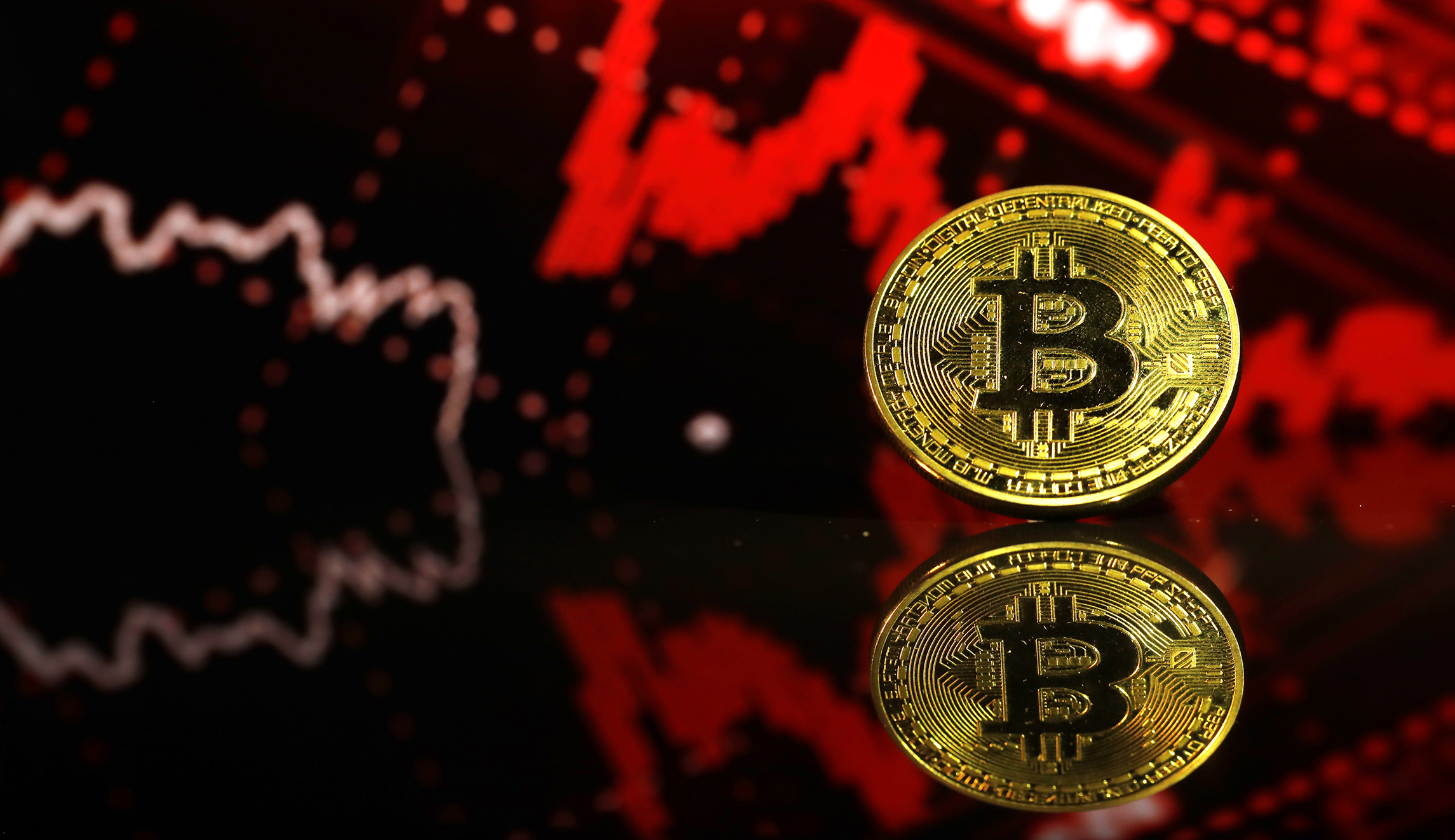
Cryptocurrency mining operators are shutting down aspects of their China operations after Beijing promised a “severe” crackdown on the growing industry.
Bitcoin, Ethereum, and other so-called altcoins plummeted in value over the past week as regulatory news from China caused the markets to decline. On Friday, Chinese Vice Premier Liu He called for the “crackdown on Bitcoin mining and trading behavior, and resolutely prevent the transmission of individual risks to the social field.”
Recommended Stories


While the news out of China sent cryptocurrencies into a spiral with some investors selling their coins and moving out of the market, it also caused some companies in China to plot to move their operations out of the country given the increasingly stringent regulatory stance that Beijing is adopting.
Huobi, the second-largest cryptocurrency exchange in the world by volume, announced over the weekend that it has suspended Chinese cryptocurrency mining hosting services and the sale of machines used to mine the internet tokens in China.
VOLATILE CRYPTOCURRENCIES GO MAINSTREAM AS GOLDMAN SACHS DECLARES BITCOIN A NEW ASSET CLASS
“Due to recent dynamic changes in the market, in order to protect the interests of investors, a portion of services such as futures contracts, ETP, or other leveraged investment products are temporarily not available to new users from a few specified countries and regions,” the company told CoinDesk. “Huobi always strives to abide by the evolving policies and regulations of each jurisdiction to adhere to risk and preserve the well-being of our users and their assets.”
Crypto mining pool BTC.TOP also announced that it would be suspending its operations in China due to regulatory risks and HashCow, another crypto mining company that owns the world’s largest mining farms, said that it would stop selling new mining rigs to customers in China, Reuters reported.
“We will actively support all kinds of laws and regulations in the country to avoid regulatory risks,” HashCow said,
Cryptocurrency mining is complex, expensive, and consumes a lot of energy — also raising environmental concerns. High-powered computers are used to create rigs that verify virtual coin transactions in order to mine for virtual currencies such as Bitcoin.
China is responsible for more than 75% of the Bitcoin mining in the world, and with that comes major energy costs, according to researchers who published their findings in Nature Communications. The researchers said that, without policy intervention, the annual energy consumption of Bitcoin in China is expected to peak in 2024, generating 130.5 million metric tons of carbon emissions.
Even as it cracks down on cryptocurrency mining, China’s central bank created the digital yuan — a currency that it sees as a potential challenger to the global supremacy of the U.S. dollar, according to Fortune.
Justin d’Anethan, head of exchange sales at the digital assets financial services company Diginex, predicts that miners affected by China’s latest regulatory push will move their operations to neighboring countries such as Kazakhstan, Mongolia, and Afghanistan. He said China’s Friday move “shows a continuing trend of stronger government action and serious consideration from regulators.”
While China’s statements this past week created a massive selloff and jitters in the market. Bitcoin, Ethereum, and other cryptocurrencies began to rebound on Monday from their Sunday lows. On Sunday, Bitcoin tanked to about $31,200, but on Monday it rose more than 15% and is flirting with $40,000.
Ethereum, the second-largest cryptocurrency, was up more than 26% on Monday and was trading at more than $2,600 after plummeting to just over $1,700 the day before. Ethereum had been trading at highs of more than $4,300 earlier this month. Dogecoin, a “meme coin” that has been hyped by billionaire investor Elon Musk, hovered around 36 cents on Monday afternoon after cratering to below 25 cents on Sunday afternoon.
While the cryptocurrency markets are now incredibly volatile, some investors and companies are bullish about the future of digital currencies. Financial services giant Goldman Sachs labeled Bitcoin a “new asset class.”
CLICK HERE TO READ MORE FROM THE WASHINGTON EXAMINER
“And it doesn’t behave as one would intuitively expect relative to other assets given the analogy to digital gold; to date, it’s tended to be more aligned with risk-on assets,” said Mathew McDermott, the firm’s global head of digital assets. “But clients and beyond are largely treating it as a new asset class, which is notable—it’s not often that we get to witness the emergence of a new asset class.”
