

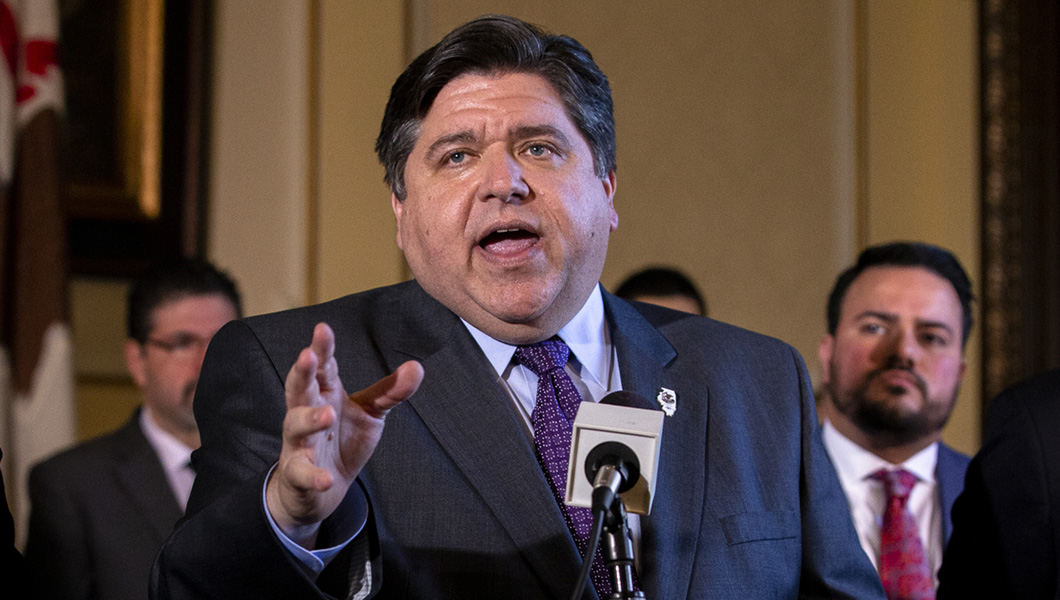
Democratic Illinois Gov. J.B. Pritzker signed legislation Friday that officially rolled back right-to-work protections that the state’s town of Lincolnshire had established.
Pritzker said the legislation, dubbed the Collective Bargaining Freedom Act, “ensures that Illinois and all of its communities will never be a Right to Work state.”
Recommended Stories


“From the start, right to work was an idea cooked up to lower wages, slash benefits and hurt our working families,” Pritzker said Friday. “‘Right to work’ has always meant, ‘right to work for less money,’ and it’s wrong for Illinois.”
Right-to-work laws prohibit union management contracts that say that all workers must either join a union or else pay it a regular fee. The fees, dubbed “security clauses,” in theory compensate the union for its collective bargaining on behalf of the worker. Right-to-work laws are allowed at the state level under the National Labor Relations Act and 27 states have them, but it is less clear if local governments can adopt them as well. Some conservative groups have promoted the idea.
Lincolnshire, a town in southern Illinois, passed an ordinance establishing it as a “right to work zone” in 2015. It was subsequently overturned by a federal court, which ruled that only states had the authority to adopt the laws.
Pritzker said he agreed with the court’s ruling. “The law as it is does not allow a state to hand this responsibility down to the local communities. This bill actually just establishes what is the law today,” he told the Chicago Tribune.
