

A group of outside conservative groups developing a plan to repeal Obamacare said they would ensure the final product does not allow taxpayer funding to go toward covering abortions.
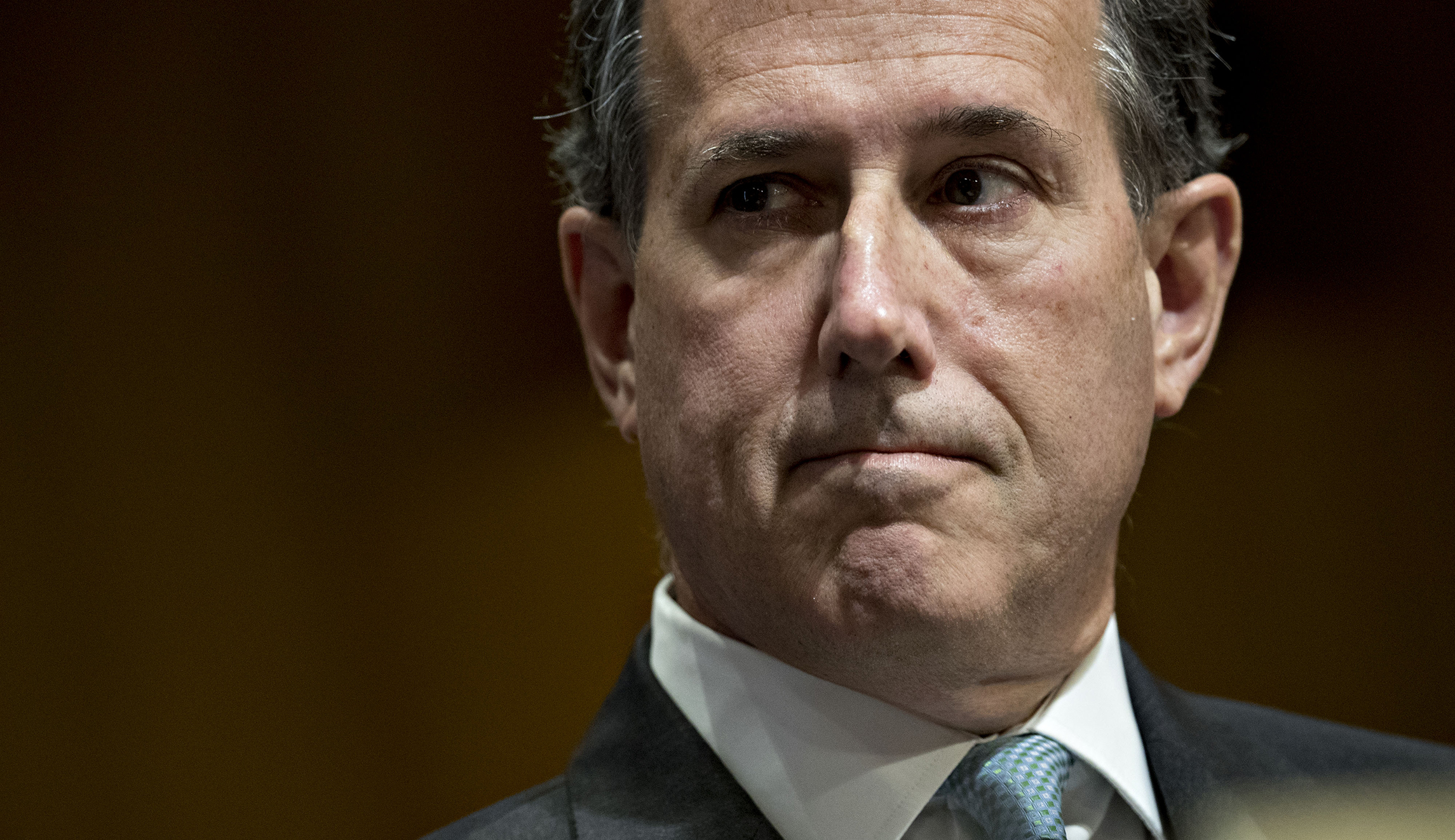
The coalition led by the right-leaning think tank Heritage Foundation and former Pennsylvania Republican Sen. Rick Santorum said that it has been working with anti-abortion groups while drafting the new plan. The statement comes after criticisms surfaced about a leaked summary of the plan’s outline.
“When our plan is released, it will include strong pro-life priorities as well as recommendations that focus on providing Americans relief from Obamacare’s high costs and lack of choice while helping to heal the broken private small-group and individual insurance markets,” said Marie Fishpaw, Heritage’s director of domestic policy studies, in a statement.
Recommended Stories



The dispute centers on a summary of the plan leaked by Topher Spiro, vice president of health policy at the left-leaning think tank Center for American Progress, a few weeks ago.
In the summary, the plan would include a short-term extension of insurer payments called cost-sharing reduction payments. President Trump in the fall eliminated the payments, which reimburse insurers for a requirement to lower out-of-pocket costs for low-income Obamacare customers.
But conservative health policy expert Chris Jacobs wrote in the Federalist Thursday that the inclusion of the cost-sharing payments in the repeal plan was “shocking” because paying CSRs “amounts to taxpayer funding of abortion coverage.”
To get Obamacare repeal through the Senate, Republicans would have to use a procedural tool called reconciliation that lets budget bills be approved with only 51 votes instead of 60 needed to break a filibuster. But using reconciliation comes with certain restrictions, which include preventing any non-budgetary items attached to a reconciliation bill.
The summary intends to use language from an Obamacare stability bill touted by Sens. Lamar Alexander, R-Tenn., and Susan Collins, R-Maine, for the CSRs. That bill was not meant to go through reconciliation, but through the regular Senate because it would have had Democratic support.
The effort collapsed in March because of a disagreement over abortion funding restrictions.
Jacobs wrote that since the bill’s language would be included in the new reconciliation legislation, it likely means that CSR payments wouldn’t be protected under the Hyde amendment, a common spending rider that prevents federal funding from being used to cover abortions.
Adding the Hyde amendment to the CSR payments likely would be an “exercise in futility,” Jacobs wrote.
The provisions “would almost certainly not pass muster with the Senate parliamentarian,” he added. The parliamentarian acts like a referee and determines what does and does not meet reconciliation requirements in a bill.
The Senate could pass a waiver for adding Hyde language, but such a waiver would require 60 votes in the Senate. Republicans hold a 51-vote majority.
Fishpaw said Jacobs’ piece was an “incorrect characterization” of the group’s efforts.
“The column points to an unverified document — touted by a far-left Obamacare advocate who had never attended any coalition meetings,” she said. “That document was not viewed by members of the health policy group. While it described some general ideas that the health policy consensus group had discussed, it contained substantial inaccuracies and does not represent our final proposal,” she said.
Heritage said in response to a question from the Washington Examiner that the proposal doesn’t include the CSR language and is “focused on the terms and conditions of the block grant.”
Jacobs also questioned the veracity of the summary, but wrote in his column that he checked with people working on the new plan. The concepts and policies outlined in the summary align with Heritage’s discussions, Jacobs said his sources told him.
Jacobs told the Washington Examiner that Heritage’s response does not “dispute the core message of my article: That Sen. Santorum and others have repeatedly advocated for inclusion of the exact ‘stability’ language Sens. Collins and Alexander endorsed.” He added that such a scenario “would almost certainly see important pro-life protections on that funding stricken from the bill.”
“If Heritage and Sen. Santorum say that they will include strong pro-life protections in their final product, I will take them at their word. But the fact that, after eight months of internal deliberations, Sen. Santorum and the Heritage group did not appear to understand Senate procedure when making their repeated statements about the Collins-Alexander language suggests serious shortcomings in that process.”
It is not clear if there is enough support for Obamacare repeal again in the Senate even through reconciliation.
Sen. Lindsey Graham, R-S.C., said he is working on a new plan and trying to build a coalition to bring repeal up again this year. But other Republicans doubt if they have enough support, pointing to continued opposition from Sen. Rand Paul, R-Ky., and the extended absence of Sen. John McCain, R-Ariz., due to brain cancer treatments.
