

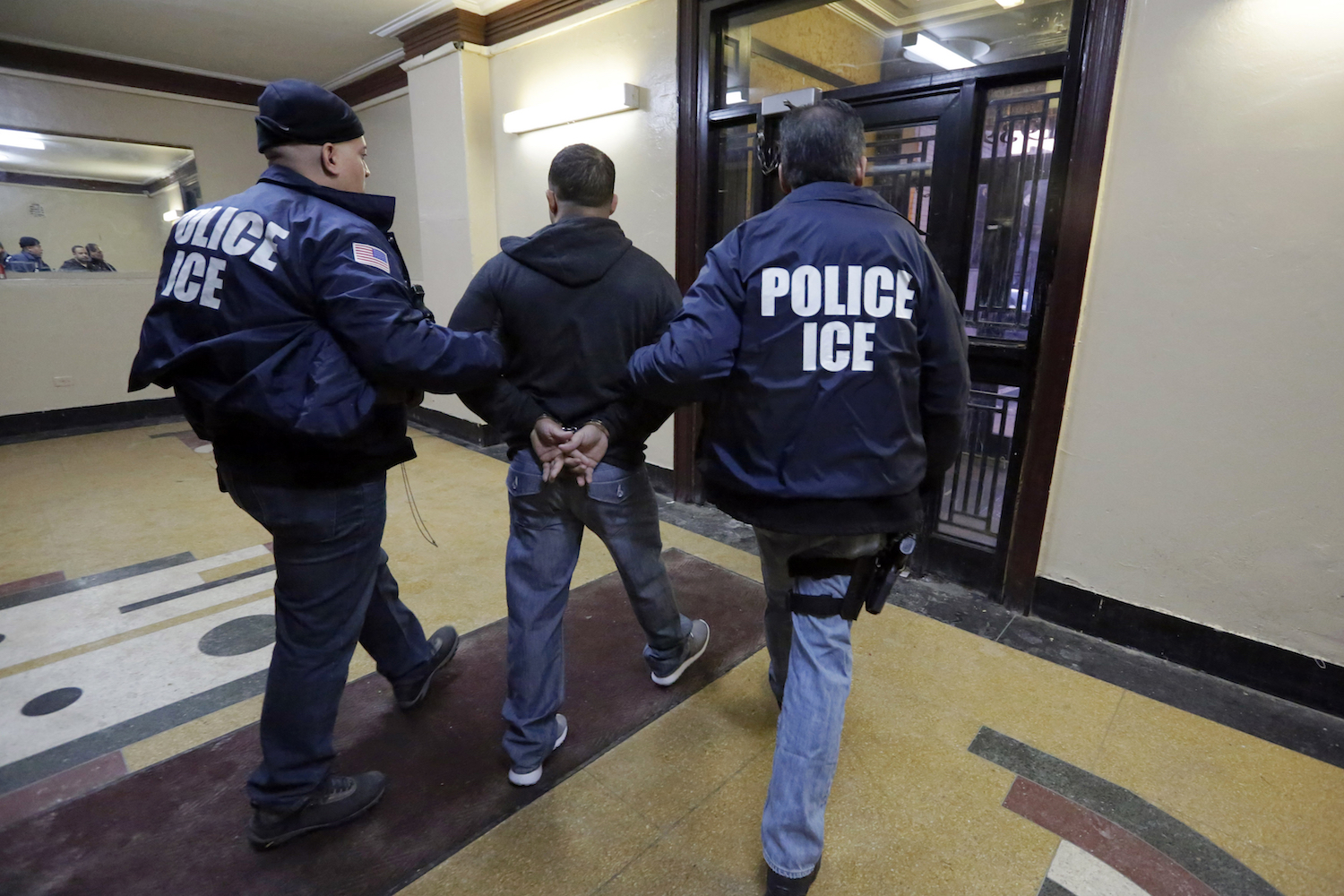
A top official of U.S. Immigration and Customs Enforcement warned Monday that a Democratic effort to limit detentions would create a new “pull factor” for illegal immigration, weakening border security while forcing the release of current inmates.
“They are trying to undermine our ability to do interior enforcement,” ICE Deputy Director Matt Albence told reporters on a call arranged by the White House. “If [prospective illegal immigrants] know that there is no enforcement officer in the interior of the United States out there looking for them, you will continually have that pull factor and you will never secure the border.”
Recommended Stories


The proposed detention cap, pushed by congressional Democrats, has stalled bipartisan talks seeking to avert another partial government shutdown over border policy.
A proposed detention limit emerged as a key sticking point this weekend as bipartisan lawmakers discuss border policies following a 35-day shutdown over President Trump’s bid for border wall funds. Funding for portions of the government run out Feb. 15, and Trump has threatened to declare a national emergency to build a wall if Democrats don’t approve border wall funds.
The Trump administration has requested funding for 52,000 detention beds. Albence said that about 20,000 to 22,000 people currently are detained by ICE, but that the administration requested more beds in response to anticipated demand and a desire for flexibility.
Democrats reportedly want to cap detentions at 16,500 between enactment of the spending law and the end of fiscal 2019 on Sept. 30 — which Albence said would result in immediate release of inmates.
“If we are forced to live within a cap based on interior arrests, we will be immediately forced to release criminal aliens that are sitting in our custody,” he said. “We will be releasing gang members, we will be releasing individuals convicted of crimes of domestic violence and drug crimes, and we will be limited in our ability to respond to state and local law enforcement.”
