

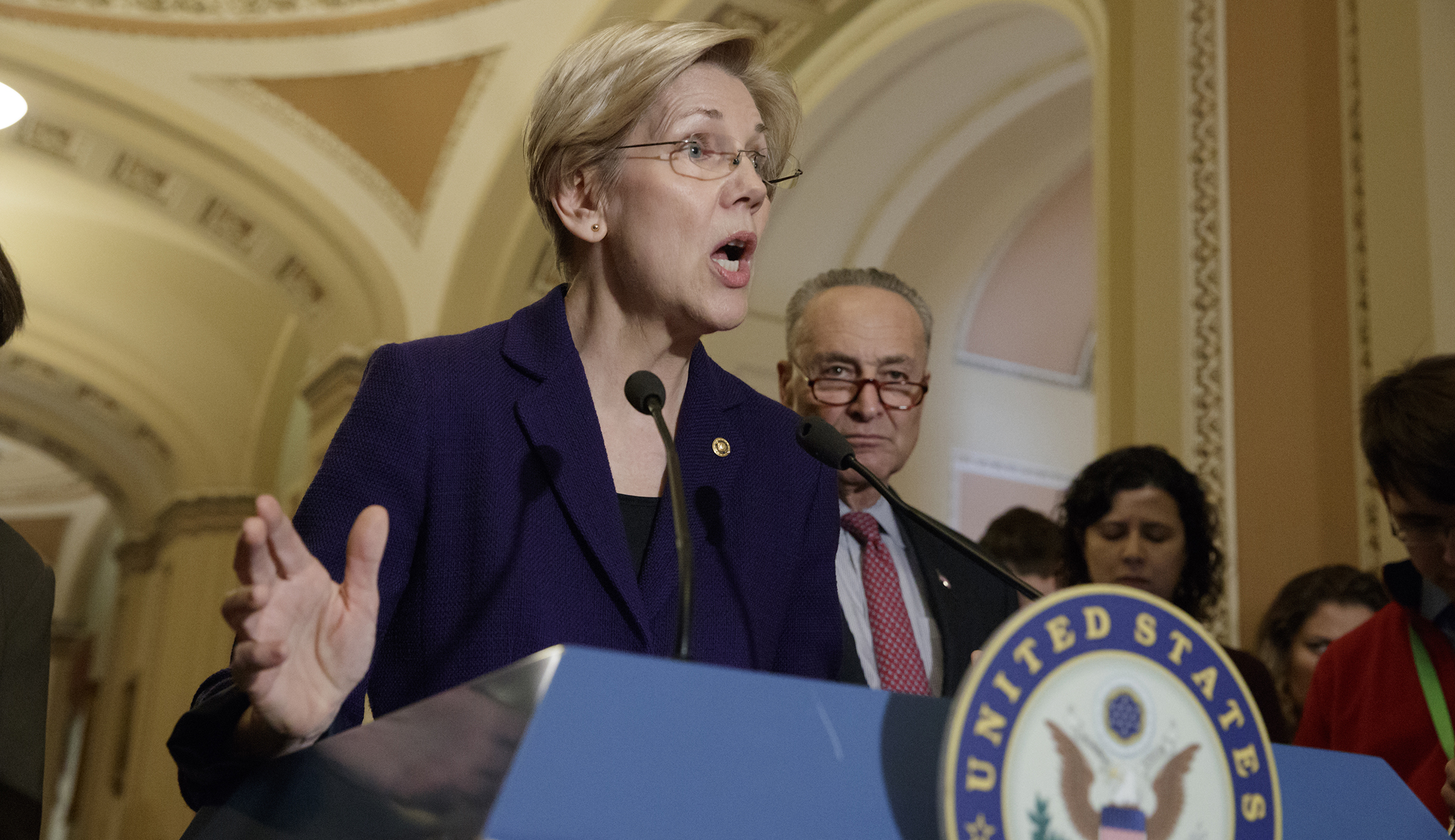
Conservative groups say they are happy that Senate Democrats have introduced legislation to repeal all state right-to-work laws, arguing that the lawmakers are raising the anti-union measure’s profile.
Recommended Stories



Right-to-work laws prohibit workers from being forced to join a union or otherwise financially support one as a condition of employment. The Democrats’ repeal bill would force the 27 states that have the laws to allow unions to demand regular payments even from non-member workers.
The National Right to Work Committee said it welcomed a debate on the issue, arguing that it could boost congressional interest in pro-right-to-work legislation as well.
“That bill is an offense against freedom, integrity, justice, and every other ideal that America was built on. Unfortunately, this sort of thing comes as no surprise, considering that these politicians are entirely dependent on the union bosses confiscating wages of rank-and-file workers and funneling it into their reelection campaigns. This sort of abuse is exactly why 28 states passed right-to-work laws in the first place and why we need a national right-to-work law,” said group Vice President Greg Mourad. Missouri’s legislature passed a right-to-work law this year, but it is on hold pending a voter referendum next year.
Matt Patterson, executive director of the Center for Worker Freedom, which is affiliated with Americans for Tax Reform, said debating the issue would be a losing proposition for Democrats. “Right to work laws do not prohibit unions from organizing, nor do they prevent anyone from joining or financially supporting a union, if that’s what they want. So, what exactly is the Dems’ problem with right-to-work? That it allows people an option? That is preserves their First Amendment freedoms of speech and assembly? Just goes to show liberal hypocrisy on ‘choice.'”
Sens. Sherrod Brown, D-Ohio, and Elizabeth Warren, D-Mass., sponsored the legislation. They argue that right-to-work laws are wrong because they make it harder to form unions.
“At a time when Americans are working harder and earning less for the time they put in, we should be making it easier for workers to raise their voices and bargain for better wages and safer working conditions. Right-to-work is really right to work for less,” Brown said.
The laws specifically prohibit union-management contracts that require all workers join the union or pay it a regular fee. The provisions, dubbed “security clauses” by unions, are common in non-right-to-work states. Unions argue they are owed the money to pay for collective bargaining expenses that benefit all workers.
Labor leaders hate right-to-work laws because allowing workers to opt-out of members can put a severe drain on their treasuries. Right-to-work has experienced a revival in recent years with five states adopting versions of the law since 2012, including states with strong pro-union histories such as Wisconsin, Michigan and Indiana. Missouri would be the sixth.
Organized labor is a major source of campaign funding for the Democratic Party, giving more than $59 million in the 2016 election cycle alone, according to the Center for Responsive Politics.
