

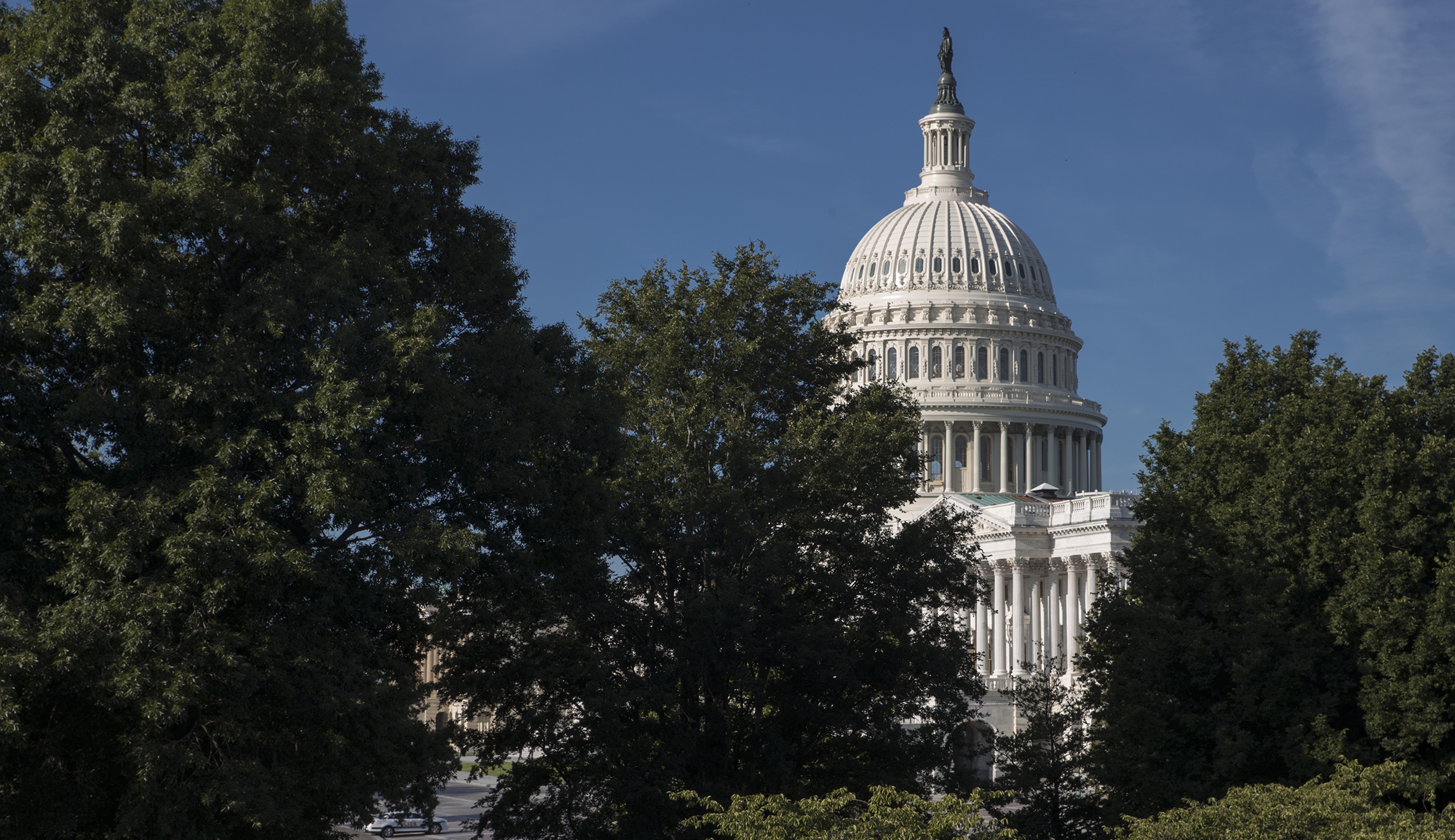
Congress will start tackling the fiscal 2018 budgets next week, while the House votes on a bill to curb late-term abortions and the Senate confirms President Trump’s pick to chair the Federal Communications Commission.
Republicans are eager to pass tax reform and plan to hitch it to the fiscal 2018 budget resolution, which will allow them to use special rules that can be used to circumvent a filibuster by the Democrats.
Recommended Stories


The Senate unveiled a budget plan on Friday that paves the way for tax cuts worth $1.5 trillion. The Senate Budget Committee will mark up the plan next week.
The House is further ahead in the budget process and will debate and vote on their 2018 budget resolution next week.
The two chambers will then work out differences between the two so a compromise resolution can serve as the vehicle for tax reform.
“Without it, Democrats will continue to play partisan politics and obstruct our efforts to get our economy flourishing and growing at its full potential,” Majority Leader Mitch McConnell, R-Ky., said.
Minority Leader Chuck Schumer, D-N.Y. said the GOP budget plan is “the clearest sign yet that Republicans are intent on pursuing a tax plan that would blow a huge hole in the deficit and stack up debt, leading to cuts in programs that middle-class Americans rely on.”
Outside of the budget, the House is also planning a vote on legislation that would ban abortions after the 20th week.
The GOP has been trying to get the measure signed into law for years. It’s based on medical evidence that a fetus feels pain after the 20th week of development.
Republicans kicked off the House effort to pass the Pain Capable Unborn Child Protection Act at a press conference that featured a healthy five-year-old boy who was born prematurely at 20 weeks.
“It is time that America recognizes and responds to the cries and humanity of these helpless little pain-capable babies and the inhumanity of what is being done to them,” said Rep. Trent Franks, R-Ariz., the sponsor of the legislation.
Senate Democrats have blocked the legislation in the past and are likely to do so again this year if McConnell brings a House-passed bill to the floor.
In the Senate, lawmakers are on track to confirm Ajit Pai to new five-year term on the Federal Communications Commission. Pai was designated by President Trump to serve as FCC chairman.
He was first appointed to the board in 2012 by President Obama and confirmed unanimously. But he has since then drawn criticism from Democrats for opposing net neutrality and relaxing media ownership rules.
Pai, during the Obama administration, publicized a secret proposal from the FCC to send government researchers into newsrooms to question journalists about coverage choices.
But Senate Democrats, who are in the minority, do not have the power to block Pai thanks to a rule change in the Senate that allows lawmakers to confirm executive branch appointees with 51 votes, rather than 60 votes.
