

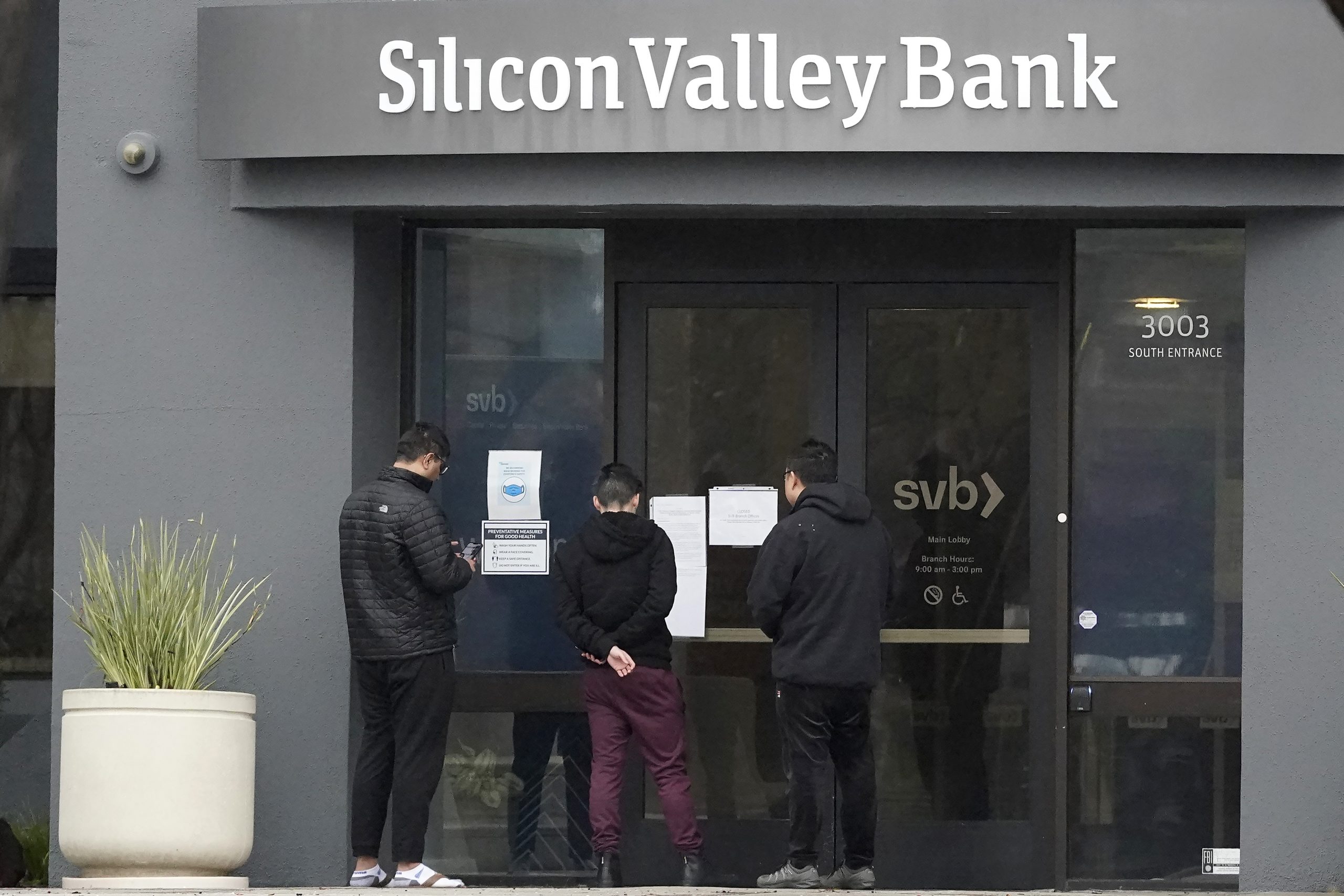
Federal bank regulators said Sunday that the Federal Deposit Insurance Corporation will employ emergency measures to back Silicon Valley Bank deposits in full.
Recommended Stories


News of the decision to guarantee deposits beyond the federally insured ceiling of $250,000 came in a much-anticipated joint statement from the Federal Reserve, Treasury Department, and FDIC two days after Silicon Valley Bank’s sudden collapse, which has sparked fears of a possible banking crisis. The Treasury also said Silicon Valley Bank’s senior management team would be removed.
SILICON VALLEY BANK COLLAPSE: CEO CASHED OUT MILLIONS WHILE EMPLOYEES GOT BONUSES
“After receiving a recommendation from the boards of the FDIC and the Federal Reserve, and consulting with the president, Secretary Yellen approved actions enabling the FDIC to complete its resolution of Silicon Valley Bank, Santa Clara, Calif., in a manner that fully protects all depositors,” the statement said. “Depositors will have access to all of their money starting Monday, March 13. No losses associated with the resolution of Silicon Valley Bank will be borne by the taxpayer.”
The agencies also plan to enact a similar plan for Signature Bank, which was closed on Sunday by New York’s state chartering authority.
California shuttered Silicon Valley Bank on Friday, just two days after the nation’s 16th largest federally insured bank announced that it needed to raise more than $2.2 billion to remain solvent, which sent its stock price plunging over 60% in 48 hours. The bank had achieved financial stardom during the pandemic because of major cash deposits from booming firms. Its securities portfolio rose from roughly $27 billion in 2020’s first quarter to approximately $127 billion at the end of 2021.
The fact that most of Silicon Valley Bank’s assets were seemingly secure — they were mainly longer-term government bonds — led many investors to feel the bank was secure. The government securities bought by Silicon Valley Bank pay a fixed rate, so when market interest rates were raised, a gap began to grow between how much the securities were worth on the open market and what they were valued on the bank’s books. The unrealized losses in Silicon Valley Bank’s securities portfolio in December had grown to more than $17 billion, a number expected to rise as the securities could only be sold at a loss.
The FDIC moved Silicon Valley Bank’s remaining assets on Friday to the newly created Deposit Insurance National Bank of Santa Clara, leaving customers to spend the weekend unsure if they would be able to secure their capital on Monday morning.
Treasury Secretary Janet Yellen said in an interview with CBS’s Face the Nation on Sunday morning that while the federal government did not intend to bail out the collapsed bank itself, regulators were looking at solutions for depositors.
“From the standpoint of depositors, many of which may be small businesses, they rely on access to their funds to be able to pay the bills that they have, and they employ tens of thousands of people across the country. We’ve been hearing from those depositors and other concerned people this weekend,” she said.
CLICK HERE TO READ MORE FROM THE WASHINGTON EXAMINER
“So let me say that I’ve been working all weekend with our banking regulators to design appropriate policies to address this situation. I can’t really provide further details at this time,” she added. “But what I do want to do is emphasize that the American banking system is really safe and well capitalized. It’s resilient.”
When pressed about a bank bailout, Yellen said, “Let me be clear that during the financial crisis, there were investors and owners of systemic large banks that were bailed out, and we’re certainly not looking. And the reforms that have been put in place means that we’re not going to do that again.”
