

PHILADELPHIA — Hillary Clinton plans to talk about how “it takes a village” in her acceptance speech at the Democratic National Convention Thursday night, but delegates want to know what she will say to unify their fractured party.
“I want to hear her speak to the Bernie Sanders delegates and bring them in,” Florida delegate Diane Hatsis-Neuhoff, told the Washington Examiner.
Recommended Stories


On Thursday morning, Clinton campaign manager Robby Mook offered reporters a preview of what will be the most important address thus far of Clinton’s political career.
“You will hear her invoke different principles that have guided her throughout her career. In particular you will hear her talk about how it takes a village. This was a theme from her 1992 book,” Mook said.
“In this campaign in 2016, we are talking about how we are stronger together, and you will hear her flesh out not just what this means from a values standpoint, but specific policies to make our country stronger and to do it together.”
Clinton will address a convention that has been clouded by infighting over the direction of the party and who should be running at the top of the ticket.
A significant faction of delegates hoped Sanders, a self-declared socialist, would be their nominee, but he officially lost to Clinton after a Tuesday-night roll call vote.
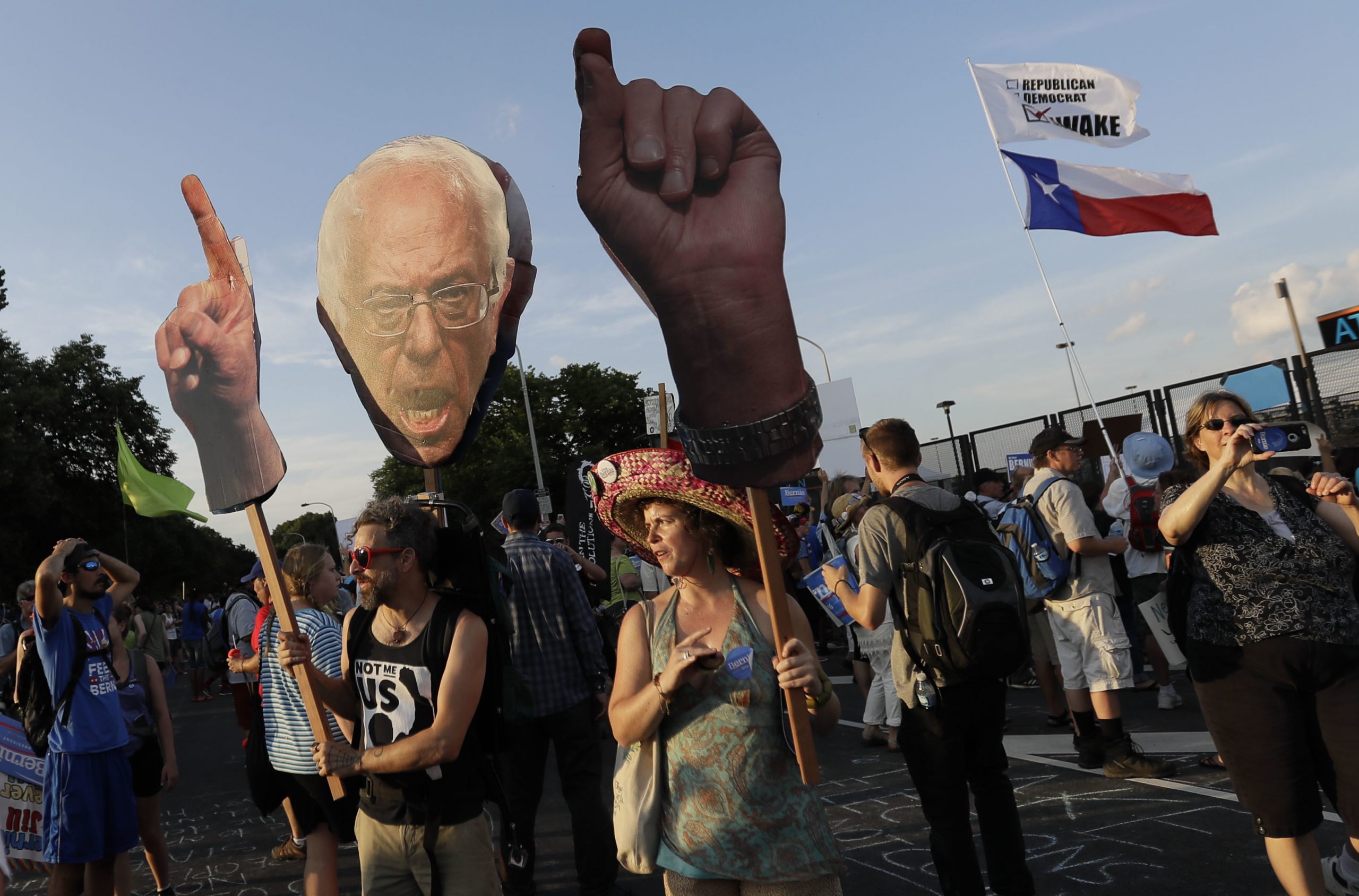
Many of the nearly 1,900 delegates who backed Sanders are now angry, hurt and in some cases threatening to leave the party.
While Clinton’s nomination as the first major female presidential candidate is historic, many delegates say the appearance that everyone is thrilled is an illusion.
“There are people here, standing behind me, in front of me and throughout this week who feel that what we are doing is splitting this party apart,” California delegate Robert Shearer told the Examiner.
“The truth is, there is a deep divide in the Democratic Party. The facade is making things worse and furthering the divide. We are going to continue to talk about these issues. The progressive base of this party has had enough.”
Tensions flared between the Sanders and Clinton delegates in the days before the convention began when leaked emails from the Democratic National Committee appeared to show officials working to thwart Sanders’ campaign.
Sanders delegates made their dissatisfaction known on Wednesday night with signs protesting the Trans-Pacific Partnership trade agreement Clinton once supported but now opposes. Some held up Sanders signs and others, like Shearer, stood with tape over their mouths to symbolize their belief that the more liberal wing of the party has been silenced by the DNC.
“She needs to connect with the people who are are feeling hurt right now,” Hatsis-Neuhoff, 55, said. “Especially these younger millennials. They want to hear facts from her. They need to be able to trust her, and we all know there has been an issue with that.”
The angry delegates are among the 12 million voters who backed Sanders in the primary and who Clinton must now draw to her candidacy or risk losing them to third-party candidates or Republican nominee Donald Trump.
Delegates said Clinton could help mend the rift by using her speech to explain her stance on issues that have divided the party, like TPP.
“I would like to hear how she has evolved on all of these many issues that she was in full support of and now opposes,” Sanders delegate Eric Sunderland, of California, said. “If she could bring that, with some sincerity, it would go a long way.”
Mook said Clinton will address “specific policies,” but few expect her to address divisive issues like TPP, which President Obama is pushing to pass into law by the end of his term.
Dozens of delegates are equipped with anti-TPP banners they are prepared to raise when Clinton takes the stage.
“I doubt the TPP will be mentioned,” Sunderland said.
Instead, Mook said, Clinton is going to “stitch together” the themes of each night of the convention so far, “and talk about how this election is really a reckoning for the voters.”
Mook said Clinton will issue a warning aimed at some of the convention’s disgruntled delegates.
“Are we going to succumb to some very powerful forces that are tearing at our social fabric, that are dividing us economically and socially,” Mook said, “or are we going to come together to solve these problems, to build an economy that works for everyone, to make our nation and our world more secure and to make sure that every American has the same opportunities?”
David M. Drucker contributed to this report.
