

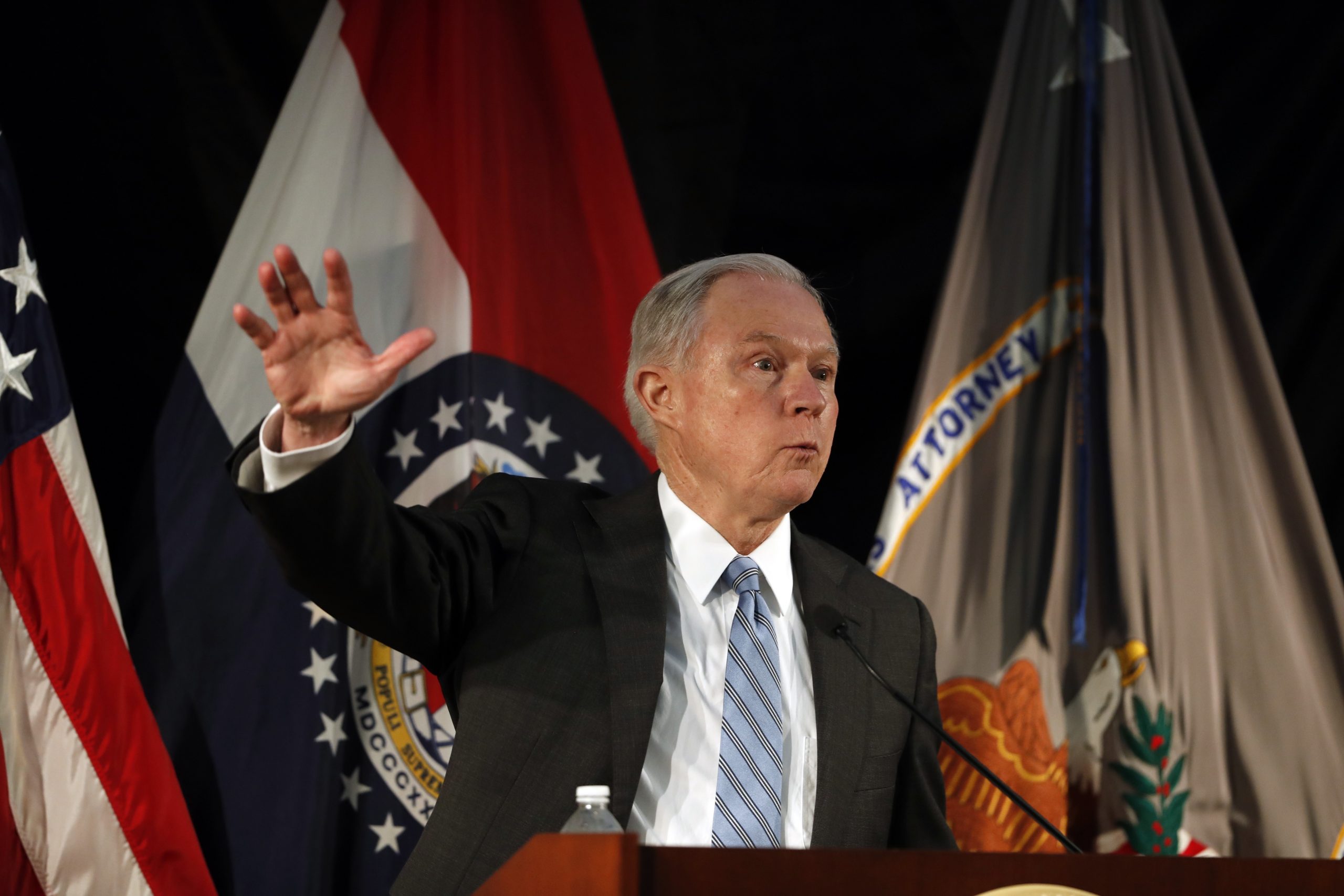
Attorney General Jeff Sessions has ordered a sweeping review of agreements that the Obama administration struck with police departments to reduce civil rights abuses, and while many of those consent decrees are legally binding in court, Sessions does have a way out of them if he wants.
Sessions has directed his staff to make sure all department programs adhere to the Trump administration’s policy of backing up police officers as they work to reduce violent crime. That includes consent decrees reached under Obama in the wake of high-profile violence between cops and black citizens in the local community.
Recommended Stories


If any of the Obama-era consent decrees don’t adhere to those principles, they could be in jeopardy, Jim Bueermann told the Washington Examiner.
Bueermann, president of The Police Foundation, explained Sessions’ memo as what any new boss would do: Come into a new role and review operations.
“It’s not unreasonable,” Bueermann said, especially for someone who philosophically believes “local policing is the responsibility of the local government and the state.”
Sessions likely has a few options for striking down agreements he doesn’t like. First, some of those consent decrees are still being negotiated in court, where the federal government is the plaintiff and the city is the defendant.
In those cases, federal government could simply decide it no longer wishes to negotiate the agreement, and walk away.
For the consent decrees already backed by a court, the federal government could go to the federal judge who oversaw the agreement and ask that it be dismissed, arguing that the police department no longer needs federal help.
A third way Sessions could pull back on consent decrees is by refusing to enforce them.
According to Matthew Miller, who served Attorney General Eric Holder’s spokesman, police departments rely on the Justice Department to enforce the consent decrees, which is a big reason why some local police departments went to the federal government for help in the first place.
Sessions then could “weaken [consent decrees] by simply looking the other way and not following through in mandating reforms,” Miller told the Washington Examiner.
Either way, Bueermann says cities currently in or currently negotiating a consent decree, such as Chicago and Baltimore, should “get ready for Plan B” when it comes to police reforms.
But it may be a while before “Plan B” is needed. According to a Justice Department official, there is no timetable for the review.
“[S]till a bit premature to know the what’s and when’s that will result from reviewing the policies of the Department,” the official told the Examiner.
In Baltimore, the Department of Justice has already tried to thwart a proposed consent decree.
Following Sessions’ memo, a federal judge denied a request by department lawyers to delay Thursday’s public hearing on the proposed consent decree — which was reached in the final days of the Obama administration. Then on Friday, U.S. District Judge James K. Bredar approved that consent decree, paving the way to overhaul the Baltimore Police Department.
“It would be extraordinary for the court to permit one side to unilaterally amend an agreement already jointly reached and signed,” the judge wrote in his dismissal of the department’s request. “Now it is time to enter the decree and thereby require all involved to get to work on repairing the many fractures so poignantly revealed by the record.”
At the hearing on Thursday, a DOJ attorney said the agency has “grave concerns” about the proposed consent decree.
John Gore, deputy assistant attorney general the Civil Rights Division, told Bredar that his agency has “grave concerns” about the agreement and believes the reform is “really the job of local officials.”
In a statement, Sessions blasted the Baltimore consent decree, saying it makes the city “less safe.”
“This decree was negotiated during a rushed process by the previous administration and signed only days before they left office,” Sessions said in a Friday statement. “While the Department of Justice continues to fully support police reform in Baltimore, I have grave concerns that some provisions of this decree will reduce the lawful powers of the police department and result in a less safe city.”
