

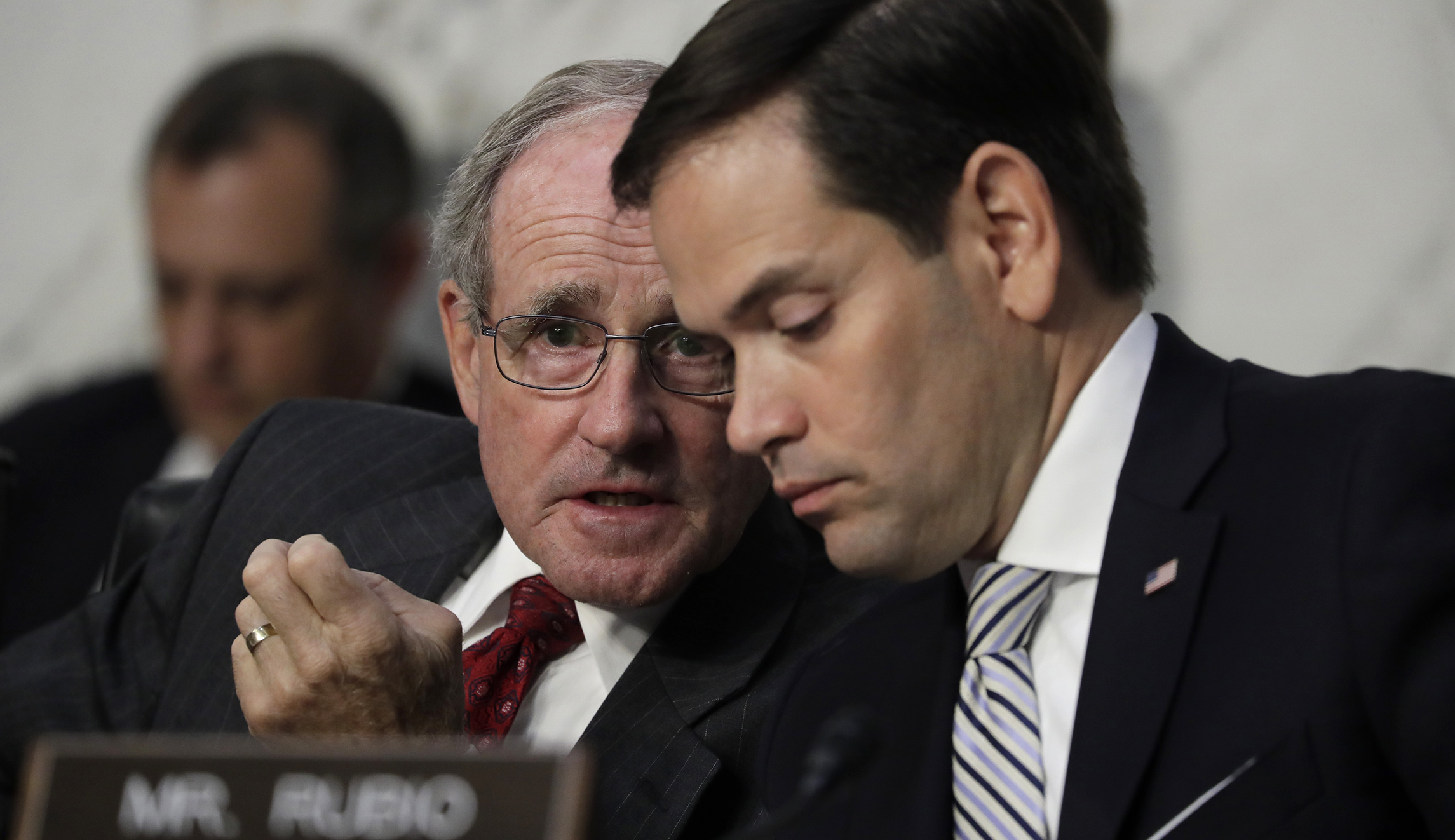
Sen. Marco Rubio, R-Fla., will defer to a more senior colleague rather than make a bid for the chairmanship of the Senate Foreign Relations Committee.
Senate Foreign Relations Chairman Bob Corker’s announcement that he will not seek re-election in 2018 creates a leadership opening on one of the most prestigious and influential committees in Congress. Rubio, following his unsuccessful run for president, is one of the highest-profile members of the panel, but he plans to defer to an Idaho Republican with more seniority on the committee.
Recommended Stories


“If Jim Risch wants to be chairman, I’ll support him,” Rubio said Wednesday, according to a statement provided by an aide.
That sidesteps a fight that would have been difficult to win, given the Senate’s seniority system. Risch and Rubio have been political allies, but the Idaho lawmaker made clear that he was willing to assert his rights.
“We have a long, clear history of how these things are resolved in the Senate,” Risch told the Washington Post. “We will follow that route when we get there.”
The seniority system can be an unforgiving process. When Republicans recaptured the Senate majority in the 2014 election cycle, then-Sen. Jeff Sessions, R-Ala., appeared poised to head the Budget Committee. He had served as the top Republican on the panel throughout their years in the minority, and used the post to amplify his preferred trade and immigration policies.
But his ascension to the chairmanship was foiled when Sen. Mike Enzi, R-Wyo., announced that he wanted the job.
“We have talked and I am deferring to his seniority so that he can lead the Budget Committee as its Chairman beginning in 2015,” Sessions said at the time, after contemplating a challenge against Enzi. “Mike graciously deferred to me two years ago after he timed out on [the health committee] as ranking member, and it has been my enormous privilege to serve as the panel’s ranking member these last four years, as well as to serve as the Judiciary ranking member for the two years before that.”
Risch didn’t say if he would pursue the Foreign Relations chairmanship. If he declines, it might not be his only shot at an A-list committee. He is the second-most senior Republican on the Senate Permanent Select Committee on Intelligence. That panel is chaired by Sen. Richard Burr of North Carolina. Burr was re-elected in 2016, but if the post became vacant for some reason, Risch would be precluded from consideration to succeed him if he held the Foreign Relations gavel.
