

The Justice Department is privately discouraging two of special counsel Robert Mueller’s top deputies from testifying before Congress.
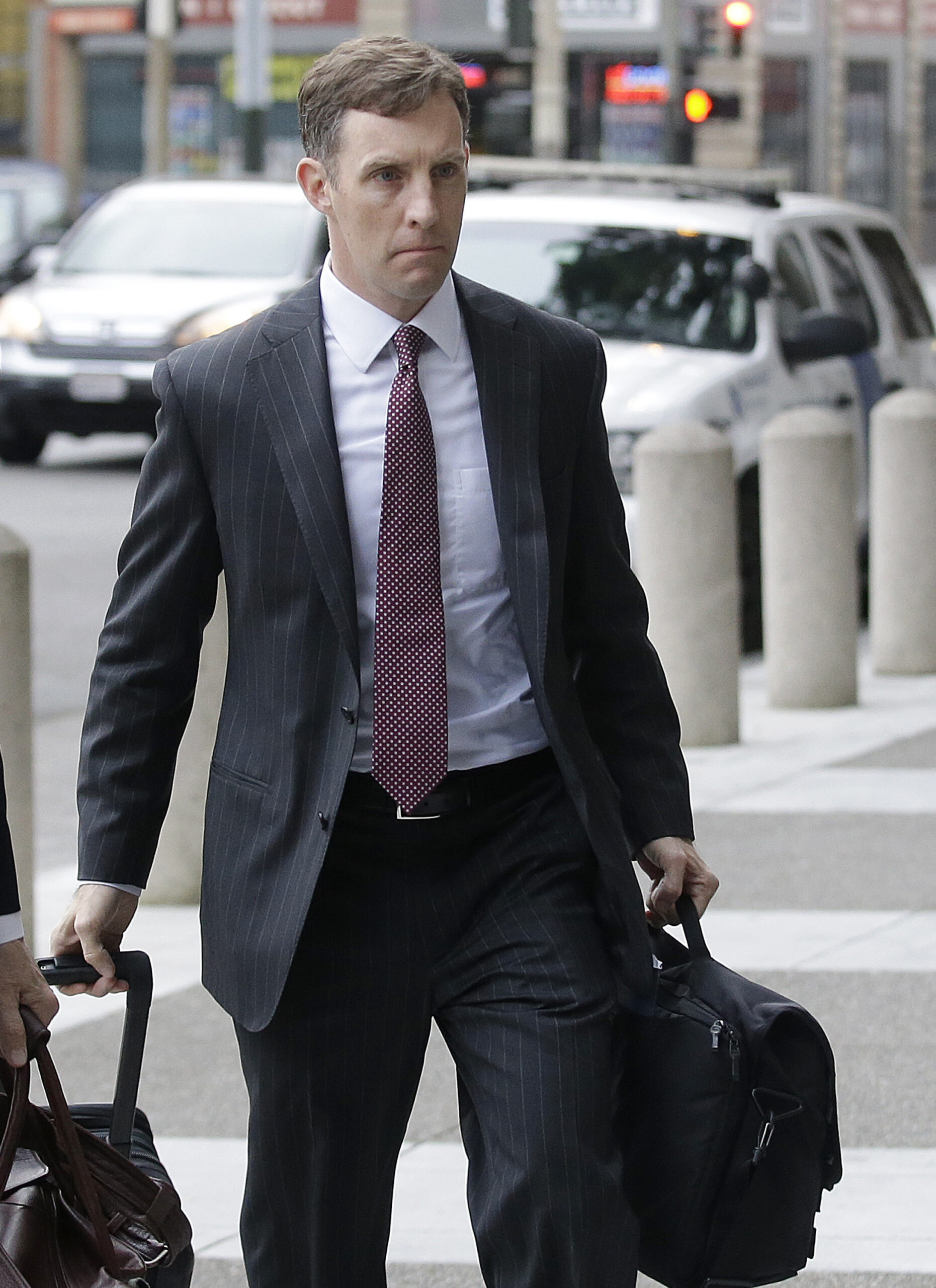
Aaron Zebley and James Quarles III have tentatively agreed to answer questions from the House Intelligence and Judiciary committees behind closed doors. But the Justice Department has informed both panels of its opposition to testimony from Zebley and Quarles and have also channeled this message to the pair of prosecutors, according to the New York Times.
Recommended Stories
A DOJ spokesperson did not immediately return the Washington Examiner’s request for comment.
Both Zebley, a close associate to Mueller, and Quarles, who focused on the obstruction portion of the Russia investigation, have retired from the DOJ and are private citizens, so the agency can only pressure them to bow out.
The news comes about a week ahead of Mueller’s back-to-back public testimony before the two Democrat-led committees following a pair of subpoenas from Chairmen Adam Schiff and Jerry Nadler. During a recent interview with CNN, Schiff said there will also be an “executive session” with members of Mueller’s staff.
In an interview with Fox News, Rep. Devin Nunes, the top Republican on the House Intelligence Committee, expressed concern about what one of Mueller’s top prosecutors might say in a closed setting as part of the deal to speak to lawmakers.
“Now what’s off about this is, supposedly he’s only agreed to testify for four hours. Four hours with the House Intelligence Committee and the House Judiciary Committee is not enough time to get everyone’s questions in,” Nunes said. “In addition, people should know he’s not willing to testify as of now behind closed doors and he’s supposedly going to send in Andrew Weissmann and his team of geniuses that came up with these conspiracy theories. And that’s not even going to be translated. So stay tuned.”
Although Attorney General William Barr has said he is fine with Mueller testifying, he accused the Democrats of trying to “create some kind of public spectacle” in an interview with the New York Times on Monday.
Delivering his only public statement so far on the Russia investigation at the end of May, Mueller indicated he had no desire to testify about his work, let alone do it publicly. “The report is my testimony,” he said.
Still, Schiff, who hails from California, is focusing his criticism on Barr, not Mueller. “Earlier when he said it is completely up to Bob Mueller whether he testifies, he was counting on Bob Mueller not wanting to testify and not be compelled to,” Schiff said. “But now I think his real motivation is exposed. He is nothing if not transparent and transparently the president’s agent.”
Mueller’s report, released in April with redactions, shows his team was not able to establish criminal conspiracy between the Russian government and the Trump campaign, but left open the question of possible obstruction of justice. The report laid out 10 instances in which Trump might have obstructed justice, but Mueller declined to make a determination on the matter, citing a Justice Department guideline that sitting presidents cannot be indicted.
Although Trump and his allies say the case is closed, Democrats argue Mueller’s refusal to clear Trump on obstruction provides them a road map to continue to investigate and possibly seek impeachment. Barr said he and former Deputy Attorney General Rod Rosenstein determined there was not sufficient evidence to establish that a crime had occurred.
