

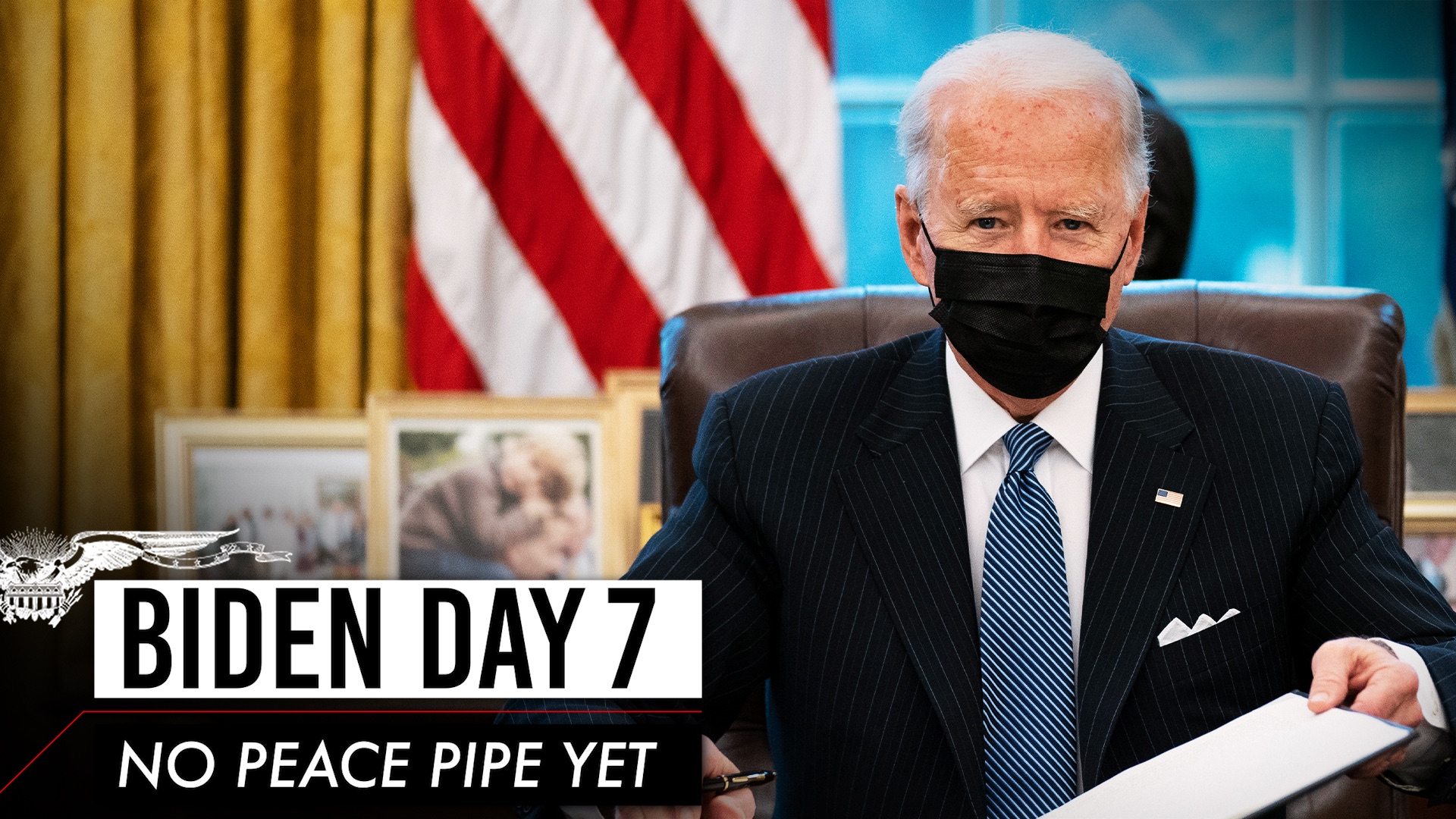
Nearly a week into the Biden administration, the United States is consumed with the same divisions and conflicts that marked the Trump administration.
None is more symbolic than Monday night’s delivery of an impeachment article against former President Donald Trump. The one charge is gravely serious in the eyes of Democrats, many of whom are still traumatized by Jan. 6.
On the Senate floor, Rep. Jamie Raskin, the House’s lead impeachment manager, said, “The president repeatedly issued false statements asserting that the presidential election results were the product of widespread fraud.”
But it’s a charge that’s absurd to many Republicans.
Former Director of National Intelligence John Ratcliffe said, “It’s just really a farce. There’s no constitutional basis to move forward with a trial against a private citizen.”
Some Republicans sense that impeachment may be just one component of a broader Democratic strategy to divide and conquer and, as former President Barack Obama’s chief of staff Rahm Emanuel once said, to “never let a crisis go to waste.”
Two crises, the Jan. 6 riot and the coronavirus pandemic, have given Democrats plenty of political ammunition.
“I had this very close encounter where I thought I was going to die,” Rep. Alexandria Ocasio-Cortez said.
And the deadly virus? With timing that seems strangely suspect, some oppressive restrictions and lockdowns are suddenly being lifted in blue states, such as California.
After the Capitol assault, Trump-aligned politicians, staffers, private companies, and voters are being subject to cancel culture, advertising boycotts, and censoring. Some academics are facing petitions for removal from universities and scientific organizations.
Democratic Rep. Stephanie Murphy of Florida has introduced a bill that would disqualify government employees from holding security clearances if they “knowingly engaged in activities conducted by an organization or movement … that spreads conspiracy theories and false information about the U.S. government.”
In a weekend piece, Washington Post columnist Margaret Sullivan called for the elimination of Fox News for its often pro-Trump agenda while ignoring her own publication’s partisan stance and its scrubbing of controversial quotes from then-vice presidential candidate Kamala Harris from its archives.
Meanwhile, Jeff Bezos, the owner of the Washington Post and Amazon, is rejecting mail-in voting for an Amazon workers unionization vote after supporting widespread mail-in voting in the presidential election.
Last summer, when antifa was pillaging in the Pacific Northwest, prompting a brief federal response, House Speaker Nancy Pelosi tweeted: “Trump & his stormtroopers must be stopped.”
But she welcomed the protection of the National Guard to protect the Capitol, where guardsmen will remain through March.
And when the President Biden signed an executive order last Wednesday on transgender rights, opponents claimed it will discriminate against women.
Wall Street Journal writer Abigail Shrier said, ‘It’s probably the greatest blow to women’s rights we’ve seen in decades.”
It is this kind of double standard that leaves those interested in compromise frustrated. Respected Republican Sen. Rob Portman has announced his plan to retire when his term is up.
In a statement, Portman said, “We live in an increasingly polarized country where members of both parties are being pushed further to the right and further to the left, leaving too few people to find common ground.”
