

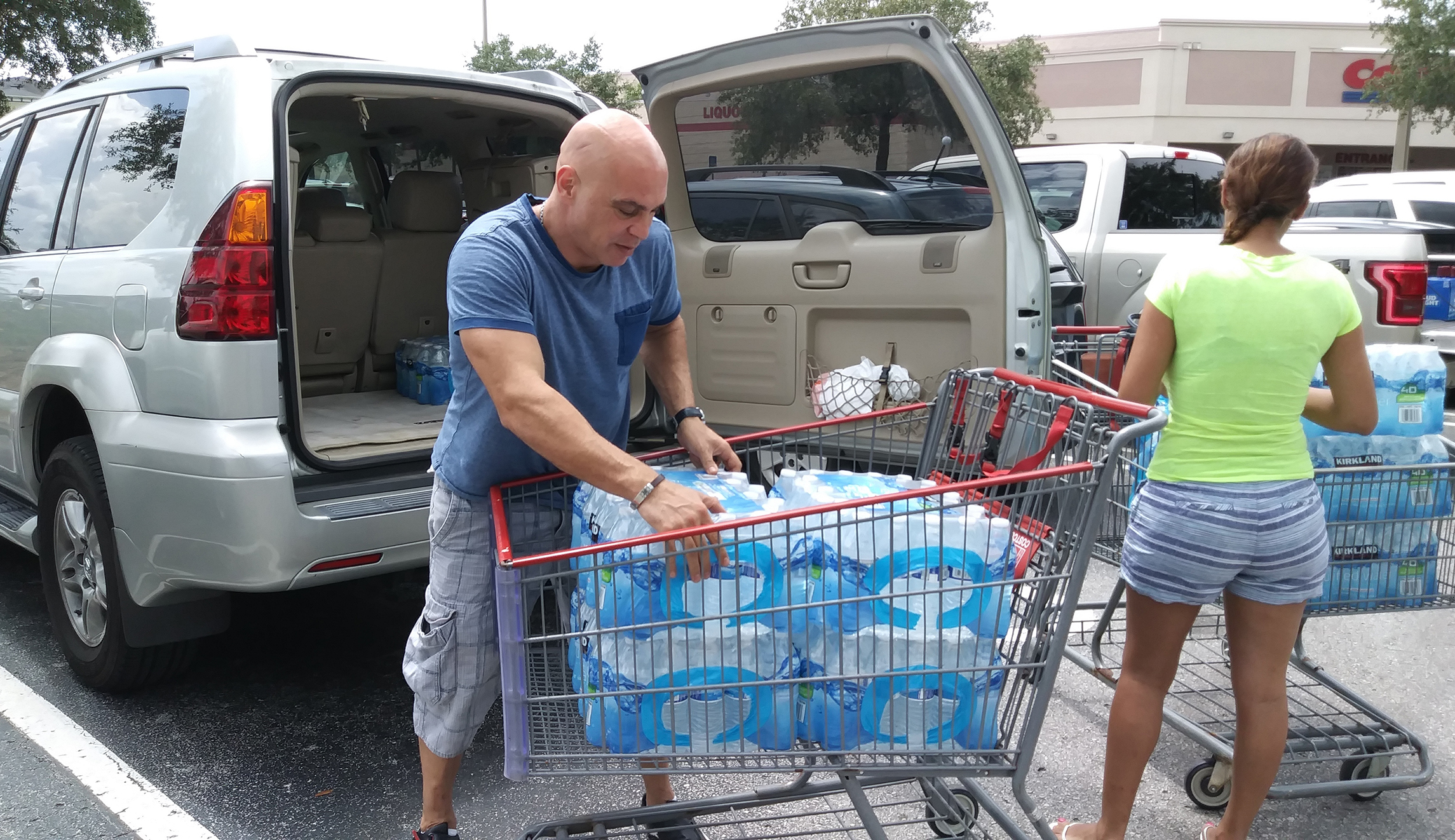
Amid all the news about Hurricanes Harvey, Irma, Jose, and now Maria, the issue of price gouging arose as people flocked to gas stations and supermarkets to stockpile supplies.
Many see gouging as little more than a way for producers to make extra money off of desperate people who are trying to prepare for the destructive force barreling towards their homes. On the surface, this seems like an accurate summation. Firms are in business to maximize profits, after all, and they respond to trends in supply and demand curves to achieve this.
Recommended Stories


However, it is because of these flocks of desperate consumers that price gouging is necessary to ensure a widespread distribution of resources. When too many people buy too much of something, supply plummets and the good becomes unavailable to many or even most of those who need it. While it may seem that price gouging is merely producers’ indulgence in greed, it actually discourages the hoarding of large quantities and enables more people in need to have an equal opportunity to acquire the resources they need to prepare for an impending catastrophe.
When a crisis is announced, consumers rush to the nearest gas stations and supermarkets to stock up on supplies. In response to this, supply decreases as demand increases. It is when the people who make it to the stores first and purchase the supplies in excess that the issue arises.
In a panic, people buy more than what is necessary to sustain themselves. Supply then plummets, and other people do not have the chance to gather supplies. The only way to prevent over-buying under these conditions is to increase the price, which in turn lowers demand. Higher prices might just look like an effort to stick it to consumers, but they actually give those further back in line a chance to collect supplies within a still-reasonable price range (no one was charging $100 per gallon) given the circumstances. Otherwise, it is a matter of first-come-first-served instead of supply and demand.
And the increase in price not only discourages consumers from purchasing the goods in excess, but also conveys to producers the need for the good in question. Producers have an incentive to manufacture and deliver more gas, more batteries, more bottled water, thus increasing supply and in turn lowering the price of the goods in question. The surge in prices thus sets into motion the process by which the problem fixes itself, lowering prices to something closer to their original level.
In South Florida, a couple of retailers were accused this hurricane season of price gouging as Floridians rushed to stores to stockpile supplies and gas stations ran out of fuel, supermarkets ran out of non-perishable food, and stores ran out of batteries and flashlights. The result was that some people were unprepared or unable to evacuate. Those who could evacuate would later have a difficult time returning home as gas stations were still out of fuel. Sharp price increases can help rectify these kinds of shortages. Sharp price spikes make people think twice about buying more gasoline or batteries (for example) than they actually need, so that others have a chance to buy them too.
In an ideal world, altruism would be the dominant factor behind people’s decisions, and price gouging would not be an issue. However, people are not incentivized by charity so much as they are incentivized by self-preservation. This instinct is exhibited in people’s tendency to purchase more than what they need in anticipation of a crisis. The result is a shortage of goods.
Even though gouging may seem just like a means by which to greedily make extra money, it is a necessary anti-hoarding measure. It is a corrective that ensures all consumers have some access to resources when they suddenly become scarce in the short term. In extreme circumstances, what some deride as “price gouging” can be the solution to a dire shortage.
Harry Dardashti is a political activist and graduate of Florida State University.
If you would like to write an op-ed for the Washington Examiner, please read our guidelines on submissions.
