

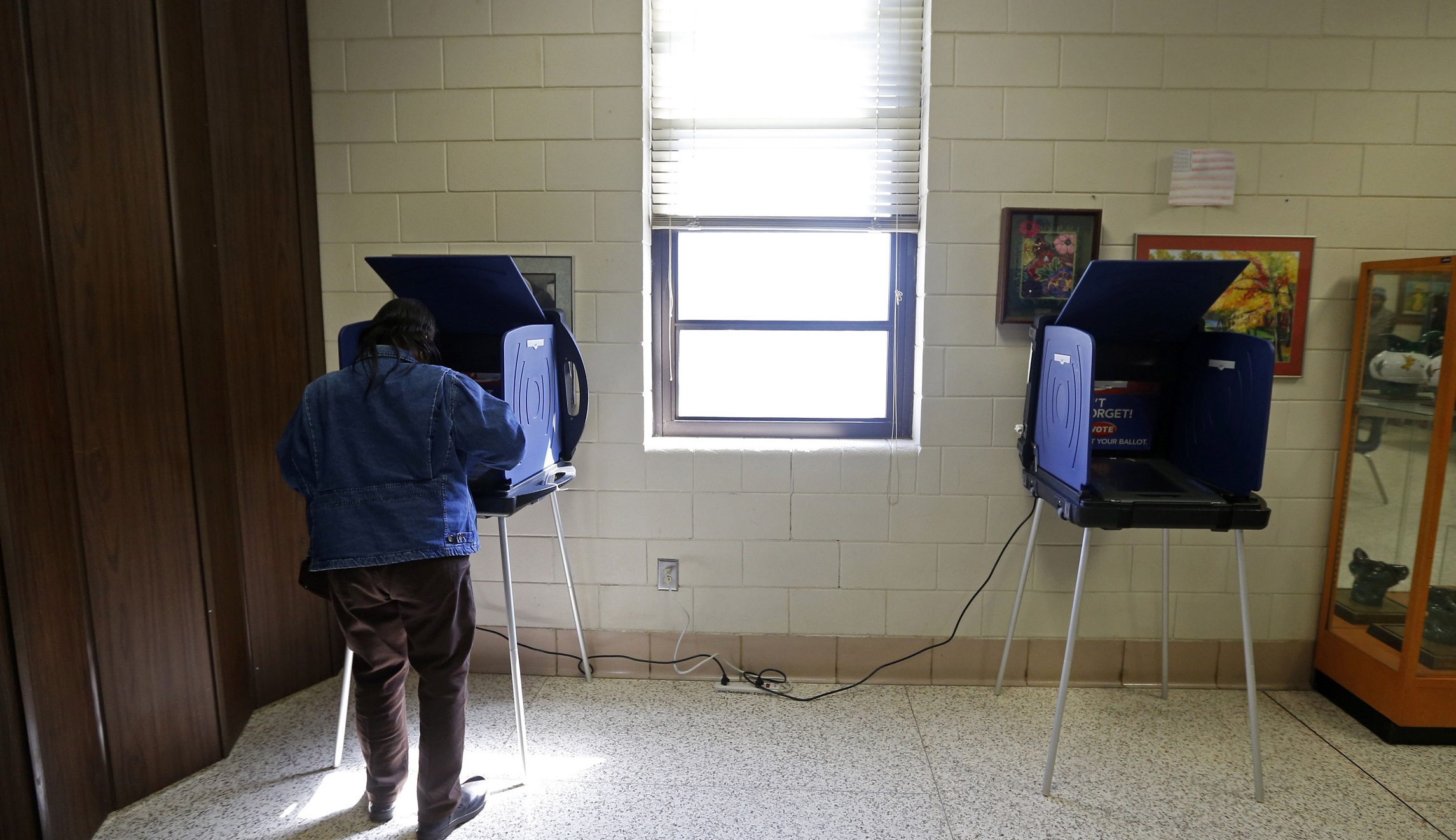
South Carolina Republican voters have been partially disenfranchised by a South Carolina judge who ruled that party bosses can refuse to hold the state’s traditional “first-in-the-South” presidential primary in 2020.
Both the merits and the timing of the decision by Circuit Judge Jocelyn Newman are problematic.
Recommended Stories


The move to cancel the primary is part of a nationwide effort by President Trump’s supporters to eliminate primaries where possible, to make his renomination that much easier. It is beyond dispute that in ordinary circumstances, state parties are free to determine how they will choose delegates to their national nominating conventions. The pro-Trump effort takes advantage of that reality to undermine the spirit of regular democratic processes, keeping party power in the hands of Trump-backed insiders.
South Carolina’s own legislature and its Republican Party, however, have recognized and highly valued the history of the state’s presidential primary as a crucial kingmaker. Its victor almost always proceeds to secure the national party’s nomination. To that end, both state law and South Carolina GOP rules include provisions making the traditional primary the default option, while other means of choosing nominees (such as caucuses or selection by the state party executive committee) are disfavored.
When the state GOP executive committee nonetheless voted Sept. 7, far later than party rules require, to cancel the 2020 primary without even replacing it with a convention, former U.S. Rep. Bob Inglis sued. Inglis requested an injunction forcing the party to follow its own rules by holding the primary anyway. As the previously planned primary date is Feb. 29, and as state law requires at least 90-days notice for an election, the effective deadline for a decision was Dec. 1.
A judge usually rules on a preliminary injunction within 10 days. “I recognize the time-sensitive nature of this,” Judge Newman said at an Oct. 18 hearing on the case. Nonetheless, Newman blew past the 10-day norm, past her own acknowledgment of time-sensitivity, and even beyond the Dec. 1 deadline. Then, she issued a ruling that depends on a selective reading of state law.
Newman cited one phrase of one subsection of the election law to claim that the state laws applicable to other primaries are not applicable to presidential primaries. And, yes, that phrase does say a provision of the law applies except regarding presidential primaries. Nonetheless, the judge’s reading of the statute is nonsensical. The “exception” discussed in the phrase clearly has nothing to do with whether to hold a primary, but only when. Primaries for other state offices are set by law for June, but the express exception allows the party to hold the presidential primary earlier in order to maintain its first-in-the-South status.
In other words, the exception itself is meant to guarantee, not hinder, the state’s presidential primary. The exception says nothing to exempt the parties from otherwise following state law or their own published party rules, much less in a way favoring party bosses over ordinary voters.
The judge’s ruling is a farce, and its timing, after the ordinary deadline for calling a primary, seems designed to leave little recourse to plaintiffs desirous of a fair election. Nonetheless, here’s hoping Rep. Inglis and his backers file an emergency appeal, citing the judge’s plain error.
In 2014, the South Carolina Republican Executive Committee adopted a resolution stating that “Republicans do not wish to be perceived as a party that simply selects its nominee in a backroom or underhanded fashion.” Five years later, they have embraced and earned, that contemptible perception.
