

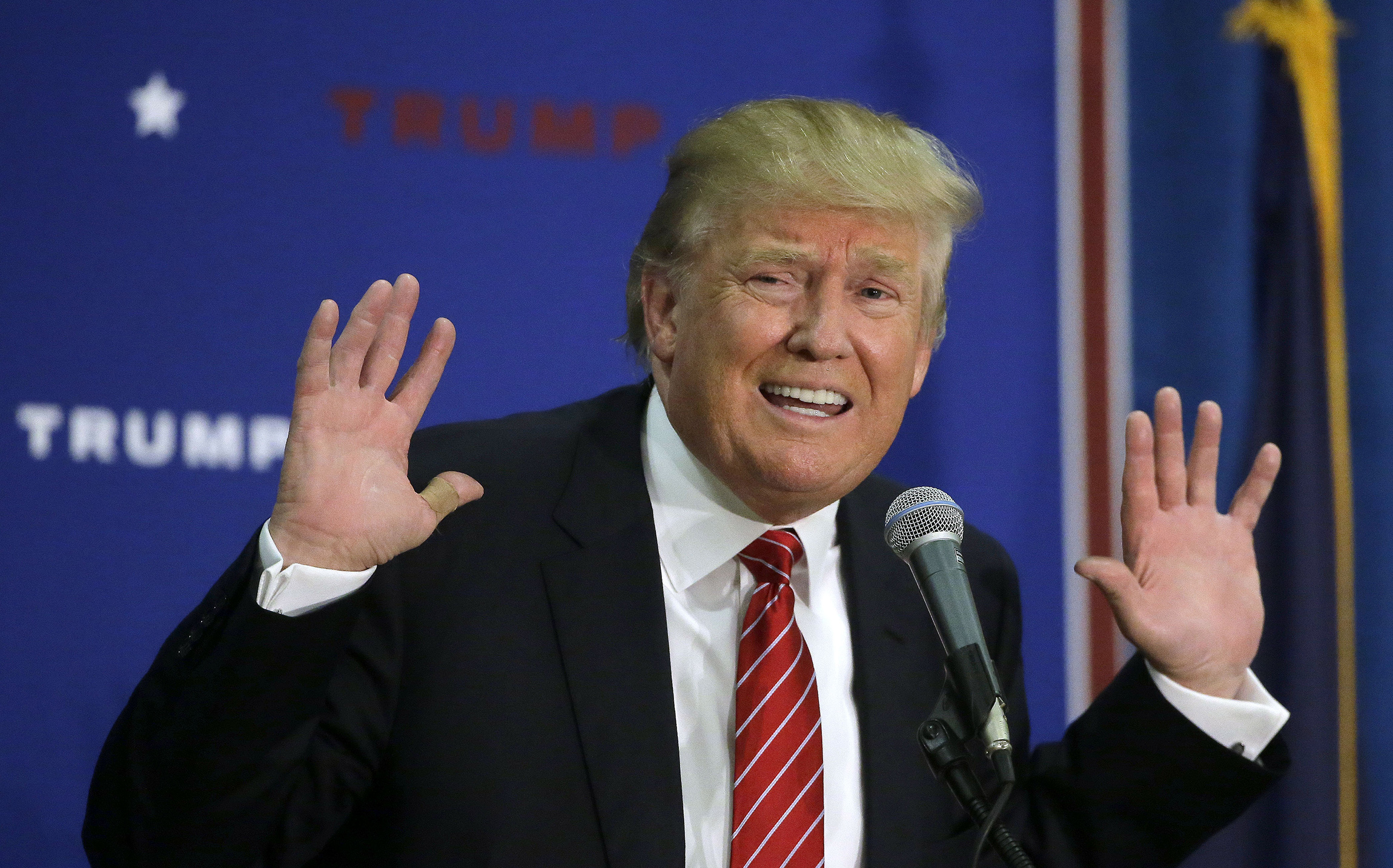
When Donald Trump clinched the Republican nomination, many conservatives seemed to endorse him on the belief that he was malleable and over time would embrace conservative positions, at least on their issue of choice. Months later, it now seems like this has succeeded on some issues but failed on others.
Immigration and trade are two issues where Trump seems to have his own ideas going into the campaign.
Recommended Stories


When he sees companies inverting and outsourcing, he assumes trade deals are to blame. When he sees stories of illegal immigrants committing crimes, he decides a wall must be built in an attempt to keep them all out. Perhaps he would take specific policy proposals from think-tanks if elected, but his overarching beliefs on immigration and trade seem to come from the news he’s seen.
But when he’s asked to get into the nuts and bolts of other issues, it seems like Trump is generally borrowing from conservative think tanks or advisers. Here’s a quick rundown of where it looks like Trump’s ideas come from, at least on five issues.
National Defense
Trump famously said he gets military advice from “the [TV] shows.” But at least when it comes to specifics, he seems to be borrowing from the conservative Heritage Foundation.
In a speech last week, Trump proposed increasing Marine Corps battalions to 36, increasing the Navy to 350 ships and adding Army combat brigades.
His proposal was very similar to what Carly Fiorina proposed during the GOP primary campaign and to what Mitt Romney proposed in 2012. All the numbers are very similar to what Heritage calls for in its annual Index of United States Military Strength: 346 Navy ships, 36 Marine Corps battalions and 50 army brigade combat teams, up from today’s 32.
Supreme Court
When Trump released a list of 11 potential Supreme Court nominees earlier this year, he wasn’t shy about saying the Federalist Society influenced him. “We’re going to have great judges, conservative, all picked by Federalist Society,” he said in June. He also mentioned that Heritage was an influence.
Education
Last week, Trump proposed a $20 billion federal school choice program that would allow children living in poverty to use federal funding at the private or public school of their choice. States would choose if they want to receive a block grant to participate and could even use state dollars to supplement the small federal funding.
The idea is quite similar to Title I portability, the idea that federal funding for low-income students should be allowed to follow students to the school of their choice. In late August, Trump hired Rob Goad as an education policy adviser. Goad previously worked for Rep. Luke Messer, R-Ind., who backed Title I portability to the public or private school of a student’s choice. The idea didn’t have enough support in Congress to make it into the final education bill signed by President Obama in December 2015.
Title I portability also has support from Heritage.
Taxes
Trump wants a top individual income tax rate of 33 percent, full expensing of capital investment, a tax deduction for childcare costs and to consolidate today’s seven individual income tax brackets into three.
According to Tax Foundation Analyst Scott Greenberg, Trump’s proposal for three brackets at 12 percent, 25 percent and 33 percent are the same brackets proposed in the House Republican tax reform blueprint released in June.
Trump has also been advised on taxes by Stephen Moore, a visiting fellow at Heritage, Larry Kudlow, a senior contributor to CNBC, and economist Art Laffer, of Laffer Curve fame.
Religious Liberty
Trump hasn’t said much on religious liberty, but he has called for the Johnson Amendment to be repealed. If repealed, tax-exempt organizations, including religious institutions, would be allowed to organize politically.
That idea probably comes from Jerry Falwell, Jr., the president of Liberty University, which is affiliated with the Southern Baptist church. Falwell endorsed Trump in late January and has said the amendment “intimidates the leaders of the organizations from exercising free speech. The law is a farce, it is not enforced, and it is time for it to go.”
Falwell isn’t the only conservative who wants to see the Johnson Amendment repealed. Tony Perkins of the Family Research Council also wants to see it go, while the Alliance Defending Freedom and the American Center for Law and Justice also oppose the amendment and may have influenced Trump.
Jason Russell is a commentary writer for the Washington Examiner.
