

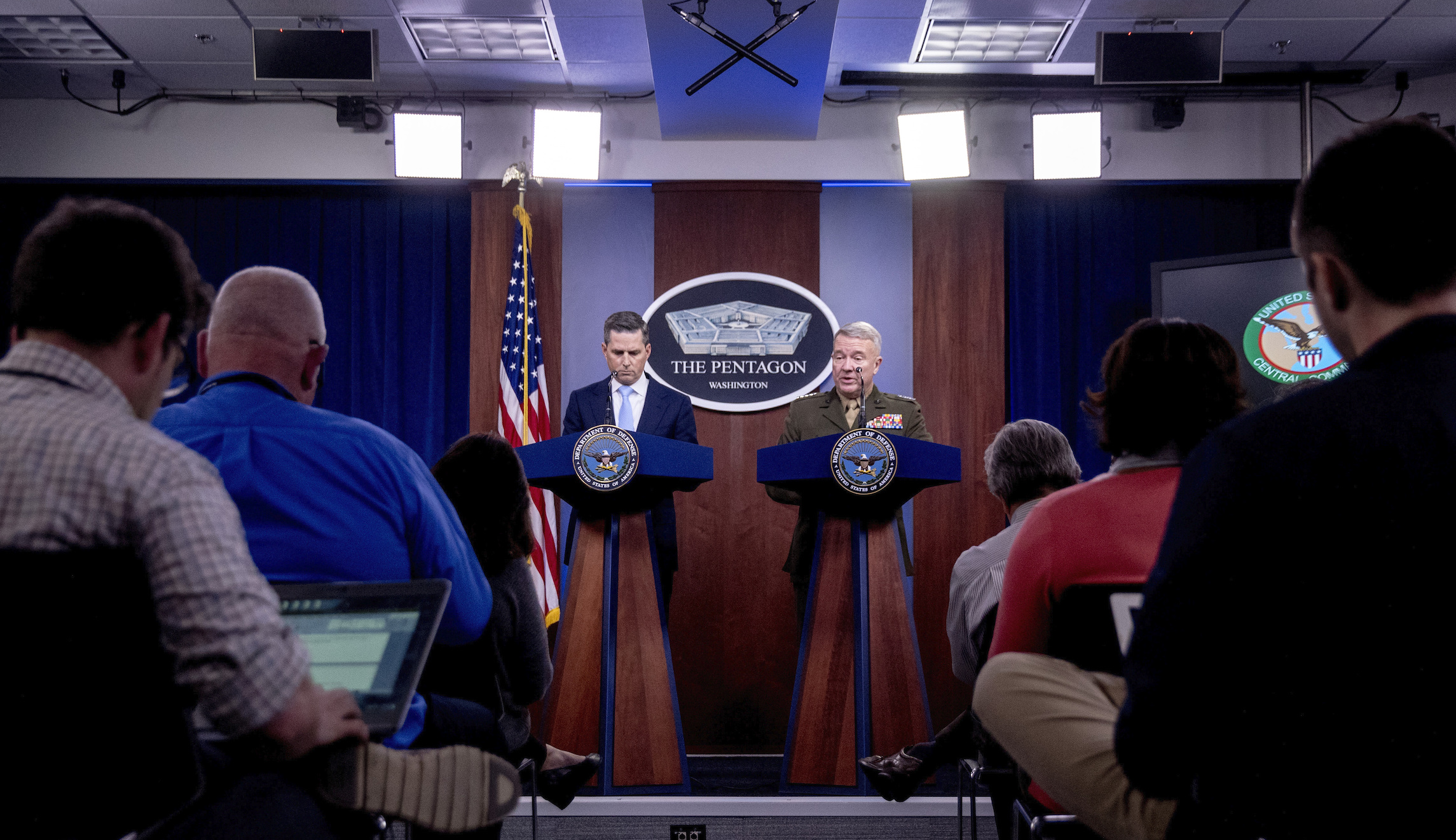
On Tuesday, Pentagon spokesman Jonathan Hoffman announced that the United States has upheld its commitment made in the Feb. 29 Taliban peace deal to draw down U.S. forces in Afghanistan.
“As stipulated in the agreement, the United States agreed to reduce its forces in Afghanistan to 8,600 and withdraw from five bases,” he stated, adding, “We have met this obligation. We maintain the capabilities and authorities necessary to protect ourselves, our allies and partners, and U.S. national interests.“
Recommended Stories


The Defense Department may have withdrawn forces, but Hoffman is being disingenuous and dishonest when he says that the United States remains committed to and maintains the ability to defend U.S. allies.
A report released the same days as Hoffman’s statement found that, on average, the Taliban had killed 16 Afghan civilians per day, every day for the past six months. That translates to the Taliban killing almost 2,000 Afghan civilians. The Taliban killed hundreds more Afghan soldiers and security force members.
There should be no question that Afghanistan itself should be considered America’s key partner in its mission. Many NATO members essentially send office workers in uniform, while the Afghan army is consistently on the front lines. Multiple elections legitimized the Afghan government and its institutions. Its leaders at all levels live in Afghanistan. In contrast, no one elected the Taliban, a movement whose leadership lives outside Afghanistan. This is not to absolve the Afghan government of criticism, but no one should doubt its sacrifice.
Hoffman also says, “U.S. military presence in Afghanistan remains focused on capabilities — not numbers.” He doth protest too much, methinks. Special Envoy Zalmay Khalilzad’s peace process seems to be little more than window dressing for a predetermined White House decision to withdraw from Afghanistan regardless of the situation on the ground. This, in turn, is largely due to President Trump’s conviction that the U.S. gains little for the $30 billion it spends annually in Afghanistan at a time when those funds would be better invested countering China.
The Afghanistan conflict, already America’s longest war, is a quagmire because neither Democrats nor Republicans maintain the will either to confront the Taliban’s foreign backers or to make the military decisions necessary to turn the tide against the Taliban. Trump may want to withdraw before the presidential election this November so he can say he ended a “forever war.” If that’s the reason for withdrawal, the Pentagon should be honest. But U.S. actions in Afghanistan (and the flippant, if diplomatic, statements such as Hoffman’s) create a credibility gap that ultimately erodes America’s diplomatic standing at a time when it already appears to be in free fall.
Michael Rubin (@Mrubin1971) is a contributor to the Washington Examiner’s Beltway Confidential blog. He is a resident scholar at the American Enterprise Institute and a former Pentagon official.
