

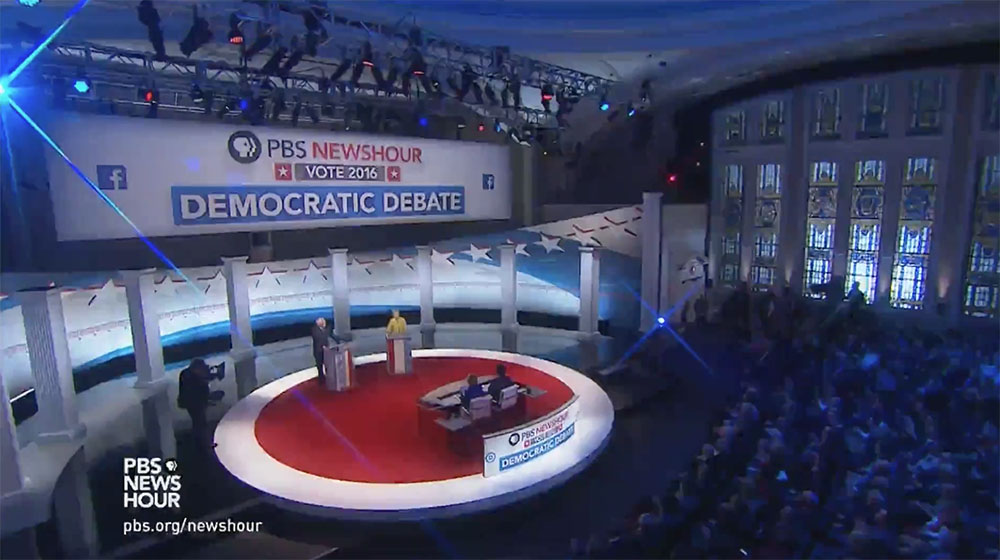
The sixth Democratic presidential primary debate is over. Here are a few brief thoughts:
Young Voters
Recommended Stories


Hillary Clinton is struggling mightily to get young Democrats to support her. Clinton admitted as much Tuesday night after conceding the New Hampshire primary to Bernie Sanders. “I know I have some work to do, particularly with young people,” Clinton said. “But I will repeat again what I have said this week. Even if they are not supporting me now, I support them.” More than 80 percent of young New Hampshire voters aged 18-29 supported Sanders, according to CNN exit polls.
If Clinton agreed to four additional primary debates because she felt it would help her reach young voters, she’s mistaken. People aged 18-34 make up 24 percent of the population, but only 11 percent of debate viewers, according to FiveThirtyEight. She’ll need to find other avenues to win them over, because whatever she’s doing now isn’t working.
Clinton Scandals
Republicans often wonder why Sanders does not attack Clinton over her email or corruption scandals more often. What they don’t understand is that Democrats view them as non-issues driven by Republicans who simply want to bring Clinton down. One poll found that fewer than 30 percent of Democrats said the email scandal would be somewhat or very important to their vote, compared to 50 percent of independents and 75 percent of Republicans.
Keep in mind, Clinton has a 53 percent net favorability rating with Democrats, according to Quinnipiac. Not as high as Sanders’s 62 percent, but anything Democrats might see as a personal attack against Clinton won’t work. Instead of attacking her on a personal issue, Sanders hit Clinton from the left on issues like immigration, tax hikes and foreign policy.
Race Relations
I thought Clinton made a good point about race relations. Clinton said there have been a lot of advances under Obama, despite plenty of racial tension in the news. “We have a lot more social media. We have everyone with a cell phone. So we are seeing the dark side of the remaining systemic racism that we have to root out in our society,” Clinton said.
Thanks to technological advances, nearly everyone can record live video as needed. Racism and police brutality existed before the advent of cell phone cameras and social media, but it wasn’t immediately seen by millions of people when it happened. For example, the shooting of Laquan McDonald in Chicago was initially ruled as justifiable. When the dashcam video was released, McDonald’s killer was charged with murder within hours. Just because these incidents are caught on tape more often doesn’t mean they happen more often. Nor does it mean that Americans are more racially divided.
Jason Russell is a commentary writer for the Washington Examiner.
