

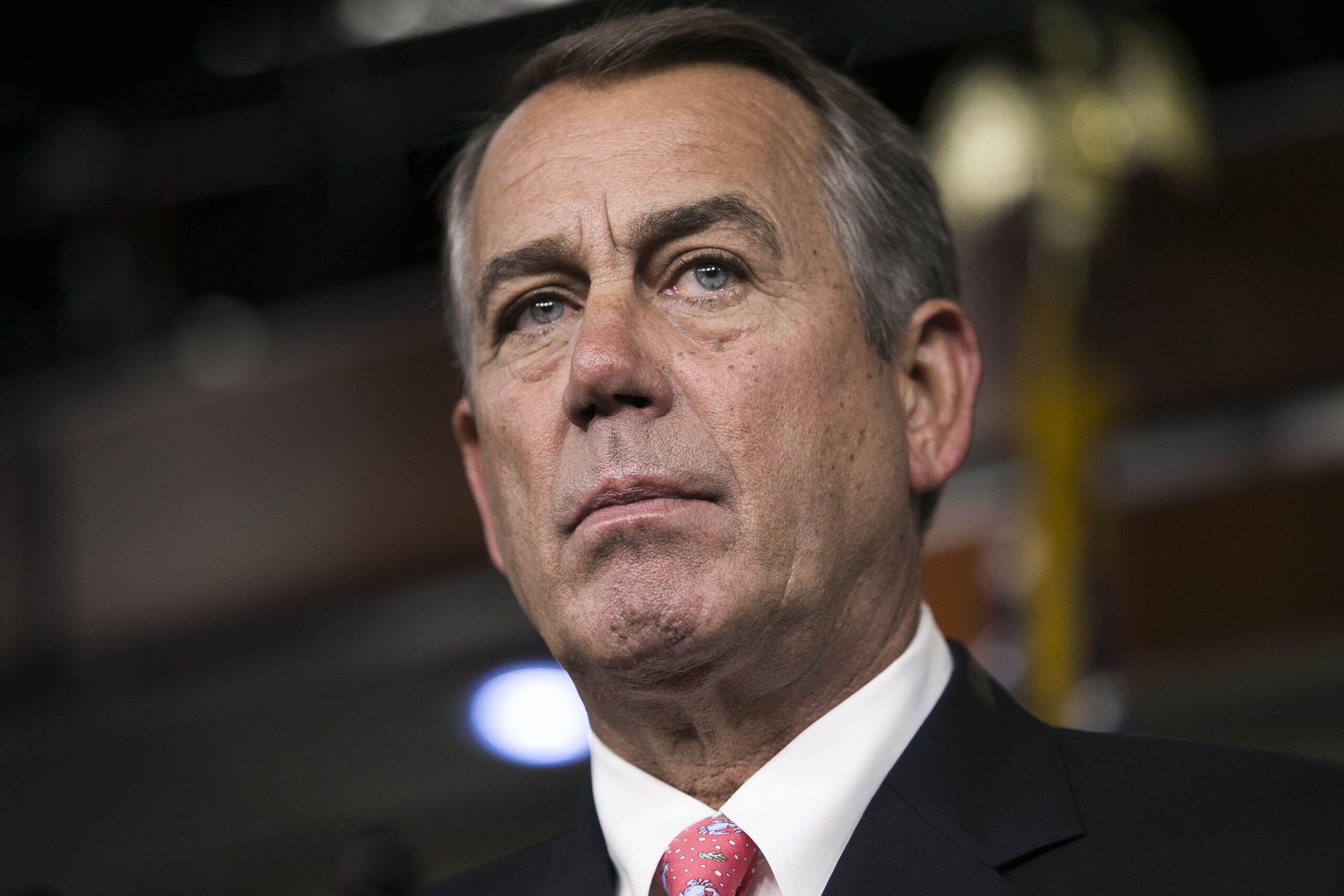
Shortly after the Congressional Budget Office estimated that legislation to change the way Medicare calculates doctors’ payments would raise deficits both in the short-term and over time, House Speaker John Boehner issued a release headlined, “CBO Confirms Permanent Doc Fix Saves Taxpayers Money, Bends Cost Curve.”
What gives?
Well, as a reminder to those who may not be as acquainted, the issue of how to compensate doctors through Medicare has been a constant thorn on the side of lawmakers. Back in 1997, Congress established a new formula to contain the cost of paying doctors. But starting in 2003, Congress, facing constant lobbying on the issue, developed a habit of cutting last minute deals to avoid the payment cuts going into effect. The problem this created is that as time went on, the potential cuts became more severe. Without any action by Congress, doctors’ payments would be slashed by 21 percent this April 1 — and many physicians would no doubt respond to these cuts by dropping out of Medicare, meaning reduced access for beneficiaries.
Recommended Stories

For years, the idea of a permanent ‘doc fix’ has been a Holy Grail in Washington — lobbyists don’t like the uncertainty and lawmakers don’t like having to deal with the issue constantly, but a permanent solution has been elusive. It’s become a symbol of congressional dysfunction by demonstrating the way lawmakers tend to govern from crisis to crisis rather than sensibly planning for the long term.
That brings us to now, with Boehner pushing a bill he negotiated along with House Minority Leader Nancy Pelosi, D-Calif.
The bill would replace the current formula for paying doctors and add other spending priorities (such as extending State Children’s Health Insurance Program, a program that provides health coverage to low-income children), and make modest changes to Medicare to save money. Mainly, the law reduces expected payments to hospitals and increase premiums on higher-income Medicare beneficiaries.
When the savings and costs are mixed together, the CBO estimated that the bill would add $141 billion to deficits over the next decade. Supporters of the bill had argued that the true savings wouldn’t kick in until the following decade. But the CBO took that into account, and still concluded that it would add deficits on a net basis in the second decade.
Much like a movie ad featuring a review touting “an ambitious film” while leaving out the part where the reviewer added “that ultimately falls flat,” Boehner’s press release cherry-picks quotes from the CBO report to portray the legislation as a savings to taxpayers.
The release quotes the CBO as saying, “The budgetary effects of some provisions of the bill that would generate federal savings would increase rapidly in that [second] decade. … Compared with the costs of freezing Medicare’s payment rates for physicians’ services, the budgetary effects of the legislation could represent net savings or net costs in the second decade after enactment, but the center of the distribution of possible outcomes is small net savings.”
Here’s the fuller CBO quote, with the parts omitted by Boehner in bold: “Taken as a whole, H.R. 2 would raise federal costs (that is, increase budget deficits) relative to current law in the second decade after enactment. The budgetary effects of some provisions of the bill that would generate federal savings would increase rapidly in that decade, but they would be growing from a much smaller starting point in 2025 than the budgetary effects of the provisions generating additional federal costs.”
Big difference.
Now, what’s that reference to its savings relative to “freezing Medicare’s payment rates”? Well, Boehner asked the CBO to do an alternate analysis of what the effect of legislation would be if payment rates were kept in place. As Boehner put it, that’s “the path we’ve been on — freezing physician payments every year and 17 times total.”
Relative to that scenario, the CBO said the bill would save $900 million over the next decade, and in the second decade, it could cost money, but would most likely save a small amount.
However, there’s something else that is left out. In the past, Congress hasn’t simply frozen payment rates. In most cases, when Congress has cut a deal to preserve doctors’ pay, they’ve offset the cost with new spending cuts. In fact, 98 percent of the short-term “doc fixes” that have been put in place since 2004 have been paid for, according to an analysis from the Committee for a Responsible Federal Budget, resulting in $140 billion in deficit reduction.
Whether or not future deals would be otherwise offset by spending cuts is of course an open question, but Boehner is incorrect to say that the taxpayers would save money relative to the path we’ve been on. What’s more, there’s no guarantee that future Congresses won’t undo some of the spending cuts that have been negotiated as part of this deal.
The existing Medicare payment formula that passed nearly 20 years ago is an ugly piece of legislating, but it has acted as a cudgel to reduce spending. This bill would remove that cudgel without making enough longer-term changes to Medicare to make it worthwhile.
