

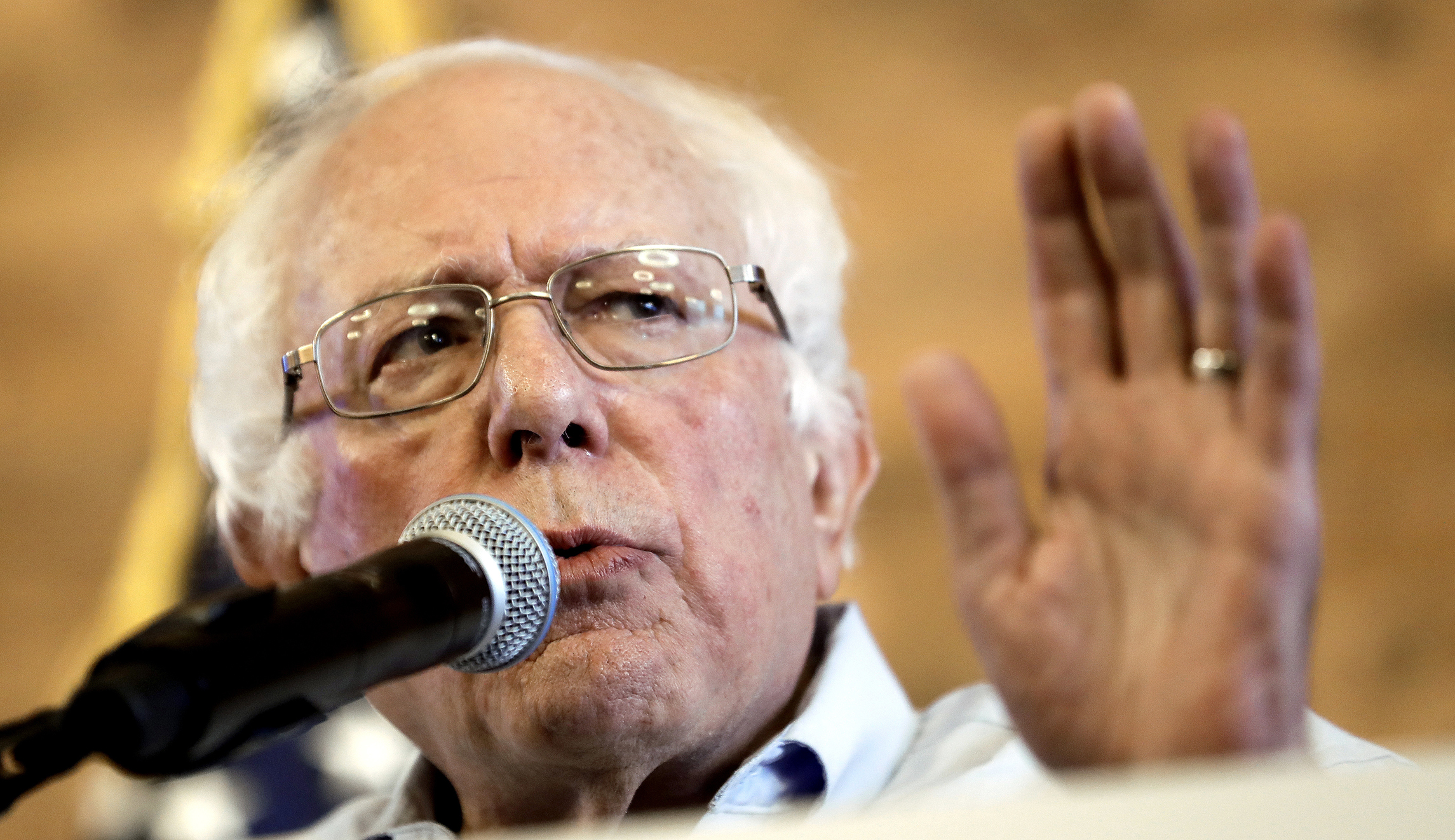
Bernie Sanders is the Democratic front-runner, but his lead is weak.
Heading into Nevada’s caucuses this week, Sanders has yet to establish himself as the chosen favorite among the state’s voters. Former Vice President Joe Biden remains competitive in Nevada, as even Elizabeth Warren does. Granted, that could easily change, given Biden’s and Warren’s poor performances in both Iowa and New Hampshire.
Recommended Stories


Even so, Sanders still faces a potent challenger in Pete Buttigieg, the former South Bend, Indiana, mayor who is actually the delegate leader after the first two nominating contests. Buttigieg hasn’t been polling well in Nevada, but the political momentum he’s gained over the past few weeks could help him close the gap.
And now, Sanders must reckon with Michael Bloomberg, who just hit 19% nationally in a new poll Tuesday and qualified for the Democratic Party’s next debate in Nevada. Bloomberg hasn’t won a primary, and this is the first time he’ll appear on the debate stage. Still, the former New York City mayor’s rise is proof that Democratic voters haven’t made up their minds just yet.
Sanders’s own performance thus far is proof that his campaign isn’t as strong this time around. In New Hampshire, for example, Sanders won less than half of what he won in 2016. Yes, he has more competition now than he did four years ago. Still, it’s obvious that many of the 150,000+ voters who turned out for Sanders in 2016 chose someone else when given a non-Hillary Clinton choice.
Add this to the low voter turnout in both of the first two nominating contests, and it’s obvious that the Bernie Sanders running for president this year is not the Bernie Sanders who ran in 2016.
Many of Sanders’s supporters have dismissed this criticism as an attempt to discredit his campaign. It’s arguably true that much of the liberal media, encouraged by the Democratic establishment, don’t want Sanders to become the party’s nominee. Whether this will affect Sanders’s standing in the long run is still unclear, but it very likely could.
Still, the media don’t deserve as much credit as Sanders’s supporters would like to think. Negative coverage can only do so much to harm a candidate before it starts helping him — President Trump is proof of that.
The truth is that Sanders is his own worst enemy. His policies have become a roadblock to his campaign in states such as Nevada, where the state’s largest union has voiced its opposition to the socialist and his “Medicare for all” proposal. He refuses to give specifics when asked what his policies would cost or require, making it all too easy for centrists such as Buttigieg and Amy Klobuchar to dismiss his agenda as unrealistic.
Sanders’s recent gains should not be understated. But he hasn’t won the nomination yet, and he won’t unless he wins over the hesitant voters attracted to more moderate candidates.
