

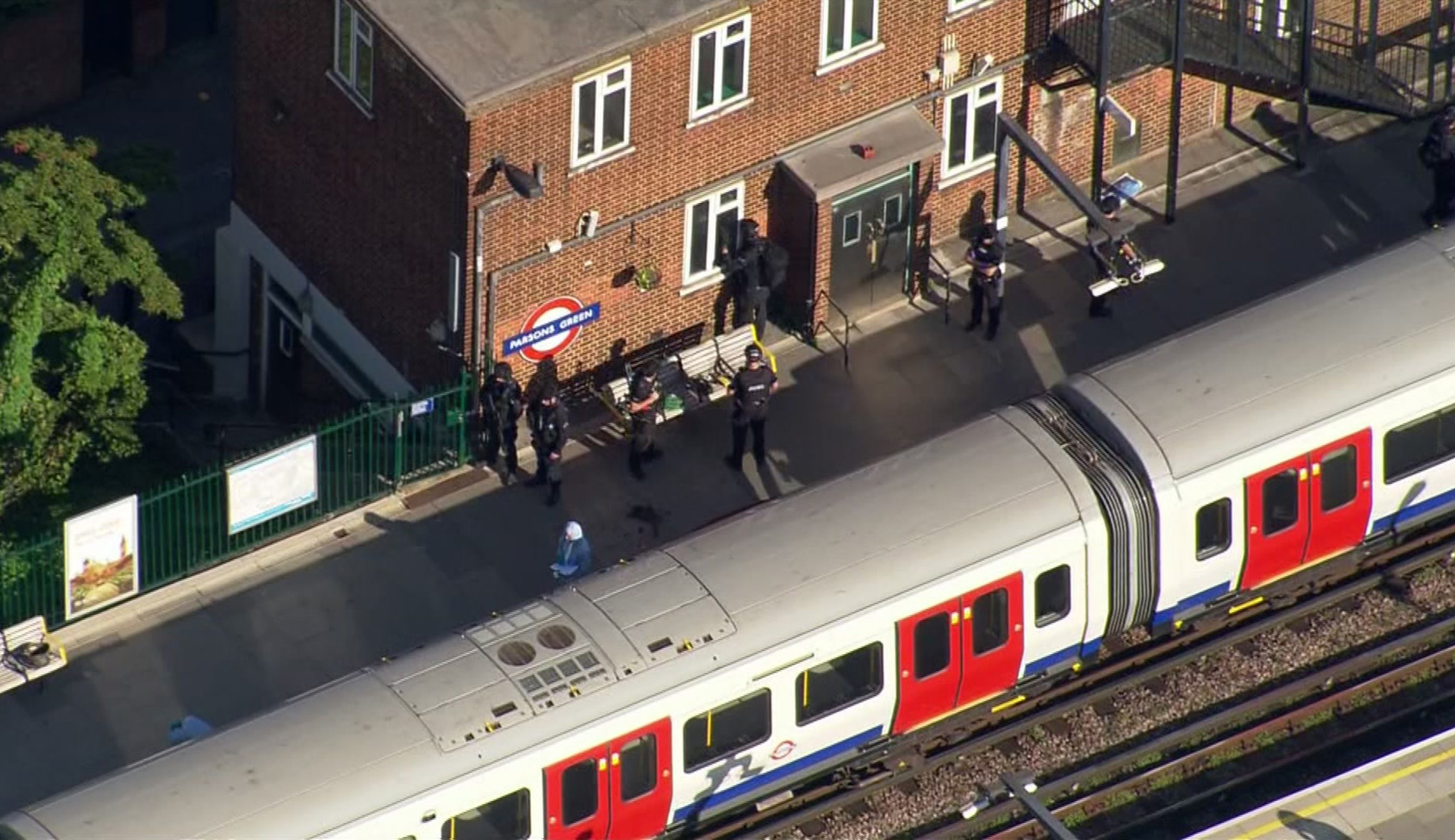
On Friday evening U.K. time, around 12 hours after a terrorist bomb attack targeted commuters on a London Underground train, the British government raised its terror alert level from “severe” to “critical.”
This means that Britain’s Joint Terrorism Analysis Center (JTAC) believes an attack is “expected imminently.”
Recommended Stories


This development is notable in the shift from earlier Friday, when JTAC did not raise the threat level. As I noted this morning:
…based on Britain’s quick decision not to raise the terror alert level, I believe the cell is likely small in number and inspired, rather than directed, by ISIS or al Qaeda. Had they suspected the cell was larger or in possession of more bombs, British authorities would have raised the terror alert level in fear that other attacks are imminent. That they have not suggests they are confident they know who the attacker is, expect to detain him or her soon, and believe a broader operational cell is not involved.
Clearly all those assessments have now changed. But what specific intelligence might have precipitated the escalation?
I think two different factors.
First, the head of the Metropolitan Police service’s counter-terrorism command has stated that the individual who planted the bomb is male and that his officers are searching for “suspects.” That use of a plural term indicates that the intelligence services assess a broader cell may be at work here. This assessment is likely also based on new Islamic State claims that “a squad” carried out the attack, that “several explosive devices” have been planted, and that “what is forthcoming, Allah willing, shall be more grievous and bitter.”
It is also possible that the individual who planted the bomb has now been identified by applying camera footage to biometric intelligence capabilities. If that’s the case and he is linked to a broader group of individuals, it increases the likelihood that an undetected attack cell is involved. Conversely, if he has not been identified, security officials will worry that a directed ISIS cell may have infiltrated onto U.K. soil. As I noted in December, such infiltration of Britain has long been an ISIS priority.
Second, the authorities have thus far been unable to track down the primary suspect. That they have not yet made an arrest will concern them as to a growing potential of possible follow-on attacks. The challenge here is that knife attacks (such as the London Bridge attacks in July) and vehicle attacks (such as in Barcelona last month) mean the terrorists can threaten life even without firearms or explosives. In turn, by moving to a critical alert, the government will now deploy a limited number of British Army personnel onto the streets to provide static armed presence at major tourist sites and other possible targets. This allows armed police officers to standby for responsive roles in the event of a new attack.
It also likely means that squadron size elements of the British SAS and SBS special forces units will be sent to reinforce forward-deployed teams in London.
Regardless, it is clear that British intelligence analysts are increasingly concerned.
